Is it safe to eat eggs, chicken and turkey during a bird flu outbreak?
Yes, cooked or pasteurized, CDC says. What CDC and USDA advise on eggs, chicken, turkey, raw milk and backyard flocks when bird flu is found near you.
By Tom Calder · Updated November 9, 2026 · Sourced to CDC and the U.S. Department of Agriculture's Animal and Plant Health Inspection Service (APHIS)
- Yes. CDC says eating properly prepared and cooked poultry and eggs, and pasteurized milk, is safe. A bird flu detection in a nearby flock or herd doesn't change that.
- Cook chicken, turkey and eggs to an internal temperature of 165°F. CDC says that kills bacteria and viruses, including bird flu viruses. A food thermometer is the way to check.
- Choose pasteurized milk and cheese. CDC says pasteurization kills bird flu viruses in milk, and advises against raw milk, especially from areas with infected herds.
- CDC rates the current public health risk as low. The human cases in the U.S. have been sporadic, in dairy and poultry workers, and people catch it most often through close, unprotected contact with infected animals.
- If you keep chickens, keep them away from wild birds, don't touch sick or dead birds without protective gear, and report sick birds to your state veterinarian or to USDA at 1-866-536-7593.
The short answer: cooked and pasteurized food is safe
CDC lists eating undercooked or raw poultry or eggs, or drinking unpasteurized milk from infected dairy cows, as a possible way to catch bird flu, and then says plainly: "Consuming properly prepared and cooked (or pasteurized) products is safe." It adds that there is no evidence that anyone in the United States has been infected with bird flu after eating properly handled and cooked poultry products.
The main risk is contact with animals, not food. CDC says exposure to infected sick or dead animals is the main risk factor, and that infections in people happen most often after close, prolonged and unprotected contact (without respiratory and eye protection) with infected birds, dairy cows, other animals or contaminated surfaces.
On November 5, 2026, CDC said bird flu is widespread in wild birds worldwide and is causing outbreaks in poultry and U.S. dairy cows, with sporadic human cases in U.S. dairy and poultry workers. It rates the current public health risk as low and counts 74 reported human cases in the United States since February 2024. CDC also says no person-to-person spread has been identified in the United States.
Why flocks near you keep turning up in the news in the fall
USDA's Animal and Plant Health Inspection Service (APHIS) says detections in poultry are higher in the fall and spring because wild birds spread the virus as they migrate. For scale, it says the U.S. has more than 378.5 million egg-laying chickens.
When a flock is infected, APHIS says there is no treatment for highly pathogenic bird flu, and the only way to stop it is to depopulate all affected and exposed poultry. That is how outbreaks are contained. The CDC advice for your kitchen is the same whether or not there is an outbreak in your county.
Chicken and turkey: cook to 165°F and keep raw juices away
CDC says cooking poultry to an internal temperature of 165°F kills bacteria and viruses, including bird flu viruses, and that all poultry, including ground chicken and ground turkey, should reach 165°F. That covers the Thanksgiving turkey too. CDC's everyday chicken advice, which also protects against Salmonella, is this:
- Use a food thermometer to check that chicken is cooked to 165°F.
- Keep raw chicken and its juices away from ready-to-eat foods, like salads or food that is already cooked.
- Don't wash raw chicken: it is ready to cook. CDC cites a USDA study in which 1 in 7 people who cleaned their sink after washing chicken still had germs in the sink.
- Use a separate cutting board for raw chicken, and wash hands with soap and water for at least 20 seconds before and after handling it.
- Refrigerate or freeze leftovers within 2 hours, or within 1 hour if the food is in temperatures above 90°F.
Eggs: cook until the yolks and whites are firm
CDC's bird flu food page says cooking poultry and eggs to an internal temperature of 165°F kills bacteria and viruses, including bird flu viruses, and to cook all poultry products, including eggs, all the way before eating. Its table of safer food choices puts it this way for eggs:
- Riskier: raw or runny eggs, and foods with raw or undercooked eggs, such as Caesar salad dressing, raw cookie dough and homemade eggnog.
- Safer: eggs cooked until the yolks and whites are firm.
- Safer: egg dishes such as frittata, quiche or casserole cooked to 160°F, or to 165°F if they contain meat or poultry.
- Safer: pasteurized eggs in foods that won't be cooked to a safe temperature, such as mousse and salad dressing.
Milk, cheese and beef: choose pasteurized, cook beef through
Bird flu has been found in U.S. dairy cows, which is why CDC's advice covers milk. CDC says pasteurization kills bacteria and viruses, like bird flu viruses, in milk, and that choosing pasteurized milk and products made with it is the best way to keep your family safe. Based on the limited research available, CDC says it does not know at this time whether bird flu can pass to people through raw milk or raw-milk cheese from infected cows.
CDC's prevention advice is direct: do not touch or consume raw milk or raw milk products, especially from animals with confirmed or suspected bird flu or in areas known to have infected herds. It also recommends against drinking raw milk contaminated with live H5N1 virus as a way to build antibodies. Raw milk carries other germs too, such as E. coli, Listeria and Salmonella, and CDC says children under 5, adults over 65, pregnant women and people with weakened immune systems are at higher risk of serious illness.
Cheese made from pasteurized milk is the safer choice. CDC's table lists hard cheeses like Cheddar and Parmesan, cottage cheese, cream cheese, feta and soft cheese clearly labeled "made from pasteurized milk" as safer, and soft cheese made from raw milk, such as queso fresco and brie, as riskier.
For beef, CDC says cooking to the right internal temperature kills bird flu viruses: 160°F for ground beef, and 145°F for whole cuts, then a 3-minute rest.
If you keep backyard chickens
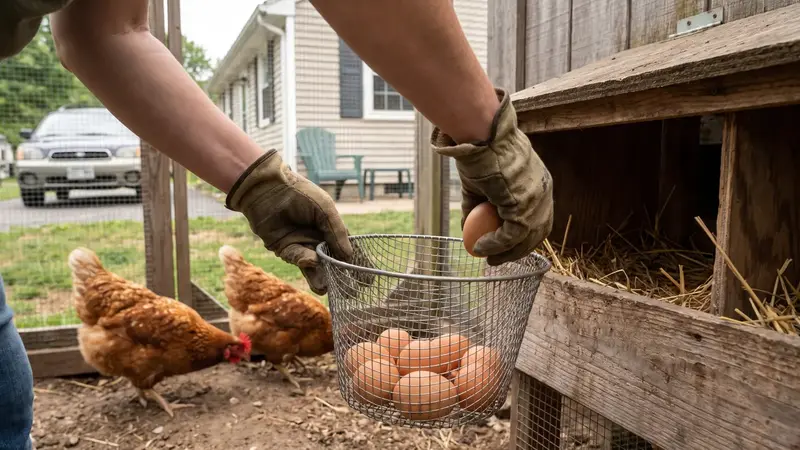
APHIS says bird flu spreads through direct bird-to-bird contact and through contaminated surfaces and materials such as manure, egg flats, crates, equipment, and people's clothing, shoes or hands. Wild birds can bring it to a flock. Its Defend the Flock program boils biosecurity down to three habits: control what comes in (simple rules for visitors, clothes and shoes near birds), protect your birds from wildlife, and build a clean routine of washing hands, cleaning equipment and disinfecting surfaces. Before you go into the flock area, APHIS suggests asking: are my clothes and shoes clean, are my tools clean, have I washed my hands, and are visitors limited to people who need to be there?
Know the warning signs. APHIS lists these for highly pathogenic bird flu in poultry:
- Sudden death without any earlier signs of illness
- Lack of energy and appetite
- A drop in egg production, or soft-shelled or misshapen eggs
- Swelling of the eyelids, comb, wattles and shanks, or purple discoloration of the wattles, comb and legs
- Gasping for air, nasal discharge, coughing or sneezing
- Twisting of the head and neck, stumbling or falling down, or diarrhea
If your birds might be sick: report it, and protect yourself
Report sick or dying birds to your state veterinarian or to USDA's toll-free line, 1-866-536-7593. APHIS says to act quickly.
Until you have advice, CDC says not to touch sick or dead birds, their feces or litter, or any surface or water source they might have contaminated (waterers, buckets, troughs, ponds) without personal protective equipment. Once infection is confirmed, CDC says APHIS recommends wearing that gear in contaminated areas until there are no longer infected birds, eggs, feces or contaminated litter on the property. CDC's list of protective gear for backyard flock owners:
- Snug-fitting safety goggles (unvented or indirectly vented)
- Disposable gloves
- Rubber boots that can be disinfected, or boot covers
- An N95 respirator if available, or else a well-fitting facemask
- Disposable, fluid-resistant coveralls and a disposable head or hair cover
After contact with sick birds
CDC says not to wear used protective gear into your home, to wash the clothes you wore underneath with detergent and dry them on high heat, and to shower right after taking the gear off. Watch for symptoms for 10 days after your last exposure.
If you get sick within 10 days of contact with infected or possibly infected birds or animals, CDC says to stay home away from your household, not go to work or school, and contact your local or state health department, which can help with testing. CDC says flu antiviral drugs can treat bird flu and work best when started within 48 hours of symptoms.
Sick or dead wild birds, and hunters
CDC says to check first with your local and state government about their rules for collecting and testing sick or dead animals; health departments and state wildlife agencies can tell you how to report them. If you're told to throw the bird away, don't touch it with bare hands: CDC says to use gloves, or a plastic bag turned inside out, to put it in a garbage bag for your regular trash.
For hunters, CDC says not to handle wild birds that are obviously sick or found dead, and not to eat, drink or put anything in your mouth while cleaning game.
Cook chicken, turkey and eggs to 165°F, choose pasteurized milk and cheese, and leave sick or dead birds alone. CDC says properly cooked and pasteurized food is safe.
Common questions
Can you get bird flu from eating eggs?
Not from properly cooked eggs. CDC says cooking eggs to 165°F kills bird flu viruses and that properly cooked products are safe. Raw or runny eggs are the riskier choice; use pasteurized eggs in foods that won't be cooked.
Is it safe to eat chicken and turkey during a bird flu outbreak?
Yes, cooked to 165°F. CDC says there is no evidence that anyone in the United States has caught bird flu from properly handled and cooked poultry. Use a food thermometer and keep raw poultry away from food that won't be cooked.
Is store-bought milk safe?
Pasteurized milk is. CDC says pasteurization kills bird flu viruses in milk, and recommends choosing pasteurized milk and products made with it. It advises against raw milk and raw-milk products, especially from areas with infected herds.
Can I still eat eggs from my backyard chickens?
From a healthy flock, yes, cooked until the yolks and whites are firm, as CDC advises for all eggs. If your birds show signs of bird flu, report them to your state veterinarian or USDA at 1-866-536-7593 and follow their advice. CDC counts eggs on an infected property among the material to handle only with protective gear.
Should I wash raw chicken?
No. CDC says raw chicken is ready to cook and doesn't need washing, and that washing it can spread germs around the sink. Cooking to 165°F is what makes it safe.
Does the flu shot protect against bird flu?
No. CDC says the seasonal flu vaccine is not designed to protect against H5N1 bird flu, though it still recommends a yearly flu shot for everyone 6 months and older, with rare exceptions.
What should I do if I feel sick after handling sick birds?
CDC says to stay home away from your household, skip work or school, and contact your local or state health department, which can help with testing. Flu antivirals can treat bird flu and work best within 48 hours of symptoms.
How do I report sick or dead birds?
For poultry, call your state veterinarian or USDA toll-free at 1-866-536-7593. For wild birds, CDC says to check with your local or state government, health department or state wildlife agency.
Sources (12)
- CDC: Food Safety and Bird Flu
- CDC: About Bird Flu
- CDC: Preventing Bird Flu Infections
- CDC: A(H5) Bird Flu, Current Situation
- CDC: Backyard Flock Owners, Protect Yourself from Bird Flu
- CDC: Raw Milk
- CDC: Safer Food Choices
- CDC: Chicken and Food Poisoning
- USDA APHIS: Avian Influenza
- USDA APHIS: Confirmations of HPAI in Commercial and Backyard Flocks
- USDA APHIS: Defend the Flock, Biosecurity Basics
- USDA APHIS: Defend the Flock
Get one calm email when it matters
Seasonal checklists and gear price drops. No spam, unsubscribe any time.
Keep reading
 Backyard chickens for eggs: how to keep them and stay healthyKeeping backyard chickens for eggs: CDC rules for avoiding Salmonella, kids under 5, bird flu, collecting and …
 Could bird flu on a Utah mink farm spark a pandemic? What is confirmedProPublica reports bird flu spreading on a Utah mink farm while workers go untested. What is confirmed, what e…
 Food safety in a power outage: how long food lasts and what to throw outHow long food stays safe in the fridge and freezer without power, what to throw out, and when you can refreeze…
 Sell-by vs best-by dates: what USDA says they mean (mostly not safety)Most date labels on food are about quality, not safety. What sell-by, best-by and use-by mean per USDA, the on…