Best whole-home battery backup systems (2026)
These are the big, expandable batteries built to back up a house: 3.6 to 12.3 kWh as sold, most with 240V, and room to add batteries up to 21 to 180 kWh. For each one we list the kWh, whether it gives 240V from one unit, how far it expands, the warranty, roughly how long it runs a fridge, a furnace fan and a well pump, and what it takes to connect it to your circuits. Big single power stations (EcoFlow DELTA Pro 3 and DELTA Pro Ultra, Anker SOLIX F3800 Plus, Jackery Explorer 5000 Plus) are on our home backup battery comparison, and the panels and transfer switches that connect these to a house have their own comparison.
By Tom Calder · Updated November 9, 2026 · 11 products, 8 of 11 price-tracked
Our picks by size
 Photo: Amazon
EcoFlow TITAN 5000 + Smart Home Panel 10
A 5 kWh, 240V start with its own 10-circuit panel
as of Nov 9, 2026, 11:40 AM ET · Details
Product prices and availability are accurate as of the date/time indicated and are subject to change. Any price and availability information displayed on Amazon.com at the time of purchase will apply to the purchase of this product. Photo: Amazon
BLUETTI Apex 300 + B500K
7.9 kWh with 120V and 240V at the same time
as of Nov 9, 2026, 11:40 AM ET · Details
Product prices and availability are accurate as of the date/time indicated and are subject to change. Any price and availability information displayed on Amazon.com at the time of purchase will apply to the purchase of this product. Photo: Amazon
EcoFlow DELTA Pro Ultra X
The most power: 12 kW at 120V and 240V
as of Nov 9, 2026, 11:40 AM ET · Details
Product prices and availability are accurate as of the date/time indicated and are subject to change. Any price and availability information displayed on Amazon.com at the time of purchase will apply to the purchase of this product.All 11 compared
| System | Battery (as sold) | AC output | 240V | Expands to (maker) | Warranty | Runs (our estimate) | Connecting to the house | Price |
|---|---|---|---|---|---|---|---|---|
7,884.8 Wh · 3,840 W · Yes, from one unit (NEMA 14-50) · Up to 6 batteries per unit; 58 kWh with three units · 5 years · Fridge 2.7–5.7 days; fridge + furnace fan 8.7–12 h; well pump 6–7.9 h running · Plugs into a home inlet box; BLUETTI's Apex 300 Home Integration Kit (Reliance sub panel and 50A inlet) for house circuits, installed by a qualified electrician 7.9 kWh with 120V and 240V at the same time | 7,884.8 Wh | 3,840 W | Yes, from one unit (NEMA 14-50) | Up to 6 batteries per unit; 58 kWh with three units | 5 years | Fridge 2.7–5.7 days; fridge + furnace fan 8.7–12 h; well pump 6–7.9 h running | Plugs into a home inlet box; BLUETTI's Apex 300 Home Integration Kit (Reliance sub panel and 50A inlet) for house circuits, installed by a qualified electrician | $3,298.99 at Amazon as of Nov 9, 2026, 11:40 AM ET · DetailsProduct prices and availability are accurate as of the date/time indicated and are subject to change. Any price and availability information displayed on Amazon.com at the time of purchase will apply to the purchase of this product. |
Our verdictOur verdictResearched The Apex 300 (2,764.8 Wh, 3,840 W, 7,680 W lifting power) with a 5,120 Wh B500K battery: 7,884.8 Wh in all, with 120V and 240V outlets that work at the same time, even while charging. BLUETTI's Home Integration Kit connects it to chosen house circuits through a Reliance sub panel and a 50 A inlet. Best for 7.9 kWh with 120V and 240V at the same time Good
Worth knowing
Who shouldn't buy it: Don't buy it if you need more than 3,840 W at once. | ||||||||
12,288 Wh · 12,000 W · Yes, from one unit · Up to 10 batteries (61 kWh) per inverter; 180 kWh with three (EcoFlow) · 5 years · Fridge 4.2–8.9 days; fridge + furnace fan 14–19 h; well pump 9.3–12 h running · Plugs in on its own; for house circuits, Smart Home Panel 3 or Smart Gateway, installed by an EcoFlow-authorized licensed electrician The most power: 12 kW at 120V and 240V | 12,288 Wh | 12,000 W | Yes, from one unit | Up to 10 batteries (61 kWh) per inverter; 180 kWh with three (EcoFlow) | 5 years | Fridge 4.2–8.9 days; fridge + furnace fan 14–19 h; well pump 9.3–12 h running | Plugs in on its own; for house circuits, Smart Home Panel 3 or Smart Gateway, installed by an EcoFlow-authorized licensed electrician | $7,999 at Amazon as of Nov 9, 2026, 11:40 AM ET · DetailsProduct prices and availability are accurate as of the date/time indicated and are subject to change. Any price and availability information displayed on Amazon.com at the time of purchase will apply to the purchase of this product.In stockCheck price → |
Our verdictOur verdictResearched EcoFlow's biggest home system: one inverter and two 6,144 Wh batteries for 12,288 Wh, with 12,000 W at 120V and 240V and surges up to 45 kW, which EcoFlow says handles a 5-ton central air conditioner. Appliances can plug straight in, or the whole house runs through EcoFlow's Smart Home Panel 3 or Smart Gateway, installed by a licensed electrician. Best for The most power: 12 kW at 120V and 240V Good
Worth knowing
Who shouldn't buy it: Don't buy it if you only need the fridge, Wi-Fi and lights for a day or two: a 3.5 to 5 kWh system does that. | ||||||||
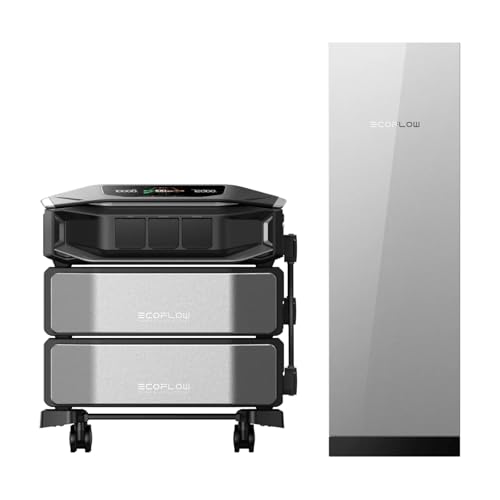 12,288 Wh · 12,000 W · Yes, from one unit · Up to 10 batteries (61 kWh) per inverter; 180 kWh with three (EcoFlow) · 5 years (panel 10 years) · Fridge 4.2–8.9 days; fridge + furnace fan 14–19 h; well pump 9.3–12 h running · Smart Home Panel 3 included; installed by an EcoFlow-authorized licensed electrician The whole-house kit: battery and 32-circuit panel together | 12,288 Wh | 12,000 W | Yes, from one unit | Up to 10 batteries (61 kWh) per inverter; 180 kWh with three (EcoFlow) | 5 years (panel 10 years) | Fridge 4.2–8.9 days; fridge + furnace fan 14–19 h; well pump 9.3–12 h running | Smart Home Panel 3 included; installed by an EcoFlow-authorized licensed electrician | $10,999 at Amazon as of Nov 9, 2026, 11:40 AM ET · DetailsProduct prices and availability are accurate as of the date/time indicated and are subject to change. Any price and availability information displayed on Amazon.com at the time of purchase will apply to the purchase of this product.In stockCheck price → |
Our verdictOur verdictResearched The same 12,288 Wh, 12,000 W DELTA Pro Ultra X, sold with EcoFlow's Smart Home Panel 3: 32 circuits you control from the app, a 200 A maximum rating, and switchover from grid to battery in under 20 ms. EcoFlow says the panel must be installed by its authorized installers, who are licensed electricians. Best for The whole-house kit: battery and 32-circuit panel together Good
Worth knowing
Who shouldn't buy it: Don't buy it if you rent, or just want to plug in a fridge: the battery alone does that. | ||||||||
5,017.6 Wh · 7,200 W · Yes, from one unit (split-phase) · 30 kWh with five extra batteries · 5 years · Fridge 1.7–3.6 days; fridge + furnace fan 5.5–7.8 h; well pump 3.8–5.1 h running · Plugs in on its own; the 10-circuit Smart Home Panel 10 is wired in by a qualified, licensed electrician A 5 kWh, 240V start with its own 10-circuit panel | 5,017.6 Wh | 7,200 W | Yes, from one unit (split-phase) | 30 kWh with five extra batteries | 5 years | Fridge 1.7–3.6 days; fridge + furnace fan 5.5–7.8 h; well pump 3.8–5.1 h running | Plugs in on its own; the 10-circuit Smart Home Panel 10 is wired in by a qualified, licensed electrician | $4,199 at Amazon as of Nov 9, 2026, 11:40 AM ET · DetailsProduct prices and availability are accurate as of the date/time indicated and are subject to change. Any price and availability information displayed on Amazon.com at the time of purchase will apply to the purchase of this product.In stockCheck price → |
Our verdictOur verdictResearched A floor-standing 5 kWh LFP battery with 7,200 W at 120V and 240V split-phase, sold with EcoFlow's 10-circuit Smart Home Panel 10, which switches over in 20 ms or less. EcoFlow says wiring the panel into your home "requires a qualified, licensed electrician." Add up to five 5 kWh batteries for 30 kWh. Best for A 5 kWh, 240V start with its own 10-circuit panel Good
Worth knowing
Who shouldn't buy it: Don't buy it if you want to carry it around or take it camping: at 119 lb it's made to stay put. | ||||||||
6,144 Wh · 7,680 W · Yes, split-phase · 30 kWh per unit; 90 kWh with three on one Power Dock · 5 years (Power Dock 10 years) · Fridge 2.1–4.5 days; fridge + furnace fan 6.8–9.5 h; well pump 4.7–6.2 h running · Through Anker's Smart Inlet Box (manual) or Power Dock (automatic); Anker says installation must be by qualified professionals Whole-home backup that starts big motors | 6,144 Wh | 7,680 W | Yes, split-phase | 30 kWh per unit; 90 kWh with three on one Power Dock | 5 years (Power Dock 10 years) | Fridge 2.1–4.5 days; fridge + furnace fan 6.8–9.5 h; well pump 4.7–6.2 h running | Through Anker's Smart Inlet Box (manual) or Power Dock (automatic); Anker says installation must be by qualified professionals | |
Our verdictOur verdictResearched A modular system: a 7,680 W power module and 6,144 Wh battery modules, up to five per unit, in an outdoor-rated NEMA 4 (IP66) case. Anker lists up to 37.2 kW of surge (155 LRA) per unit to start a 5-ton central air conditioner. It connects through Anker's manual Smart Inlet Box or its automatic 200 A Power Dock, which Anker says qualified professionals must install. Best for Whole-home backup that starts big motors Good
Worth knowing
Who shouldn't buy it: Don't buy it if you want something to plug in yourself this weekend: it's built to be installed with one of Anker's hubs. | ||||||||
 3,584 Wh · 3,600 W · Only with two units paired · 21.5 kWh per unit; 43 kWh with two · Up to 5 years (Jackery says the full term is for Jackery.com purchases) · Fridge 1.2–2.6 days; fridge + furnace fan 4–5.6 h; well pump 2.7–3.6 h running (120V pumps only) · Plugs in; Jackery's 120V 30A manual transfer switch for house circuits, installed by a qualified electrician The fridge-and-furnace system most homes need | 3,584 Wh | 3,600 W | Only with two units paired | 21.5 kWh per unit; 43 kWh with two | Up to 5 years (Jackery says the full term is for Jackery.com purchases) | Fridge 1.2–2.6 days; fridge + furnace fan 4–5.6 h; well pump 2.7–3.6 h running (120V pumps only) | Plugs in; Jackery's 120V 30A manual transfer switch for house circuits, installed by a qualified electrician | $1,875.64 at Amazon as of Nov 9, 2026, 11:40 AM ET · DetailsProduct prices and availability are accurate as of the date/time indicated and are subject to change. Any price and availability information displayed on Amazon.com at the time of purchase will apply to the purchase of this product.In stockCheck price → |
Our verdictOur verdictResearched 3,584 Wh of LFP and 3,600 W at 120V with 7,200 W surge, including a TT-30 outlet, and Battery Pack 3600 Plus add-ons up to 21.5 kWh. One unit is 120V only: 240V takes two units paired. Jackery sells a 120V 30A manual transfer switch for it, to run chosen house circuits. Best for The fridge-and-furnace system most homes need Good
Worth knowing
Who shouldn't buy it: Don't buy it if you have a 240V well pump: one unit can't run it. | ||||||||
5,024 Wh · 4,500 W · Yes, from one unit (L14-30) · 30 kWh with BP5000 batteries · 5 years · Fridge 1.7–3.6 days; fridge + furnace fan 5.5–7.8 h; well pump 3.8–5.1 h running · Plugs in; for house circuits, a compatible transfer switch or inlet box (it doesn't work with Anker's Home Power Panel) 5 kWh and 240V in one 97 lb box | 5,024 Wh | 4,500 W | Yes, from one unit (L14-30) | 30 kWh with BP5000 batteries | 5 years | Fridge 1.7–3.6 days; fridge + furnace fan 5.5–7.8 h; well pump 3.8–5.1 h running | Plugs in; for house circuits, a compatible transfer switch or inlet box (it doesn't work with Anker's Home Power Panel) | |
Our verdictOur verdictResearched 5,024 Wh of LFP with 4,500 W continuous and 8,000 W peak at 120V and 240V from one unit, 3 kW of solar input, and BP5000 batteries to reach 30 kWh. Anker says it doesn't work with its Home Power Panel: to run chosen circuits it connects through a compatible transfer switch or inlet box. Best for 5 kWh and 240V in one 97 lb box Good
Worth knowing
Who shouldn't buy it: Don't buy it if you need it this week: check stock before you plan around it. | ||||||||
 7,168 Wh · 3,600 W · Only with two units paired · 21.5 kWh per unit; 43 kWh with two · Up to 5 years (Jackery says the full term is for Jackery.com purchases) · Fridge 2.4–5.2 days; fridge + furnace fan 7.9–11 h; well pump 5.4–7.2 h running (120V pumps only) · Plugs in; Jackery's 120V 30A manual transfer switch for house circuits, installed by a qualified electrician Double the 3600 Plus's capacity from day one | 7,168 Wh | 3,600 W | Only with two units paired | 21.5 kWh per unit; 43 kWh with two | Up to 5 years (Jackery says the full term is for Jackery.com purchases) | Fridge 2.4–5.2 days; fridge + furnace fan 7.9–11 h; well pump 5.4–7.2 h running (120V pumps only) | Plugs in; Jackery's 120V 30A manual transfer switch for house circuits, installed by a qualified electrician | $3,199 at Amazon as of Nov 9, 2026, 11:40 AM ET · DetailsProduct prices and availability are accurate as of the date/time indicated and are subject to change. Any price and availability information displayed on Amazon.com at the time of purchase will apply to the purchase of this product.In stockCheck price → |
Our verdictOur verdictResearched The HomePower 3600 Plus with one 3,584 Wh Battery Pack 3600 Plus, for 7,168 Wh at 3,600 W. Still 120V only from one unit, with room for four more packs. Best for Double the 3600 Plus's capacity from day one Good
Worth knowing
Who shouldn't buy it: Don't buy it if a day of fridge and lights is enough: the 3600 Plus alone covers it. | ||||||||
 7,168 Wh · 4,000 W · Yes, from one unit: 4,000 W at 240V, 2,000 W at 120V · 21.5 kWh per unit; 43 kWh with two · Up to 5 years (Jackery says the full term is for Jackery.com purchases) · Fridge 2.4–5.2 days; fridge + furnace fan 7.9–11 h; well pump 5.4–7.2 h running · Jackery's Smart Transfer Switch (Jackery: professional electricians must install it) or its manual switch for the Pro Max 240V from one unit for a well pump, at 74 lb | 7,168 Wh | 4,000 W | Yes, from one unit: 4,000 W at 240V, 2,000 W at 120V | 21.5 kWh per unit; 43 kWh with two | Up to 5 years (Jackery says the full term is for Jackery.com purchases) | Fridge 2.4–5.2 days; fridge + furnace fan 7.9–11 h; well pump 5.4–7.2 h running | Jackery's Smart Transfer Switch (Jackery: professional electricians must install it) or its manual switch for the Pro Max | $3,159 at Amazon as of Nov 9, 2026, 11:40 AM ET · DetailsProduct prices and availability are accurate as of the date/time indicated and are subject to change. Any price and availability information displayed on Amazon.com at the time of purchase will apply to the purchase of this product.In stockCheck price → |
Our verdictOur verdictResearched The 240V member of Jackery's HomePower line: 4,000 W at 240V from one unit, with 8,000 W surge, but only 2,000 W for 120V appliances. This listing adds one Battery Pack for 7,168 Wh. It works with Jackery's Smart Transfer Switch, which Jackery says professional electricians must install. Best for 240V from one unit for a well pump, at 74 lb Good
Worth knowing
Who shouldn't buy it: Don't buy it if most of what you'll run is 120V: the 3600 Plus gives 3,600 W at 120V. | ||||||||
5,120 Wh · 7,200 W · Yes, from one unit · 35.8 kWh with FP5000-48V batteries · Given as both 3+2 and 5+1 years on PECRON's page · Fridge 1.7–3.7 days; fridge + furnace fan 5.6–7.9 h; well pump 3.9–5.2 h running · Plugs in; PECRON's page names no transfer switch or home panel 7,200 W at 240V from a single box | 5,120 Wh | 7,200 W | Yes, from one unit | 35.8 kWh with FP5000-48V batteries | Given as both 3+2 and 5+1 years on PECRON's page | Fridge 1.7–3.7 days; fridge + furnace fan 5.6–7.9 h; well pump 3.9–5.2 h running | Plugs in; PECRON's page names no transfer switch or home panel | |
Our verdictOur verdictResearched 5,120 Wh of LFP and 7,200 W at 240V (3,600 W from the 120V outlets) in one 124 lb unit, with up to 6,400 W of solar input and FP5000-48V batteries to reach 35.8 kWh. PECRON's page doesn't name a transfer switch or home panel, so ask an electrician what will connect it to your circuits. Best for 7,200 W at 240V from a single box Good
Worth knowing
Who shouldn't buy it: Don't buy it if you want a home panel made by the same company. | ||||||||
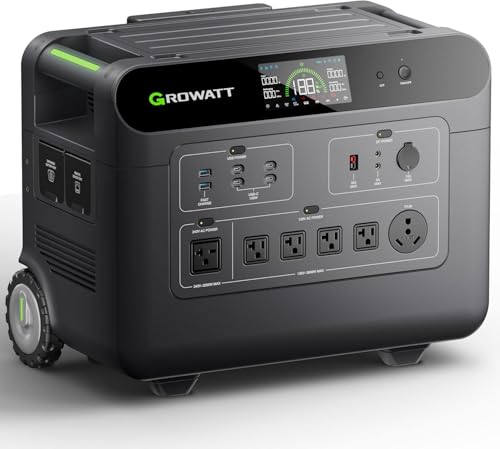 3,686 Wh · 3,600 W · Only with two units and Growatt's split-phase connector · 36 kWh (Growatt's figure; per-unit limit not stated) · 5 years · Fridge 1.2–2.7 days; fridge + furnace fan 4.1–5.7 h; well pump 2.8–3.7 h running (120V pumps only) · Plugs in; Growatt's pages name no home panel A 3.7 kWh unit that pairs up for 240V | 3,686 Wh | 3,600 W | Only with two units and Growatt's split-phase connector | 36 kWh (Growatt's figure; per-unit limit not stated) | 5 years | Fridge 1.2–2.7 days; fridge + furnace fan 4.1–5.7 h; well pump 2.8–3.7 h running (120V pumps only) | Plugs in; Growatt's pages name no home panel | $1,198.98 at Amazon as of Nov 9, 2026, 11:40 AM ET · DetailsProduct prices and availability are accurate as of the date/time indicated and are subject to change. Any price and availability information displayed on Amazon.com at the time of purchase will apply to the purchase of this product.In stockCheck price → |
Our verdictOur verdictResearched 3,686 Wh of LFP (Amazon rounds it to 3,600 Wh) and 3,600 W at 120V, with Growatt's Watt+ mode boosting to 4,500 W, 2,000 W of solar input and a 15 ms switchover. Two units with Growatt's split-phase connector give 240V and 7,200 W. Best for A 3.7 kWh unit that pairs up for 240V Good
Worth knowing
Who shouldn't buy it: Don't buy it if you need 240V from one box. | ||||||||
ⓘ As an Amazon Associate, PreparedStates earns from qualifying purchases. We may earn a commission when you buy through our links. When two products are close, commission can decide which one we pick. A clearly better product always wins. Amazon prices come from Amazon's own product data and can change at any time.
Before you buy
Size it to your essentials, not the whole house.
Our home battery guide's winter example (fridge, gas furnace fan, well and sump pumps, CPAP, Wi-Fi, lights and phones) comes to about 6.6 to 9.8 kWh a day; the runtime column shows how each system handles the big three.
Check output as well as capacity.
Capacity (kWh) decides how long it lasts; output (W) decides what runs at once. DTE Energy gives well and sump pumps a starting factor of 3, so a 1,000 W pump wants about 3,000 W for a moment.
Check 240V.
A 240V well pump or other 240V appliance needs a system with 240V. Some here give it from one unit; the Jackery HomePower 3600 Plus and Growatt HELIOS 3600 need two units paired.
Plan the connection.
Plugging appliances into the battery needs no installer. Running house circuits takes the maker's panel or a transfer switch, so the battery can't feed power back onto the utility lines. EcoFlow, Anker, Goal Zero and Jackery (for its Smart Transfer Switch) say a licensed or qualified electrician or professional installs theirs; OSHA's rule for generators is a qualified electrician with a transfer switch. Your local code may require a permit.
Decide where it lives.
NFPA 855 allows home batteries in attached and detached garages, utility closets and storage spaces, and on outside walls or outdoors at least 3 feet from doors and windows, with limits on size; your local building and fire officials decide what applies.
Read the warranty terms.
Most here offer 5 years; Jackery says its full 5 years is for Jackery.com purchases, and PECRON's page states its warranty two ways.
We verify every product's specifications against at least two independent sources, re-check its US price and stock on a schedule where we can track it automatically, and cross-check safety-relevant claims against official guidance. Every review is labeled Researched or Used and reviewed by us: where we've bought a product, or been sent it free, and used it ourselves, its review says which; where we haven't, our verdict is a considered spec-and-evidence comparison, not a hands-on test. When two products are close, commission can decide which one we pick. A clearly better product always wins. Read our full methodology →
Related gear comparisons
Guides that go with this
How long a home battery backup runs a typical US house, or just the essentials, in an outage: worked from EIA …
A gas furnace needs 120V for its blower and controls. What it draws, how long a 1,000 or 2,000 Wh station runs…
Most rooftop solar shuts down when the grid does. Why, what a battery or backup inverter changes, what it cost…
How to charge and store lithium-ion batteries at home, using the wording of CPSC, NFPA and Ready.gov: chargers…
Common questions
How long will a whole-home battery run my house?
At average use, not long. The EIA's 2022 figure works out to about 29.6 kWh a day per home. On the method in our guide, the 12,288 Wh DELTA Pro Ultra X has about 9.4 kWh to give, so about 7 to 8 hours of average use, or 14 to 19 hours of just a fridge and furnace fan.
Do I need 240V?
Only if something you need in an outage runs on 240V, such as many well pumps. Check the appliance's nameplate or breaker: a double breaker usually means 240V. A fridge, furnace fan, lights and outlets are 120V.
Do I need an electrician?
Not to plug appliances into the battery. To run house circuits, yes: EcoFlow says its Smart Home Panel 3 and Smart Gateway "must be installed by EcoFlow authorized installers and licensed electricians," Anker says its Power Dock installation "must be performed by qualified professionals," and Jackery says professional electricians must install its Smart Transfer Switch. OSHA: never attach a generator directly to a building's electrical system "unless a qualified electrician has properly installed the generator with a transfer switch."
Battery or standby generator?
A battery is silent, gives off no exhaust and, with an automatic panel, switches over in milliseconds, but stops when it's empty. A standby generator runs as long as its natural gas or propane lasts. For outages longer than a day or two, a generator, or a battery with solar, keeps going. Ready.gov says generators must be used only outdoors, at least 20 feet from windows, doors and attached garages. A permanently installed standby generator is placed by its installer to the maker's and local code's clearances.
Can I keep it in my garage?
Usually. NFPA 855 permits home batteries in attached and detached garages, utility closets and storage spaces, and outdoors at least 3 feet from doors and windows, with limits on unit size and total stored energy. Your local building and fire officials decide, and follow the maker's manual.