
Is FEMA telling Americans to expect less help in a disaster? What it means for your home
Is FEMA telling Americans to expect less help? Its message is to states: build your own capacity and rely less on federal grants. We found no new rule cutting household aid.
By Tom Calder · Updated November 12, 2026 · Sourced to FEMA, the Federal Register (Executive Order 14239), Ready.gov and CDC
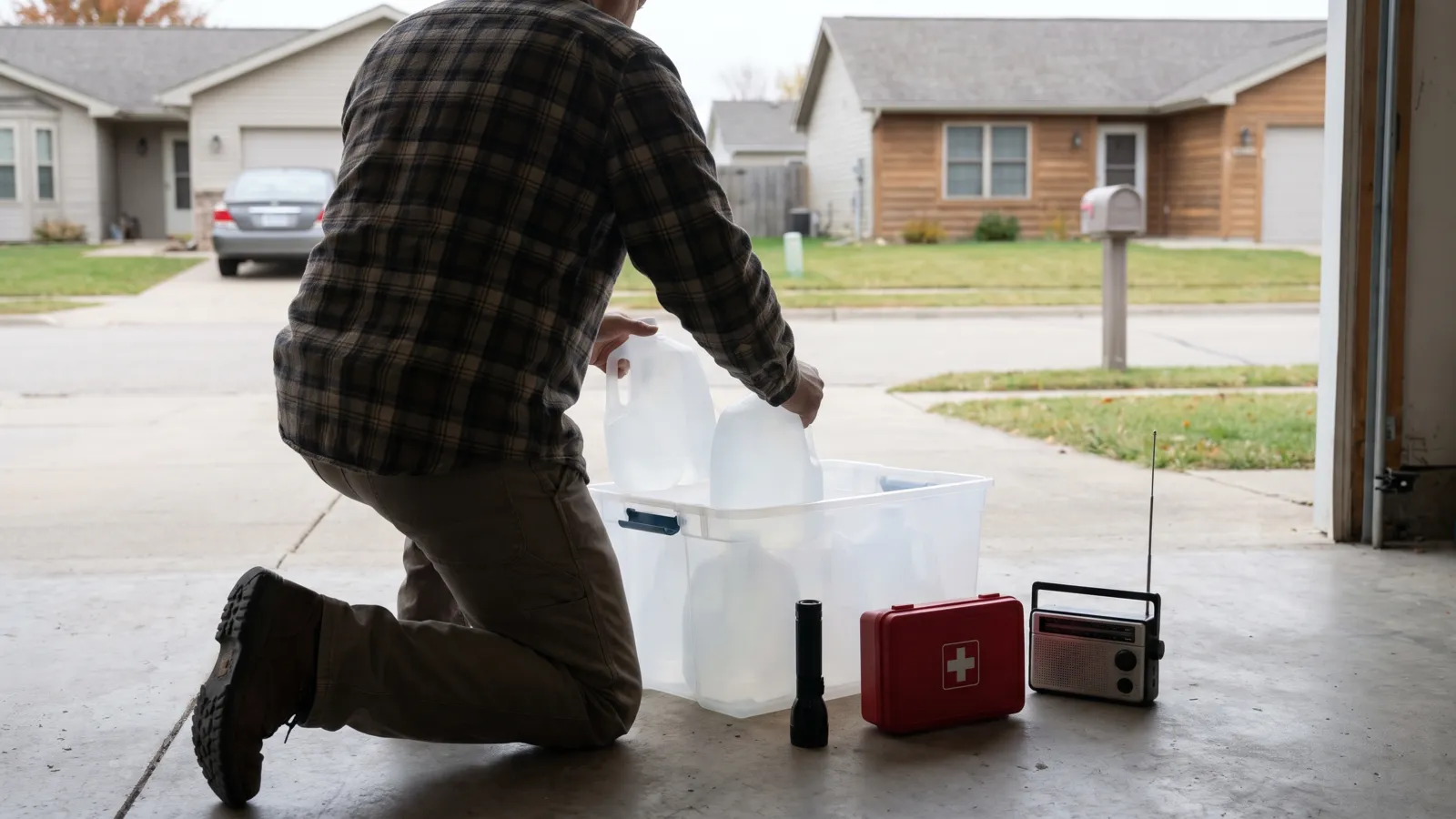
“FEMA tells states to prepare for a smaller federal role in disasters”
Narrower than the headline: the message is to states and local governments. We found no published rule cutting household aid.
- Not in so many words. FEMA's written message is to states and local governments, not to households: it wants them to build their own emergency capacity and rely less on federal grants. In the FEMA and White House documents we read, we found no new rule or date that changes what a household can apply for after a declared disaster.
- On October 16, 2026, FEMA said America's emergency management system "is strongest when it is locally led, state managed and federally supported," and that "many states have relied excessively on federal grants."
- A March 2025 executive order set the same direction, including a bigger role for "individuals."
- For your home, the advice hasn't changed. Ready.gov says "you may need to survive on your own for several days" after an emergency. CDC says to store at least 1 gallon of water per person, per day for 3 days.
- You don't need to buy anything new because of this headline.
The three things most homes are missing
Our top pick from each comparison
as of Nov 13, 2026, 6:44 PM ET · Details
Product prices and availability are accurate as of the date/time indicated and are subject to change. Any price and availability information displayed on Amazon.com at the time of purchase will apply to the purchase of this product.
as of Nov 13, 2026, 6:44 PM ET · Details
Product prices and availability are accurate as of the date/time indicated and are subject to change. Any price and availability information displayed on Amazon.com at the time of purchase will apply to the purchase of this product.
as of Nov 13, 2026, 6:44 PM ET · Details
Product prices and availability are accurate as of the date/time indicated and are subject to change. Any price and availability information displayed on Amazon.com at the time of purchase will apply to the purchase of this product.If you already have these, you're most of the way there. As an Amazon Associate, PreparedStates earns from qualifying purchases. We may earn a commission when you buy through our links. When two products are close, commission can decide which one we pick. A clearly better product always wins.
FEMA warnings 2026: what FEMA actually said
FEMA's clearest written statement is an October 16, 2026 press release about a study of emergency management agencies. It says the study "confirms that America's emergency management system is strongest when it is locally led, state managed and federally supported." FEMA Administrator Cameron Hamilton is quoted: "FEMA is focused on empowering state, local, tribal and territorial governments to lead through all phases of emergency management."
The release goes further: "For decades, many states have relied excessively on federal grants to maintain emergency response capabilities," adding that this was "to their own detriment." It says states, tribal nations, territories and local jurisdictions "should consistently invest in their own emergency management capabilities," and links this to the President's America First Resilience Strategy, which it says "calls for state and local governments to develop and maintain capacity to effectively manage incidents affecting their communities."
Hamilton also said FEMA "will continue to partner with officials at every level of government, empowering them to build local capabilities and invest in resilience efforts."
Where the direction comes from
The policy was set in writing in March 2025. Executive Order 14239, "Achieving Efficiency Through State and Local Preparedness," signed on March 18, 2025, says preparedness "is most effectively owned and managed at the State, local, and even individual levels, supported by a competent, accessible, and efficient Federal Government."
Its policy section says "State and local governments and individuals play a more active and significant role in national resilience and preparedness." It ordered a review of national preparedness and response policies to "reformulate the process and metrics for Federal responsibility" and "move away from an all-hazards approach." So the headline's direction is real and written down. What it describes is a shift in who builds and pays for emergency capacity, mainly between Washington and the states.
What is confirmed, and what is not
Confirmed: FEMA and the executive order say states and local governments should invest in their own emergency capabilities and lean less on federal grants. FEMA's study, by its account, found that local emergency management agencies "are typically understaffed and underfunded."
Not confirmed: in the FEMA and White House documents we read, we found no new rule, notice or start date that changes how a disaster declaration works or what a household can apply for. News reports describe spoken remarks to state officials; FEMA has not published them in anything we found, so we quote only what was put in writing. That doesn't mean nothing will change: it means no change to household aid is published in what we read. We will update this page if one is.
Why the first days were already yours
The US system was built bottom up long before this debate. FEMA's own description of the process: "When a disaster strikes, local government officials review the damage to determine the extent of the incident and its impact. If the state, Tribal Nation, or territory determine they need federal assistance, they submit a request for a federal disaster declaration." Even after a declaration, FEMA says "state and local officials lead recovery efforts."
And FEMA's household program was never meant to make people whole. FEMA says its Individuals and Households Program "is not a substitute for insurance and cannot compensate for all losses caused by a disaster." Our guide to how the US responds to a disaster sets out the full chain: local, then state, then FEMA.
What it means for your home
The official household advice is the same as it was before this headline. Ready.gov: "After an emergency, you may need to survive on your own for several days. Being prepared means having your own food, water and other supplies to last for several days." Its kit list starts with "one gallon per person per day for several days, for drinking and sanitation" and "at least a several-day supply of non-perishable food."
CDC is more specific on water: "Store at least 1 gallon of water per person, per day for 3 days," and "Try to store a 2-week supply if possible." Ready.gov's plan page asks four questions: "How will I receive emergency alerts and warnings? What is my shelter plan? What is my evacuation route? What is my family/household communication plan?" Our family emergency plan answers them, and the kit builder sizes the list to your household. Your state page links your state's emergency management agency.
- Water: at least 1 gallon per person, per day for 3 days, a 2-week supply if possible (CDC)
- Food: at least a several-day supply of non-perishable food (Ready.gov)
- A battery-powered or hand crank radio and a NOAA Weather Radio with tone alert (Ready.gov)
- A household plan: alerts, shelter, evacuation route, how you'll reach each other (Ready.gov)
- Insurance that matches your real risks: FEMA says its aid is not a substitute for insurance
What not to do
Don't panic-buy or stockpile months of supplies because of this headline. Nothing in what FEMA wrote changes the household advice: several days of water, food and basic supplies, and a plan. Most of that is already in an ordinary home.
Don't read the headline as "FEMA won't come." What FEMA put in writing is about states building capacity and relying less on federal grants. And don't count on federal aid to cover your losses in any case: FEMA's own page says its household assistance "cannot compensate for all losses." Checking your home or renters policy, including whether flood is covered, does more than any purchase. Our storm damage guide explains who pays for what.
We will update this check if FEMA publishes a rule or notice changing how disaster declarations work or what its Individuals and Households Program covers, if the White House or Congress sets a date for changes to federal disaster aid, or if FEMA publishes the remarks to state officials that news reports describe.
Common questions
Is FEMA telling Americans to expect less help in a disaster?
Not in what FEMA has put in writing. Its October 16, 2026 statement is aimed at states and local governments: build your own emergency capacity and rely less on federal grants. In the documents we read, we found no new rule changing what a household can apply for after a declared disaster. Ready.gov's advice to plan for several days on your own is unchanged.
Are there FEMA warnings for 2026 about a smaller federal role?
FEMA said on October 16, 2026 that the system is strongest when it is "locally led, state managed and federally supported" and that many states have relied excessively on federal grants. That is a policy direction for governments, not a warning to households or an emergency alert.
Has FEMA changed disaster aid for households?
We found no published change in the FEMA and White House documents we read. FEMA says its Individuals and Households Program is not a substitute for insurance and cannot compensate for all losses, which was true before this headline. We will update this page if a change is published.
Who helps first in a disaster?
Local officials and responders. FEMA says local government reviews the damage first, and the state, Tribal Nation or territory asks for a federal declaration if it needs federal help. Even after a declaration, state and local officials lead recovery.
How many days of supplies should my household have?
Ready.gov says you may need to survive on your own for several days and lists one gallon of water per person per day and at least a several-day supply of non-perishable food. CDC says to store at least 1 gallon of water per person, per day for 3 days, and a 2-week supply if possible.
Sources (7)
- FEMA: First-of-its-Kind Study Provides Insights into Challenges Facing Emergency Management Agencies Across the Nation (HQ-26-166, Oct 16, 2026)
- Federal Register: Executive Order 14239, Achieving Efficiency Through State and Local Preparedness (Mar 18, 2025)
- FEMA: How FEMA works
- FEMA: Individuals and Households Program
- Ready.gov: Build a kit
- Ready.gov: Make a plan
- CDC: How to create an emergency water supply
Get one calm email when it matters
Seasonal checklists and gear price drops. No spam, unsubscribe any time.
Keep reading
 How to make a family emergency plan: steps, questions and a communication planHow to make a family emergency plan: Ready.gov's four steps, the questions to ask, a communication plan, meeti…
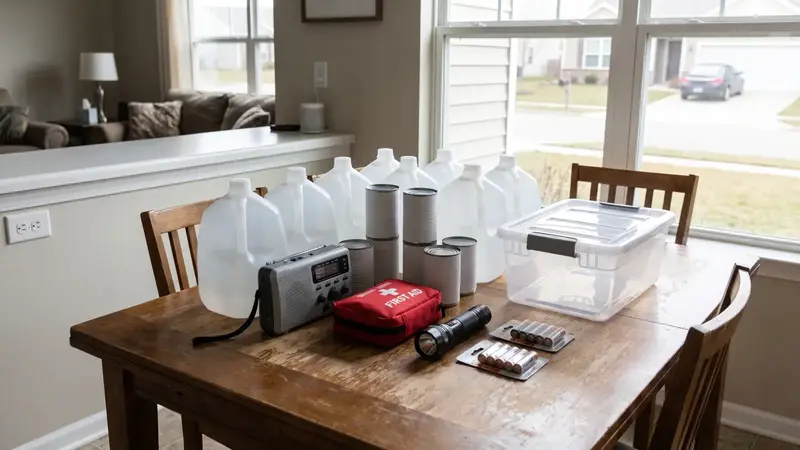 Emergency kit checklist: what to include, how much to keep and where to store itA plain-English emergency kit checklist built on Ready.gov's basic kit and extra items, with how many days of …
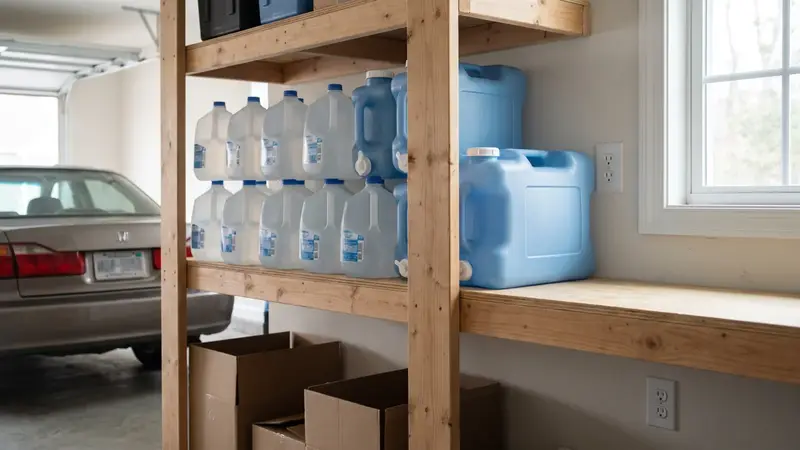 How much water to store for an emergency: per person, per pet and for how longHow much water to store for an emergency: 1 gallon per person per day, pets, which containers to use, when to …