
Will there be a shortage of water? What the Drought Monitor shows and how much to store
Will there be a shortage of water? We found no nationwide shortage notice. 43.98% of the lower 48 is in drought, down from 49.49% a week before. How much to store.
By Tom Calder · Updated November 11, 2026 · Sourced to the US Drought Monitor (National Drought Mitigation Center, USDA and NOAA), NOAA's National Centers for Environmental Information and Drought.gov, EPA, CDC, USGS and Ready.gov
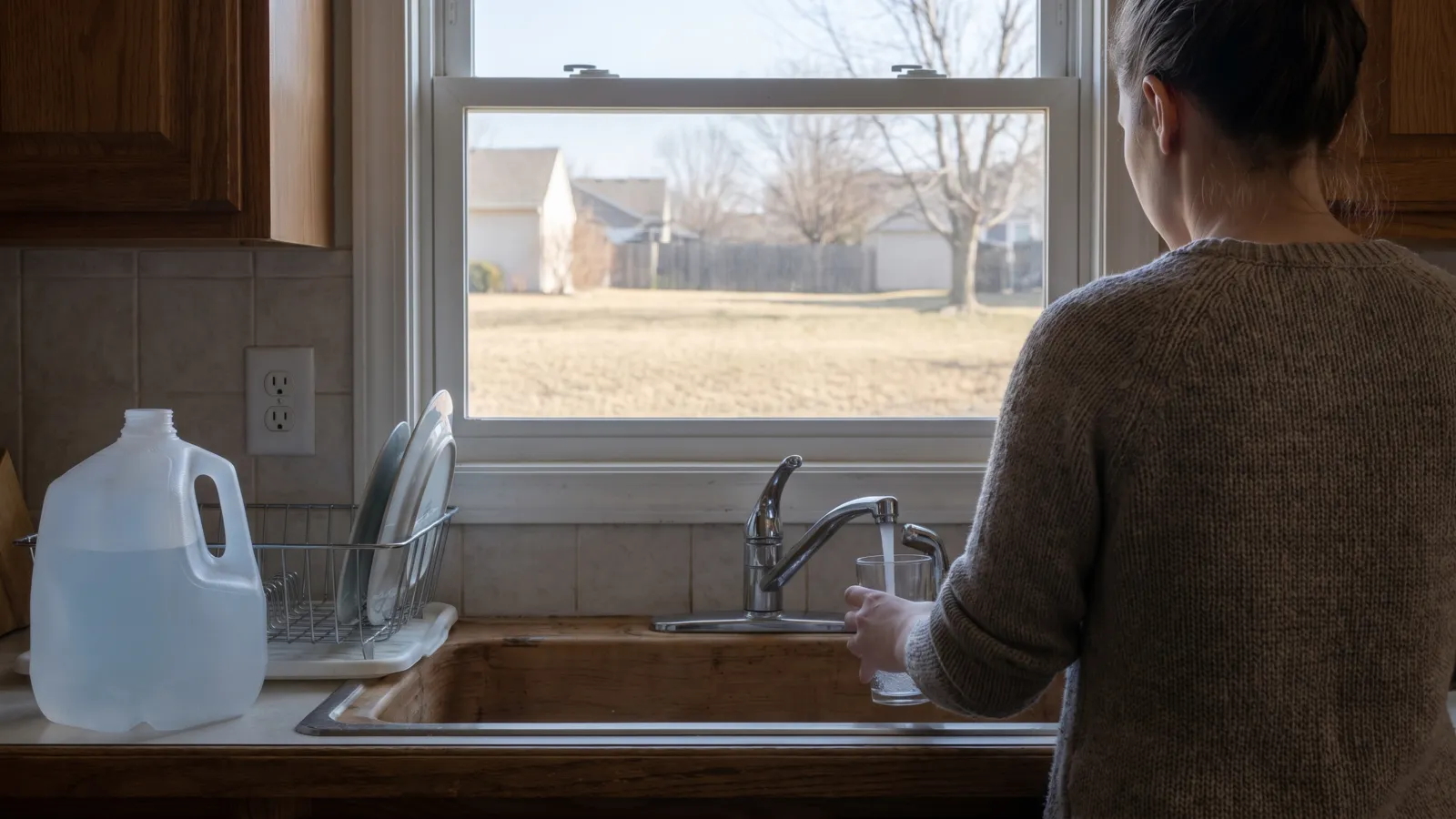
“Will there be a shortage of water?”
We found no nationwide shortage notice. Drought is local, and easing in the Southwest.
- We found no nationwide water shortage notice from EPA or Ready.gov. Shortages are local: a utility, town or private well running low in a drought, with restrictions set by your state or local government.
- On the US Drought Monitor map for November 3, 2026, 43.98% of the lower 48 was in moderate drought or worse, down from 49.49% a week earlier and 59.38% on September 29. A year earlier it was 43.71%.
- The Monitor says drought eased in the Southwest and Great Basin and expanded in parts of the Mississippi and Ohio valleys, the Mid-Atlantic and New England.
- A drought map measures dry land, not your tap. About 86 percent of Americans get their water from a public supplier (USGS), and that supplier decides when to ask you to cut back.
- Store at least 1 gallon of water per person, per day for 3 days, and a 2-week supply if you can (CDC). Tap water in clean containers will do; there is no need to buy anything.
The three things most homes are missing
Our top pick from each comparison
as of Nov 13, 2026, 6:44 PM ET · Details
Product prices and availability are accurate as of the date/time indicated and are subject to change. Any price and availability information displayed on Amazon.com at the time of purchase will apply to the purchase of this product.
as of Nov 13, 2026, 6:44 PM ET · Details
Product prices and availability are accurate as of the date/time indicated and are subject to change. Any price and availability information displayed on Amazon.com at the time of purchase will apply to the purchase of this product.
as of Nov 13, 2026, 6:44 PM ET · Details
Product prices and availability are accurate as of the date/time indicated and are subject to change. Any price and availability information displayed on Amazon.com at the time of purchase will apply to the purchase of this product.If you already have these, you're most of the way there. As an Amazon Associate, PreparedStates earns from qualifying purchases. We may earn a commission when you buy through our links. When two products are close, commission can decide which one we pick. A clearly better product always wins.
Will there be a shortage of water? What people are asking
"Will there be a shortage of water" is a common question, not a headline from one outlet. We found no single viral claim behind it; it comes up when drought maps, dry wells and watering bans are in the news, as they were in parts of the country this fall.
So we checked the two things the question mixes together: how much of the country is in drought right now, from the US Drought Monitor, and what drought actually does to the water in your home, from EPA, CDC and USGS. We looked for a nationwide water shortage notice on the EPA and Ready.gov pages we read, and found none. That is what we found, not proof that no local shortage exists anywhere: local restrictions are real, and we cover them below.
What the Drought Monitor shows this week
The US Drought Monitor is a weekly map produced by the National Drought Mitigation Center at the University of Nebraska-Lincoln with USDA and NOAA. Drought.gov says it "is released every Thursday morning, with data valid through Tuesday at 7am Eastern." The latest map is dated Tuesday, November 3, 2026, and was released on Thursday, November 5.
On that map, 43.98% of the contiguous United States was in moderate drought (D1) or worse, down 5.51 points from 49.49% on October 27 and down from 59.38% on September 29, the high of this fall. For balance, 8.20% was in extreme drought (D3) or worse, and the 2026 high was 62.78% on April 21. A year earlier, on the November 4, 2025 map, the figure was 43.71%, so the lower 48 is about where it was this time last year, though extreme drought or worse covers 8.20% against 3.82% then (our reading of the Drought Monitor's data).
The Monitor's summary for the week says "The very wet fall continued across the southwest quarter of the contiguous U.S. to end October" and that "a broad 1-category improvement was made to the Southwest and Great Basin." It adds that "lingering long-term drought remains designated for parts of these areas." In the other direction, "Drought expanded and intensified for parts of the Lower to Middle Mississippi Valley, Ohio Valley, Mid-Atlantic, and New England."
On the Monitor's data, Minnesota fell from 62.59% to 27.78% of its area in drought in a week and Utah from 91.17% to 66.22%. Kentucky rose from 16.25% to 37.02%. All of Maine (100%) is in drought, and Arkansas has 96.53% of its area in drought and 82.1% in extreme drought or worse. Alaska and Hawaii, the Monitor says, "remain drought-free," while it reports exceptional drought on St. Thomas and St. John in the US Virgin Islands. Every state's figure is on our US drought tracker, which reads the Monitor twice a day. The next map is due on Thursday, November 12.
Drought is not the same as a tap-water shortage
The Drought Monitor measures conditions on the land. Its inputs include "precipitation, streamflow, reservoir levels, temperature and evaporative demand, soil moisture and vegetation health," blended with reports from local experts. Its percentages are shares of land area, not of people, and a county in drought can still have full reservoirs or a deep aquifer behind its water system.
USGS says public suppliers "withdraw water from rivers, lakes, reservoirs, and wells and then deliver it to our homes, businesses, and schools," and that "about 86 percent" of the US population gets its water this way. Whether your tap is affected depends mainly on that supplier's sources and storage, not on the color of your county on a national map.
Drought can still reach the tap. CDC lists "compromised quantity and quality of drinking water" among the possible public health effects of drought, and EPA says "Prolonged drought can deplete groundwater aquifers that many communities rely on for drinking water and irrigation." When supplies get tight, one common response is outdoor watering limits: EPA's WaterSense program lists "Increased summer watering restrictions to manage shortages" among the consequences of strained supplies.
Where drought has reached water supplies this year
The clearest recent example is the Northeast. NOAA's monthly drought report for September 2026, published on October 14, carries the regional climate centers' summary: record-low streamflows and groundwater levels in Maine, Maryland and Massachusetts, "dry residential wells in Maine," and "municipal reservoir storage dropping to 20% capacity in Cambridge, Massachusetts, triggering mandatory water restrictions across several states." NOAA's October report was not yet published when we checked on November 11.
Maine is in the worst shape in the Northeast. The Monitor's November 3 summary says that, "Due in part to the lack of recovery from the 2025 drought," 28-day streamflows are in the lowest 5th percentile, which "supports the addition of D3 in the North Woods of Maine." In the South, it reports "poor to very poor pastures along with dry farm ponds" in Mississippi: a farm and livestock problem first, not a household tap-water one.
Households on private wells can be more exposed. CDC says "People who get their drinking water from private wells may be at higher risk for drought-related infectious disease." EPA lists "a change in your water quality (i.e. odor, color, taste)" among the reasons to test a private well, and says your local health department "may provide private well testing for free." For making water safe in an emergency, see our guide to making water safe.
What it means for your home: how much water to store
The emergency water advice is the same in a drought year as in any other. CDC says: "Store at least 1 gallon of water per person, per day for 3 days," for drinking, cooking and brushing teeth, and "Try to store a 2-week supply if possible." For a household of four that is 12 gallons for 3 days and 56 gallons for 2 weeks (our arithmetic). CDC says to consider storing more for pregnant women, people who are sick, pets, or a hot climate.
In a drought, the thing that matters day to day is your local rule, not your stockpile. Ready.gov says: "Always observe state and local restrictions on water use during a drought," and to contact your state or local government for current information. It also says "The best way to prepare for a drought is to conserve water." EPA's WaterSense says the average American family uses more than 300 gallons of water per day at home, and outdoor use is 30 percent of household use nationally, so lawns and gardens are where the big savings are.
- Store 1 gallon per person, per day: at least 3 days, 2 weeks if you can (CDC)
- Replace water you bottled yourself every 6 months (CDC, Ready.gov)
- Follow your state's and utility's watering rules during a drought (Ready.gov)
- Never ration drinking water unless ordered to by authorities (Ready.gov)
- On a private well: test if the water's odor, color or taste changes; your local health department may test it for free (EPA)
What not to do
You don't need to buy bottled water because of a drought map. CDC calls unopened, commercially bottled water "the safest and most reliable source of water in an emergency," and also tells people filling their own to "Use clean containers to collect and store your water," so you can fill containers from the tap today at no cost. Our water storage guide explains containers and rotation, and our stockpile guide sizes food and water together.
Don't ration the water you drink. Ready.gov says: "Never ration drinking water unless ordered to do so by authorities. Drink the amount you need today and try to find more for tomorrow." Cutting back on lawns, long showers and half-empty dishwasher loads is what drought conservation means. And don't read a national percentage as a forecast for your town: it is a map of dry land this week, and it changes every Thursday.
We will update this check if a federal agency issues a water shortage notice aimed at the public, if NOAA's October drought report or the coming weekly Drought Monitor maps show a large change, or if Ready.gov or CDC change their water storage advice. A single town's watering restrictions belong on that town's utility page rather than here.
Common questions
Will there be a shortage of water?
We found no nationwide water shortage notice from EPA or Ready.gov. Shortages in the US are local: a utility or a private well running low in a drought, as happened in parts of New England this fall. On the November 3, 2026 Drought Monitor map, 43.98% of the lower 48 was in drought, down from 49.49% a week earlier. Your utility or local government sets any restrictions.
How much of the US is in drought right now?
On the US Drought Monitor map for November 3, 2026, 43.98% of the contiguous US was in moderate drought or worse and 8.20% in extreme drought or worse. A week earlier the drought figure was 49.49%, and a year earlier 43.71%. The Monitor is released every Thursday; our drought tracker shows every state.
Does drought mean my tap water will run out?
Not by itself. The Drought Monitor maps dry land, not water systems. About 86 percent of Americans get their water from a public supplier that draws on rivers, lakes, reservoirs and wells (USGS), and whether supplies get tight depends on those sources. When they do, one common response is outdoor watering restrictions (EPA WaterSense). Ready.gov says to follow state and local restrictions during a drought.
How much water should I store?
CDC says to store at least 1 gallon of water per person, per day for 3 days, and to try to store a 2-week supply. For four people that is 12 gallons for 3 days or 56 gallons for 2 weeks (our arithmetic). CDC says to consider storing more for pregnant women, people who are sick, pets or a hot climate. Clean containers filled from the tap work; replace that water every 6 months.
Is my private well at risk in a drought?
Wells can run low in a long drought: NOAA's September report notes dry residential wells in Maine. CDC also says people who get their drinking water from private wells may be at higher risk for drought-related infectious disease. EPA says to test your well if you notice a change in your water's odor, color or taste, and that your local health department may provide private well testing for free.
Sources (11)
- Drought.gov (NOAA NIDIS): U.S. Drought Monitor
- NOAA NCEI: Drought report, September 2026 (published Oct 14, 2026)
- USGS Water Science School: Public Supply Water Use
- CDC: Drought and Your Health
- CDC: Health Implications of Drought
- CDC: How to Create an Emergency Water Supply
- EPA: Drought Resilience and Water Conservation
- EPA WaterSense: How We Use Water
- EPA: Protect Your Home's Water (private wells)
- Ready.gov: Drought
- Ready.gov: Water
Get one calm email when it matters
Seasonal checklists and gear price drops. No spam, unsubscribe any time.
Keep reading
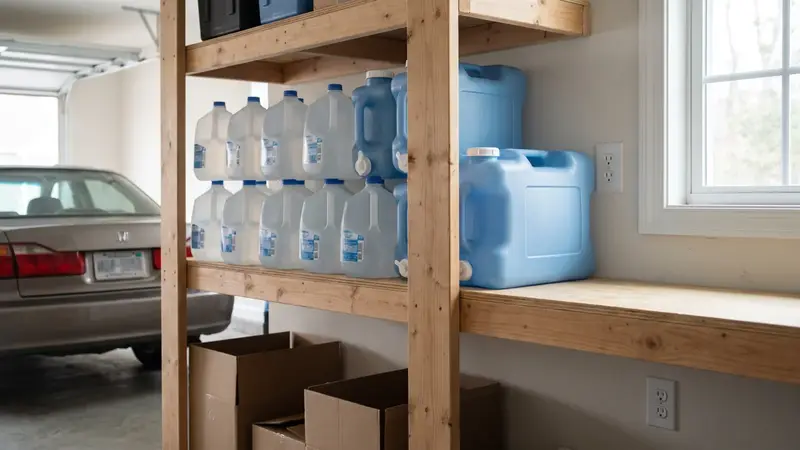 How much water to store for an emergency: per person, per pet and for how longHow much water to store for an emergency: 1 gallon per person per day, pets, which containers to use, when to …
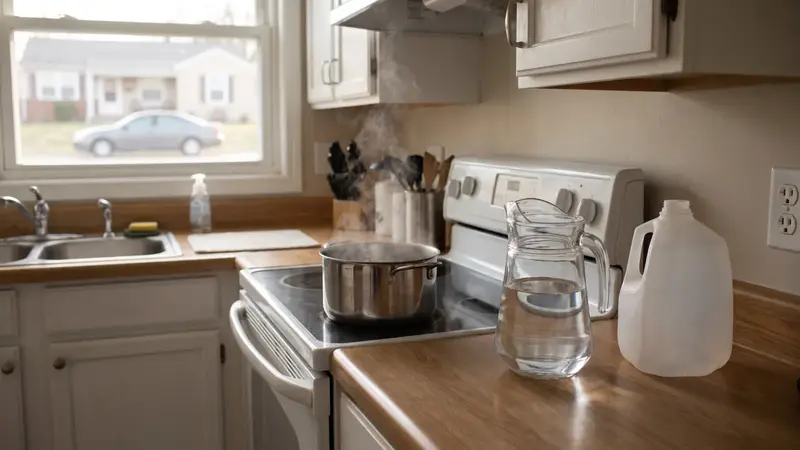 How to make water safe to drink in an emergency: boiling, bleach, filters and tabletsHow to make water safe to drink in an emergency: boiling times, exact unscented bleach amounts, what filters a…
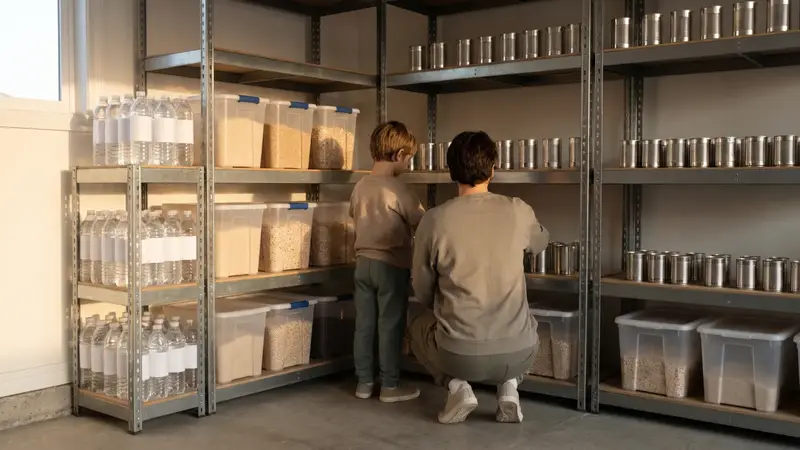 How to stockpile food and water for your household: what the official lists sayHow to stockpile food and water for your household: Ready.gov says several days, the Red Cross says 2 weeks. W…
 Boil water advisory: what to do, how to boil water and what is safe to useWhat a boil water advisory means, how long to boil water, what is safe for drinking, teeth, ice, formula, dish…