
Was the Microsoft outage and FAA ground stop a cyberattack? What officials have said
DHS says it has seen zero evidence of a cyberattack. The FAA blames a communications failure. Microsoft's outage ended hours before the FAA's began.
By Tom Calder · Updated November 14, 2026 · Sourced to the Department of Homeland Security, the Department of Transportation, the FAA, the White House, CISA, Microsoft and Ready.gov
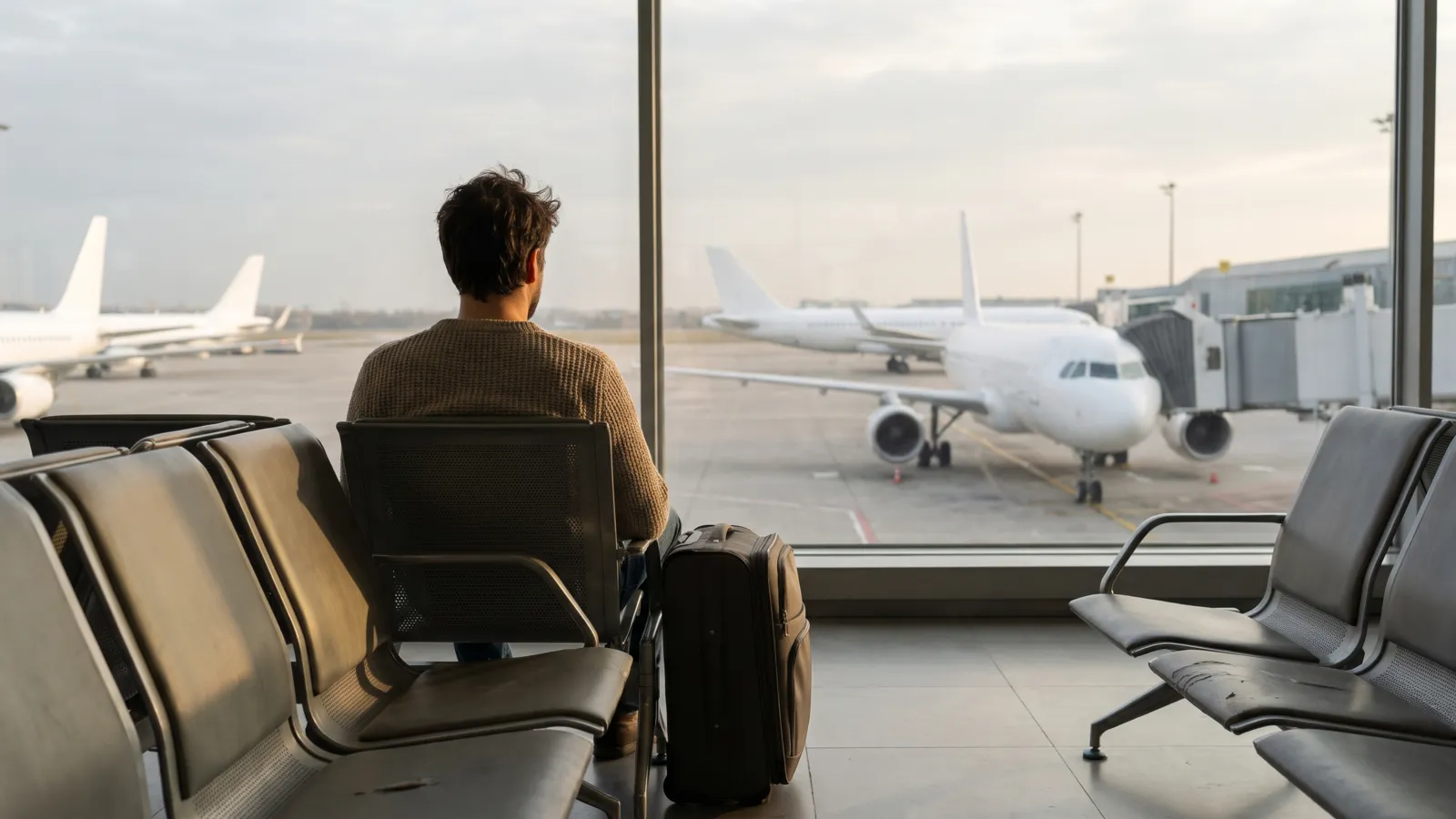
“Secretary of Homeland Security says no indication FAA communications failure was related to a cyberattack”
No evidence of one, officials say. No final cause yet.
- Was it a cyberattack? Not as far as officials have said. Homeland Security Secretary Markwayne Mullin said on Friday, November 13: "We have seen zero evidence that this is a cyberattack." The FAA gives the reason for its nationwide ground stop as a "communications failure."
- Transportation Secretary Sean Duffy blamed aging equipment: "It's the old hardware that went down." He said the airspace reopened at 8:15 p.m. Eastern. By Saturday morning, the FAA Command Center said all its air route traffic control centers had returned to normal flight plan intervals. No official had published a cause as of 9:45 a.m. Eastern on November 14.
- Microsoft's own status page says its outage of Microsoft 365 services, including email, ended at 11:10 a.m. Eastern on Friday, more than four hours before the FAA ordered its ground stop. The status page doesn't give a cause.
- There is nothing to buy. If you're flying, check with your airline. Our cyberattack guide covers what to do if a real one ever hits.
The three things most homes are missing
Our top pick from each comparison
as of Nov 14, 2026, 5:36 PM ET · Details
Product prices and availability are accurate as of the date/time indicated and are subject to change. Any price and availability information displayed on Amazon.com at the time of purchase will apply to the purchase of this product.
as of Nov 14, 2026, 5:36 PM ET · Details
Product prices and availability are accurate as of the date/time indicated and are subject to change. Any price and availability information displayed on Amazon.com at the time of purchase will apply to the purchase of this product.If you already have these, you're most of the way there. As an Amazon Associate, PreparedStates earns from qualifying purchases. We may earn a commission when you buy through our links. When two products are close, commission can decide which one we pick. A clearly better product always wins.
What DHS, the FAA and Microsoft actually said
The FAA's statement, dated November 13, says it "issued a nationwide ground stop for all U.S. airports following communication issues impacting multiple Air Route Traffic Control Centers. FAA technicians are investigating the issue." It adds: "This information is preliminary and subject to change." A later FAA Command Center advisory gives the reason as "COMMUNICATIONS FAILURE."
That evening, Mullin and Duffy briefed reporters at the White House. In the Department of Homeland Security's release, Mullin says: "We have seen zero evidence that this is a cyberattack," and "all of your loved ones are safe." The White House posted his remarks under the title "Everybody is safe." The release says both secretaries called on Congress to fund a modernized air traffic control system.
Microsoft's status page says its consumer Microsoft 365 problem ran from 10:05 a.m. UTC on November 12 (5:05 a.m. Eastern) to 4:10 p.m. UTC on November 13 (11:10 a.m. Eastern), and that "the backlog of email messages has been processed." It doesn't give a cause.
What is confirmed, and what is not
Confirmed: DHS says it has seen no evidence of a cyberattack. The FAA's stated reason is a communications failure. Duffy said the instability began at 3:36 p.m. The FAA Command Center's order grounding all airports was signed at 3:54 p.m. Eastern (20:54 UTC), more than four hours after Microsoft's status page says its outage ended. Duffy said there were over 3,500 airplanes in the air when the ground stop was issued, and that the airspace reopened at 8:15 p.m. Eastern. The FAA Command Center's cancellation notice was signed at 8:19 p.m. Eastern (01:19 UTC on November 14). Some airports stayed under ground stops overnight; the FAA Command Center said they were "at airline's requests." Its morning plan, signed at 7:51 a.m. Eastern on November 14, says all air route traffic control centers "have returned to normal flight plan drop intervals."
Not yet known: a final cause. The FAA called its own statement preliminary and said its technicians are investigating. We found no statement on the FAA's or Microsoft's own websites on whether the two outages are connected. As of 9:45 a.m. Eastern on November 14, the FAA, DOT and DHS had posted nothing newer than their November 13 statements, CISA's news page listed no statement on either outage, and Microsoft's final update gives no cause. The White House's videos of the briefings show Mullin and Duffy; we found no White House statement or transcript from President Trump on the outage. Mullin said officials had seen "zero evidence" of an attack; that is not a final finding on the cause.
Why officials point to old equipment
Duffy said radar and communications became unstable at air traffic control centers across the country: "We didn't lose all telecom, we didn't lose all radar," but the FAA stopped flights out of caution. He said the system runs on analog telecom and that "our routers actually got overloaded with data," adding: "It's the old hardware that went down." He said new equipment already installed did not fail.
That funding request is theirs to make; we don't take a side. What matters here is that neither DHS nor the FAA has described any sign of an attack.
What it means for your home
If you were flying, Duffy's advice was to "check with your airline," because crews and planes take time to get back in place. Microsoft's status page says its services "have fully recovered."
Outages like these are a good reminder of steps that help whatever the cause. Ready.gov says to "keep a small amount of cash at home in a safe place" in small bills, because "ATMs and credit cards may not work during a disaster." If a real cyberattack ever hits you, Ready.gov says to "check your credit card and bank statements for unrecognizable charges" and, if you notice strange activity, change "all of your internet account passwords immediately." Our guide on what to do in a cyberattack walks through the before, during and after.
If email or online accounts go down, keep what you need where you can reach it offline. Ready.gov's kit list includes copies of important documents "saved electronically or in a waterproof, portable container" and "Paper and pencil." Its financial preparedness checklist lists household contacts to keep, such as your bank, insurance agents and health professionals.
- Flying soon: check your flight with your airline before you leave home
- Keep some cash in small bills at home
- Keep copies of important documents on an external drive or in the cloud, as Ready.gov suggests
- Write down key phone numbers (family, bank, insurer, doctor) on paper, so you can reach them without email
What not to do
Don't buy anything because of these outages: nothing official asks you to. Don't install "fix" software or give remote access to anyone who contacts you about the outages. Ready.gov warns: "A company will not call you and ask for control of your computer to fix it. This is a common scam."
Be wary of posts that say an attack has been confirmed. As of November 14, no official source we read says so. Check DHS, the FAA and Microsoft's own status page before you share. We also checked an earlier claim of a cyberattack on freezers at military bases. Reports the same day that the National Weather Service radar was down are covered in our radar check.
We will update this check if the FAA, DHS or CISA names a cause for the ground stop or says it was a cyberattack, if Microsoft publishes a cause for its outage, or if any official says the two outages are linked.
Common questions
Was the FAA ground stop a cyberattack?
No official has said so. DHS Secretary Markwayne Mullin said on November 13 that officials had seen "zero evidence that this is a cyberattack." The FAA gives the reason as a communications failure and says its technicians are investigating. No final cause had been published as of 9:45 a.m. Eastern on November 14.
Was the Microsoft outage a cyberattack?
Microsoft's status page gives no cause and doesn't mention an attack. It says the consumer Microsoft 365 problem ran from 5:05 a.m. Eastern on November 12 to 11:10 a.m. Eastern on November 13, and that services have fully recovered.
Are the Microsoft outage and the FAA ground stop connected?
We found no official statement linking them. Microsoft's status page says its outage ended at 11:10 a.m. Eastern on November 13. The FAA's order grounding all airports was signed at 3:54 p.m. Eastern, and the FAA blames a communications failure. We found no statement on a link on either one's website.
How long did the FAA ground stop last?
The FAA Command Center's order grounding all airports was signed at 3:54 p.m. Eastern on November 13, and its cancellation at 8:19 p.m. Eastern. Duffy said the airspace reopened at 8:15 p.m. Eastern. Some airports kept ground stops overnight at airlines' requests. By about 8 a.m. Eastern on November 14, the FAA Command Center said all its air route traffic control centers were back to normal flight plan intervals.
What should I do if a real cyberattack happens?
Ready.gov says to check your bank and card statements for charges you don't recognize, change your passwords right away if you see strange activity, and keep some cash at home. Our cyberattack guide has the full steps, including how to report it and freeze your credit.
Sources (14)
- Department of Homeland Security: ICYMI: Secretary Mullin and Secretary Duffy address nationwide FAA ground stop of all flights (Nov 13, 2026)
- Department of Transportation: Secretary Duffy announces lifting of nationwide ground stop (Nov 13, 2026)
- FAA: Statement on nationwide ground stop (Nov 13, 2026)
- FAA Command Center: advisory 111, national ground stop (Nov 13, 2026)
- FAA Command Center: advisory 120, nationwide ground stop (Nov 13, 2026)
- FAA Command Center: advisory 005, nationwide ground stop cancelled (Nov 14, 2026 UTC)
- FAA Command Center: advisory 018, overnight status (Nov 14, 2026 UTC)
- FAA Command Center: advisory 055, operations plan (Nov 14, 2026)
- The White House: DHS Secretary Markwayne Mullin speaks on FAA ground stop (video, Nov 13, 2026)
- Microsoft: service health status, Microsoft 365 (Consumer)
- CISA: News
- Ready.gov: Cybersecurity
- Ready.gov: Financial preparedness
- Ready.gov: Build a kit
Get one calm email when it matters
Seasonal checklists and gear price drops. No spam, unsubscribe any time.
Keep reading
 What to do in a cyberattack: a household guide based on CISA, FTC and FBI adviceWhat to do if you are hit by a cyberattack at home: CISA's four basic steps, what Ready.gov says to do during …
 Is the National Weather Service radar down nationwide? What NWS says, and how to get warningsNo. The National Weather Service said on November 13 there is no radar outage. An old web notice about interne…
 Did a cyberattack break freezers at US military bases? What is confirmed, and your freezerInvestigators suspect hacking behind August freezer failures at base commissaries. Nothing is confirmed; no re…When the card readers are down: bank outages, dead ATMs and how much cash to keep at homeCard readers and ATMs need power and signal. Ready.gov says keep a small amount of cash in small bills at home…