
Is there an emergency alert test on November 17? What time, what sound, and will phones get it
Yes. FEMA and the FCC test the Emergency Alert System at about 2:20 p.m. ET on November 17, for about a minute on radio and TV. The sound, phones and streaming, checked.
By Tom Calder · Updated November 15, 2026 · Sourced to FEMA, the FCC and its Emergency Alert System rules, and Ready.gov

“Will the November 17 emergency alert test show on streaming? Only TV, radio, cable and satellite must carry it”
The FCC's list of who must take part doesn't name streaming apps.
- Is there an emergency alert test on November 17? Yes. FEMA and the FCC have scheduled a nationwide test of the Emergency Alert System at approximately 2:20 p.m. Eastern Time on Tuesday, November 17, 2026, lasting approximately one minute on radio and TV.
- That is 1:20 p.m. Central, 12:20 p.m. Mountain, 11:20 a.m. Pacific, 10:20 a.m. in Alaska and 9:20 a.m. in Hawaii (our conversion). FEMA says the message will include standard EAS alert tones; under FCC rules, the attention signal is two tones played together.
- Phones: FEMA's test page and the FCC's notice describe a test of the Emergency Alert System on radio and TV and don't mention phones or Wireless Emergency Alerts. The 2023 test, by contrast, was announced for cell phones too.
- Streaming: the FCC's list of the providers required to take part names radio and TV stations, cable, satellite radio and wireline video systems, not streaming apps. Neither agency says whether apps will show it.
- The message says no action is required by the public, and there is nothing to buy.
The three things most homes are missing
Our top pick from each comparison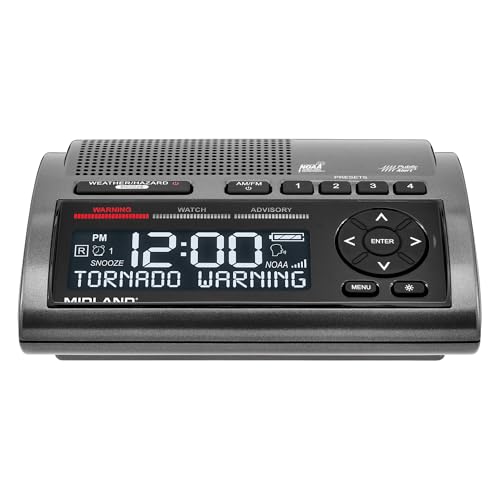
as of Nov 14, 2026, 5:36 PM ET · Details
Product prices and availability are accurate as of the date/time indicated and are subject to change. Any price and availability information displayed on Amazon.com at the time of purchase will apply to the purchase of this product.
as of Nov 14, 2026, 5:36 PM ET · Details
Product prices and availability are accurate as of the date/time indicated and are subject to change. Any price and availability information displayed on Amazon.com at the time of purchase will apply to the purchase of this product.
as of Nov 14, 2026, 5:36 PM ET · Details
Product prices and availability are accurate as of the date/time indicated and are subject to change. Any price and availability information displayed on Amazon.com at the time of purchase will apply to the purchase of this product.If you already have these, you're most of the way there. As an Amazon Associate, PreparedStates earns from qualifying purchases. We may earn a commission when you buy through our links. When two products are close, commission can decide which one we pick. A clearly better product always wins.
What FEMA and the FCC actually announced
FEMA's test page says: "FEMA, in coordination with the Federal Communications Commission (FCC), will conduct a nationwide test of the Emergency Alert System (EAS) at approximately 2:20 p.m. Eastern Time, Tuesday, November 17, 2026." It says radio and television broadcasters nationwide will interrupt normal programming to relay a test message, that the test will last approximately one minute, and that normal programming will then resume.
The FCC's public notice, released September 16, says FEMA will send the test through the Integrated Public Alert and Warning System (IPAWS), in English and Spanish. FEMA says broadcasters may air it in English, Spanish or both, depending on station practices and audience needs. The message ends: "This is only a test. No action is required by the public."
The FCC's version of the wording also says the test is "covering the United States from 2:20 to 2:50 hours ET," so you may hear or see that time window. FEMA still describes the test itself as lasting approximately one minute. If conditions on November 17 require it, the FCC says the test will be held on December 3, 2026 instead.
Emergency alert test today time: when it goes off where you live
The test is set by Eastern Time, so it happens at the same moment everywhere. By our conversion for November 17, after the end of daylight saving time: 2:20 p.m. Eastern, 1:20 p.m. Central, 12:20 p.m. Mountain (including Arizona), 11:20 a.m. Pacific, 10:20 a.m. Alaska and 9:20 a.m. Hawaii. FEMA's word is "approximately," so it may not start on the exact minute on every station.
What it sounds like: FEMA says the test message will include standard EAS alert tones to support accessibility for people who are deaf or hard of hearing. FCC rules describe an EAS message in four parts: data bursts carrying the header codes, an audio attention signal, the message, and end-of-message codes. The rules say the attention signal "must be made up of the fundamental frequencies of 853 and 960 Hz," with the two tones sent at the same time, and allow 8 to 25 seconds of it.
What is confirmed, and what is not
Confirmed: the date, the time, the wording, the roughly one-minute length and the December 3 backup date, all in FEMA's and the FCC's notices. The FCC says all EAS Participants are required to take part in the test. FEMA's test page, which we read in its September 17 version, gave no sign of a change; we found no notice moving the test.
Phones: neither FEMA's test page nor the FCC's notice mentions phones or Wireless Emergency Alerts. They describe a test of the Emergency Alert System only. Ready.gov treats the two as separate systems: Wireless Emergency Alerts are short alerts authorities can send to phones in a locally targeted area. In 2023 it was different: FEMA and the FCC announced that the test messages would be sent to all TVs, radios and cell phones.
Streaming: the FCC's notice defines EAS Participants as those required to comply with its EAS rules, including radio and television stations, cable television systems, satellite radio and wireline video systems. It doesn't list streaming apps, and neither FEMA nor the FCC says whether an app will show the test. If you're watching through an app at 2:20 p.m. ET, you may not see it; we found nothing official either way.
Why there is a test
FEMA says it is required by law to conduct a nationwide test of the public alert and warning system at least once every three years. It describes the Emergency Alert System as a national warning system made up of thousands of radio, television, cable, satellite and wireline broadband providers, and says the tests let it find technical or operational problems before the system is needed in a real emergency.
The FCC requires participants to report how the test went in its test reporting system, with day-of-test data due by 2:20 p.m. ET on November 19.
What it means for your home
Nothing to do on the day: the message itself says no action is required by the public. If you notice a problem, such as a station that doesn't carry the test or a garbled message, the FCC invites the public to report what they observed to its Public Safety Support Center.
The test is a good moment to check how real alerts would reach you. Our emergency alerts guide explains Wireless Emergency Alerts, which Ready.gov says look like text messages but come with a unique sound and vibration repeated twice, and how to check they are on in your phone's settings. For a power cut, when TV and internet may be down, Ready.gov's kit list includes a battery-powered or hand-crank radio and a NOAA Weather Radio with tone alert; our weather radio guide covers how they work.
- Note the time in your zone: 2:20 p.m. Eastern is 11:20 a.m. Pacific
- Expect about one minute of tones and a spoken test message on radio and TV
- Check that emergency alerts are on in your phone's settings
- If you own a battery or hand-crank radio, check it works
What not to do
Don't buy anything for this date. The test checks that broadcasters and providers can pass along a warning; it doesn't change any official advice for households.
Don't turn off emergency alerts on your phone because of the test. FEMA's and the FCC's notices don't describe a phone alert, and Ready.gov says Wireless Emergency Alerts are short emergency alerts authorities send to a locally targeted area.
We will update this page if FEMA or the FCC moves the test to the December 3 backup date, says anything about phones or streaming services, or after the test has run.
Common questions
Is there an emergency alert test on November 17, 2026?
Yes. FEMA, in coordination with the FCC, will conduct a nationwide test of the Emergency Alert System at approximately 2:20 p.m. Eastern Time on Tuesday, November 17, 2026. FEMA says it will last approximately one minute on radio and TV. If conditions require it, the FCC says it will be held on December 3, 2026 instead.
What time is the emergency alert test in my time zone?
By our conversion: 2:20 p.m. Eastern, 1:20 p.m. Central, 12:20 p.m. Mountain (including Arizona), 11:20 a.m. Pacific, 10:20 a.m. Alaska and 9:20 a.m. Hawaii. FEMA says "approximately," so a station may run it a little off the exact minute.
What sound will the emergency alert test make?
FEMA says the message will include standard EAS alert tones. FCC rules say an EAS message opens with data bursts carrying header codes, then an attention signal made of two tones, 853 and 960 Hz, sent at the same time, then the spoken message. Here the message says "This is only a test. No action is required by the public."
Will my phone get the November 17 emergency alert test?
FEMA's test page and the FCC's notice don't mention phones or Wireless Emergency Alerts; they describe a test of the Emergency Alert System on radio and TV. The 2023 nationwide test was different: FEMA announced it for TVs, radios and cell phones.
Will the emergency alert test show on Netflix or other streaming apps?
Neither FEMA nor the FCC says. The FCC's list of the providers required to take part names radio and TV stations, cable, satellite radio and wireline video systems, and doesn't name streaming apps. So you may not see it in an app, but we found nothing official either way.
Sources (8)
- FEMA: 2026 Nationwide Emergency Alert System Test (last updated Sep 17, 2026)
- FCC Public Safety and Homeland Security Bureau: public notice DA 26-989, nationwide EAS test on November 17, 2026 (Sep 16, 2026)
- FCC rules: 47 CFR 11.31, EAS protocol and attention signal (eCFR)
- FEMA and FCC: news release on the October 4, 2023 nationwide EAS and WEA test (DOC-395722)
- FCC: Emergency Alert System (EAS) consumer guide
- FCC: Public Safety Support Center
- Ready.gov: Emergency Alerts
- Ready.gov: Build a Kit
Get one calm email when it matters
Seasonal checklists and gear price drops. No spam, unsubscribe any time.
Keep reading
 Is there a November 17 blackout? The viral Simpsons clip and the FEMA alert test, checkedIs there a November 17 blackout? No. The date is FEMA and the FCC's one-minute Emergency Alert System test on …
 Emergency alerts on your phone: WEA, IPAWS and NOAA Weather Radio, and how to check they are onHow Wireless Emergency Alerts, IPAWS, the Emergency Alert System and NOAA Weather Radio work, why you may not …
 NOAA Weather Radio and hand-crank radios in a power outage: how they work and what to look forHow NOAA Weather Radio works, why a hand-crank radio is not always a weather radio, and what to look for: SAME…
 How to make a family emergency plan: steps, questions and a communication planHow to make a family emergency plan: Ready.gov's four steps, the questions to ask, a communication plan, meeti…