
What are the symptoms of bird flu in humans? What CDC says to watch for, with flocks hit again
CDC's list of bird flu symptoms in people, who is at risk, what the latest Washington and Oregon cases looked like, and what backyard flock owners should do.
By Tom Calder · Updated November 27, 2026 · Sourced to CDC, the Washington State Department of Agriculture, the Washington State Department of Health, the Oregon Department of Agriculture and USDA
“What are the symptoms of bird flu in humans?”
Eye redness has been the main symptom in recent US cases, CDC says, with fever, cough, sore throat and aches also on its list. Most cases have been mild.
- CDC says eye redness and irritation (conjunctivitis) has been the main symptom in recent US cases. Other mild symptoms include fever or feeling feverish, cough, sore throat, a runny or stuffy nose, muscle or body aches, headaches and fatigue.
- Most US cases have been mild, mostly in people exposed to infected animals. On November 23, CDC counted 75 confirmed human cases since 2024, with three deaths, and said the risk to the public "continues to be low." It has found no person-to-person spread in the United States.
- The four newest cases were dairy farm workers, three in Washington and one in Oregon; one Washington worker died on November 1. Washington also confirmed bird flu in two small Pierce County backyard flocks on November 17 and 20.
- If you fall ill within 10 days of contact with sick birds or animals, CDC says to stay home, away from your household, and tell your health department. Unless you handle possibly infected birds or animals, you don't need to buy anything.
The three things most homes are missing
Our top pick from each comparison
as of Nov 28, 2026, 7:52 PM ET · Details
Product prices and availability are accurate as of the date/time indicated and are subject to change. Any price and availability information displayed on Amazon.com at the time of purchase will apply to the purchase of this product.
as of Nov 28, 2026, 7:52 PM ET · Details
Product prices and availability are accurate as of the date/time indicated and are subject to change. Any price and availability information displayed on Amazon.com at the time of purchase will apply to the purchase of this product.
as of Nov 28, 2026, 7:52 PM ET · Details
Product prices and availability are accurate as of the date/time indicated and are subject to change. Any price and availability information displayed on Amazon.com at the time of purchase will apply to the purchase of this product.If you already have these, you're most of the way there. As an Amazon Associate, PreparedStates earns from qualifying purchases. We may earn a commission when you buy through our links. When two products are close, commission can decide which one we pick. A clearly better product always wins.
What people are asking
"What are the symptoms of bird flu in humans" is a question people type, not one outlet's claim. People are asking it as bird flu turns up again in Washington flocks, after the state's first detection in dairy cattle in October 2026, according to its Department of Health, and after Oregon's first human case linked to dairy cows. Our Oregon dairy story covers milk, and our food safety guide covers eggs, chicken and turkey.
Here we checked CDC's symptom, risk and prevention pages, CDC's November 23 update on the newest cases, and what Washington's and Oregon's agriculture departments have posted about flocks this fall.
Bird flu humans symptoms: CDC's list
CDC says mild signs and symptoms of bird flu in people may include: eye redness and irritation (conjunctivitis); mild fever (100°F or higher) or feeling feverish; cough; sore throat; runny or stuffy nose; muscle or body aches; headaches; and fatigue. "Eye redness has been the predominant symptom among recent U.S. cases," it says. Diarrhea, nausea and vomiting are less common, and fever may not always be present.
Signs of moderate to severe illness may include a high fever or other symptoms that "limit or prevent usual activity," shortness of breath or difficulty breathing, altered consciousness and seizures. CDC lists possible complications including pneumonia, respiratory failure, kidney injury, sepsis and inflammation of the brain. "The severity of illness associated with bird flu has ranged from mild to severe, including death," it says.
Timing: CDC says respiratory symptoms start about three days after exposure, but it can be anywhere from about 2 to 7 days, and eye redness and irritation can start one to two days after exposure. The illness usually lasts a few days to less than two weeks. Some people with bird flu in the United States reported no symptoms at all, and CDC says people without symptoms can still be contagious.
What the newest cases looked like
CDC's November 23 update says four adults who work on affected dairy farms in Washington and Oregon have tested positive since October 15. The first, in Washington, sought care for eye irritation and upper respiratory symptoms, was not hospitalized and has recovered. The third, also in Washington, had conjunctivitis and has recovered. The fourth, in Oregon, had conjunctivitis in the week ending November 14, was not hospitalized and is recovering.
The second Washington worker developed respiratory symptoms, was hospitalized and died on November 1; CDC says the person had underlying health conditions. CDC says all three US deaths since 2024 were in people at higher risk "either because of their age or underlying health conditions." Genetic tests of the Washington viruses "showed no evidence of mutations known to enhance infectivity, disease severity, transmissibility, or adaptation to humans." CDC says hundreds of people on the affected dairies are being monitored for symptoms.
Who is at risk
"People rarely get bird flu," CDC says, "but when they do, it's most often through direct unprotected contact" with infected birds or other animals. Its list of people at higher risk includes poultry and dairy workers, and, among people exposed outside work, backyard bird flock owners and hunters of wild birds and waterfowl. Its November 23 update names "caring for sick backyard birds" as one such exposure.
CDC's current situation page, updated November 27, says: "The current public health risk is Low." Person-to-person spread "has not been identified in the United States," CDC's update says. A seasonal flu shot "will reduce the risk of seasonal flu but will not protect against H5N1 bird flu," CDC says, though CDC recommends a yearly flu shot for everyone 6 months and older, with rare exceptions, and says people who work with or are often around possibly infected birds or animals should get one.
Backyard flocks in Washington and Oregon
Washington's agriculture department (WSDA) lists two small backyard flocks with bird flu in Pierce County, confirmed on November 17 and November 20, both mixed flocks of fewer than 100 birds. This fall, its list also shows a large commercial flock in Pierce County on November 4, and backyard flocks in Yakima County on October 30 and Kittitas County on October 9 and October 27.
In Oregon, the agriculture department (ODA) confirmed bird flu in a commercial flock in Clackamas County on November 4, and in milk from a Morrow County dairy on November 10. We found no ODA news release about a backyard flock in November up to November 27; that doesn't mean none has been found. USDA says detections run higher in fall and spring as wild birds migrate.
CDC says infections happen most often after close, prolonged and unprotected contact with infected birds or other infected animals, and that person-to-person spread has not been identified in the United States. CDC's advice for households is about contact with sick or dead birds and animals.
What it means for your home
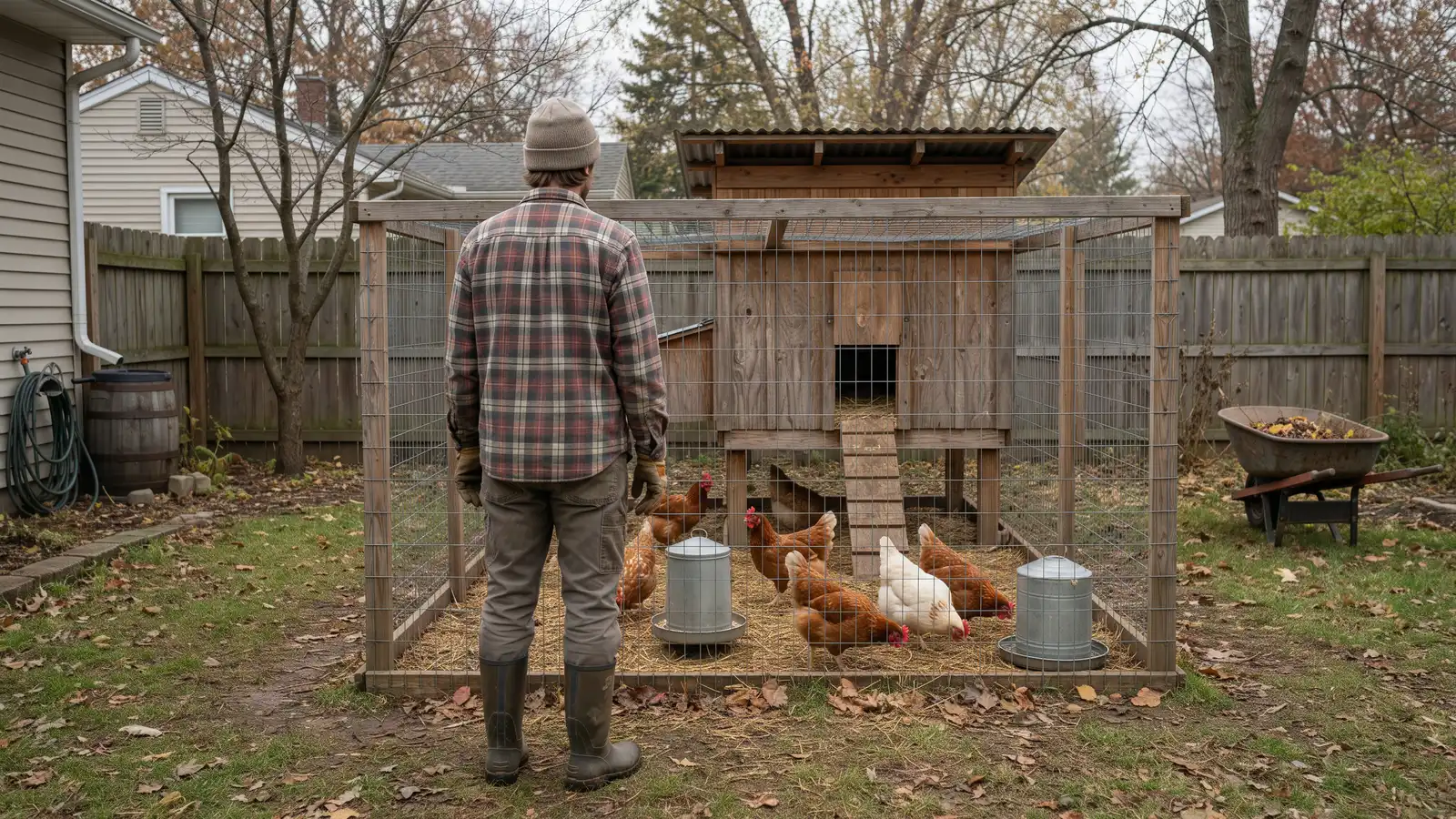
If you keep chickens or ducks: CDC says to avoid direct contact with sick or dead birds, and to wear recommended protective gear if you must handle them. Washington's Department of Health lists gloves, unvented or indirectly vented safety goggles, an N95 or better respirator and rubber boots. Report sick birds or sudden deaths: in Washington, WSDA's Sick Bird Hotline at 1-800-606-3056; in Oregon, ODA's Disease Reporting Hotline at 503-986-4711; elsewhere, your state veterinarian or USDA at 1-866-536-7593. Our backyard chickens guide has CDC's everyday rules.
If you get sick within 10 days of contact with sick or possibly infected birds or animals, CDC says to isolate at home away from your household, stay off work or school, and notify your local or state health department, which can help with testing. CDC says people with symptoms after contact with infected animals should get flu antivirals "as soon as possible," ideally within 2 days.
If you don't handle birds or animals that may be infected, you don't need to buy anything. CDC's everyday advice for everyone is to choose pasteurized milk, cook poultry, eggs and beef to the right internal temperature, and get a yearly seasonal flu vaccine.
What not to do
Don't pick up sick or dead wild birds: ODA asks people not to collect or handle them and to call Oregon's wildlife department at 1-866-968-2600, and Washington asks people to use its wildlife department's online reporting tool. Don't touch or drink raw milk, CDC says, especially in areas with infected herds. Don't count on a seasonal flu shot to protect you from bird flu. And there's no need to stock up on masks or respirators: CDC's protective-gear advice is for people who must have direct or close contact with infected or possibly infected birds or animals.
We will update this check if CDC changes its risk rating or its symptom list, if person-to-person spread is found in the United States, or if Washington or Oregon report new human cases.
Common questions
What are the symptoms of bird flu in humans?
CDC says eye redness and irritation (conjunctivitis) has been the main symptom in recent US cases. Others include fever or feeling feverish, cough, sore throat, a runny or stuffy nose, muscle or body aches, headaches and fatigue; diarrhea, nausea and vomiting are less common. Serious illness can bring shortness of breath, altered consciousness or seizures.
How soon do bird flu symptoms start after exposure?
CDC says respiratory symptoms start about three days after exposure, with a range of about 2 to 7 days. Eye redness and irritation can start one to two days after exposure. CDC advises anyone who gets sick within 10 days of contact with sick or possibly infected birds or animals to isolate at home and call their health department.
Can I catch bird flu from my backyard chickens?
CDC lists backyard bird flock owners among people with higher-risk exposures, and says human cases most often follow direct unprotected contact with infected birds or animals. It advises avoiding contact with sick or dead birds and wearing protective gear if you must handle them. Report sick birds to your state veterinarian or USDA at 1-866-536-7593.
Is bird flu spreading from person to person?
Not in the United States, CDC says: person-to-person spread has not been identified here. Its current public health risk rating is low. Genetic tests of the viruses from this fall's three Washington cases found no evidence of mutations known to make the virus spread more easily in people or adapt to humans.
How many people have had bird flu in the US?
CDC counted 75 confirmed human cases since 2024, with three deaths, in its November 23 update. The four newest were dairy farm workers in Washington and Oregon, including the Washington worker who died on November 1. CDC says most US cases have been mild.
Sources (12)
- CDC: Symptoms of bird flu in people
- CDC: H5 bird flu update (Nov 23, 2026)
- CDC: A(H5) bird flu current situation (updated Nov 27, 2026)
- CDC: Bird flu prevention
- CDC: Factors that increase your risk of bird flu
- CDC: About bird flu
- Washington State Department of Agriculture: Bird flu detections and Sick Bird Hotline
- Washington State Department of Health: Bird flu
- Washington State Department of Health: Bird flu current situation and data
- Oregon Department of Agriculture: HPAI confirmed in Clackamas County (Nov 2026)
- Oregon Department of Agriculture: First detection of HPAI in Oregon dairy cattle (Nov 2026)
- USDA APHIS: Confirmations in commercial and backyard flocks
Get one calm email when it matters
Seasonal checklists and gear price drops. No spam, unsubscribe any time.
Keep reading
 Oregon confirms its first bird flu case in dairy cattle: is milk safe, and what to do at homeOregon announced bird flu at a Morrow County dairy, confirmed by USDA on November 10. What officials say about…Is it safe to eat eggs, chicken and turkey during a bird flu outbreak?Yes, cooked or pasteurized, CDC says. What CDC and USDA advise on eggs, chicken, turkey, raw milk and backyard…
 Backyard chickens for eggs: how to keep them and stay healthyKeeping backyard chickens for eggs: CDC rules for avoiding Salmonella, kids under 5, bird flu, collecting and …
 Could bird flu on a Utah mink farm spark a pandemic? What is confirmedProPublica reports bird flu spreading on a Utah mink farm while workers go untested. What is confirmed, what e…