
Did the November 17 blackout happen? What FEMA, Vance and the outage data showed
Did the November 17 blackout happen? No national blackout: DOE data showed scattered local outages that day and the next morning. What FEMA and Vance said.
By Tom Calder · Updated November 18, 2026 · Sourced to the Energy Department's ODIN outage data, the National Weather Service, FEMA, the FCC, USA Today, EIA, Ready.gov and CDC
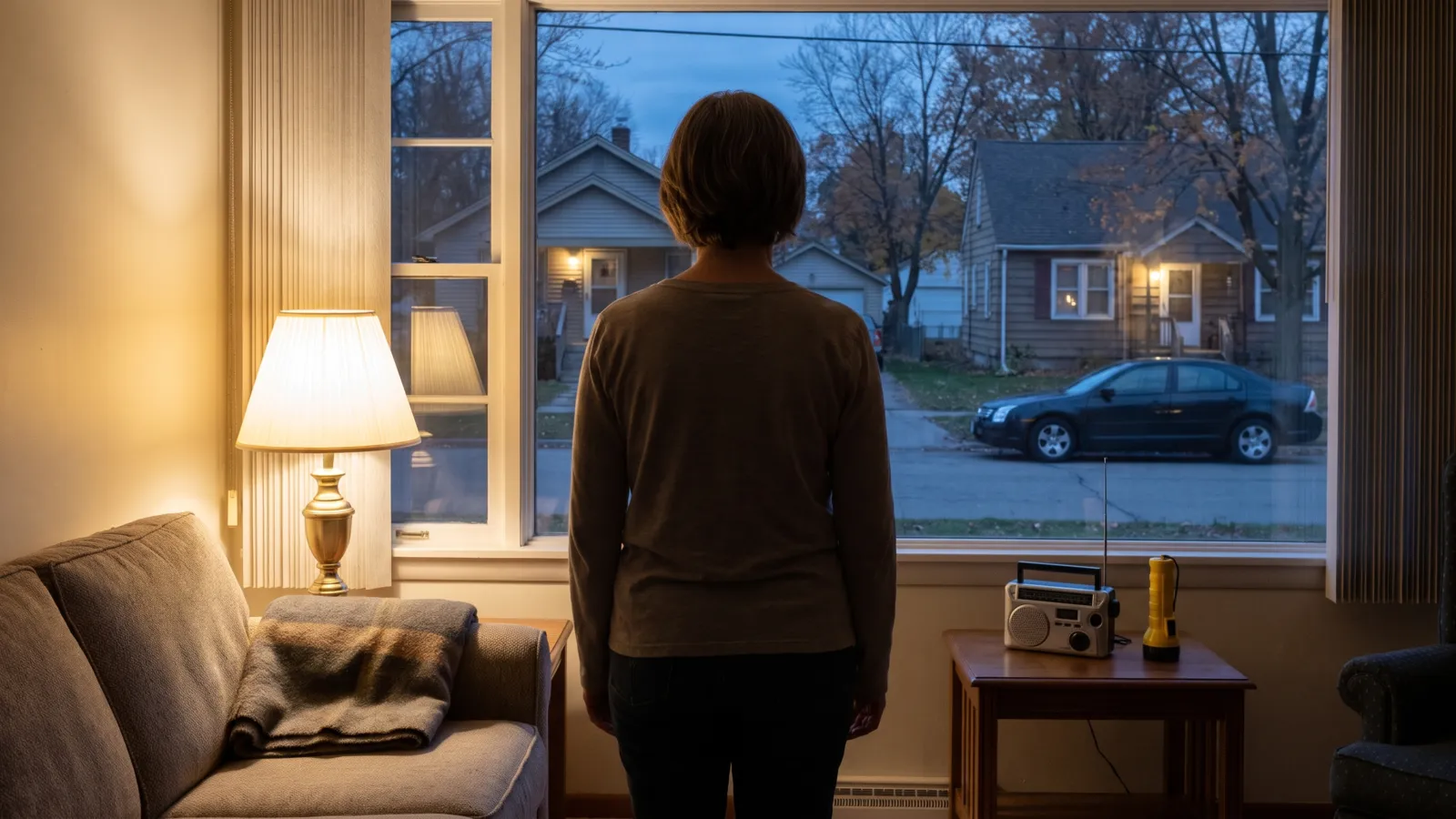
“Speculations were rife that the 90-day blackout will begin on Tuesday, Nov. 17.”
No national blackout. Outages that day were scattered and local.
- Did the November 17 blackout happen? No. There was no November 17 blackout: the Energy Department's ODIN outage data showed 11,188 customers without power at 7:30 a.m. Eastern and 10,420 at 8 p.m., scattered local outages (our reading of a partial count). The next morning's 22,771 were mostly in New York and Wyoming.
- What was scheduled that day was FEMA and the FCC's test of the Emergency Alert System on radio and TV, at approximately 2:20 p.m. ET. On November 16 FEMA wrote on X: "No blackouts, no secret emergencies." We found no notice moving the test to its December 3 backup date.
- Vice President JD Vance, asked on Fox News whether Americans should be prepping, said "we do not see some crisis coming down, but you have to be prepared for everything," USA Today reports. In the remarks it quotes, he doesn't mention November 17.
- There is nothing to buy for a date that has passed. For real outages, Ready.gov's advice stands: supplies for several days.
The three things most homes are missing
Our top pick from each comparison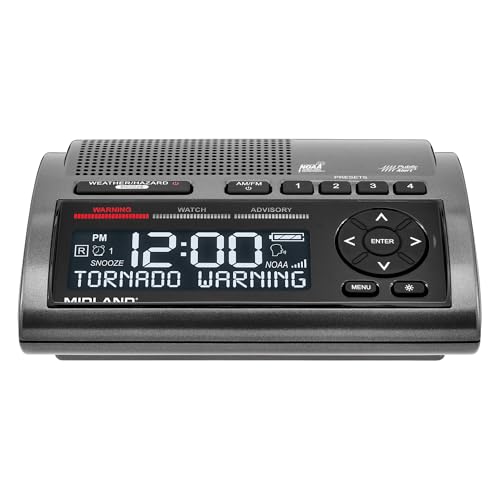
as of Nov 18, 2026, 2:52 PM ET · Details
Product prices and availability are accurate as of the date/time indicated and are subject to change. Any price and availability information displayed on Amazon.com at the time of purchase will apply to the purchase of this product.
as of Nov 18, 2026, 2:52 PM ET · Details
Product prices and availability are accurate as of the date/time indicated and are subject to change. Any price and availability information displayed on Amazon.com at the time of purchase will apply to the purchase of this product.
as of Nov 18, 2026, 2:52 PM ET · Details
Product prices and availability are accurate as of the date/time indicated and are subject to change. Any price and availability information displayed on Amazon.com at the time of purchase will apply to the purchase of this product.If you already have these, you're most of the way there. As an Amazon Associate, PreparedStates earns from qualifying purchases. We may earn a commission when you buy through our links. When two products are close, commission can decide which one we pick. A clearly better product always wins.
Was there a November 17th blackout? What happened that day
The Energy Department's ODIN system, run by Oak Ridge National Laboratory, counts outages reported in near-real time by the utilities that take part. Our snapshots of it showed no national blackout on November 17. At 7:30 a.m. Eastern, before the alert test, 11,188 customers were without power in 24 states, most of them in Washington (6,734). At 8 p.m. Eastern the count was 10,420: the largest were in California (4,408), Oregon (1,851) and Utah (1,590), and the other 26 states with outages had fewer than 900 each.
The next morning, at 9:30 a.m. Eastern on November 18, ODIN showed 22,771 customers out in 32 states, mostly in New York (8,680) and Wyoming (5,387); the National Weather Service issued high wind warnings for parts of Wyoming that morning. That is more than either reading on the 17th, but still local, and below the 32,479 on November 8, the highest since our daily series began on October 27, most of them in Washington state. Every state's latest figure is on our power outages page.
The one federal event on the calendar was the nationwide test of the Emergency Alert System. FEMA's November 16 release said that at approximately 2:20 p.m. ET on November 17, radio and television broadcasters, cable systems, satellite radio and television providers and wireline video providers would interrupt programming to relay a test message, with no action required by the public. The FCC had said that if conditions required rescheduling, the test would run on December 3. Our alert test explainer has the details.
FEMA addressed the rumor directly the day before. Its post on X read: "We've heard a lot of rumors about tomorrow's EAS test. Let's clear things up. It lasts 1 minute, and no action is required. No blackouts, no secret emergencies."
What Vance actually said
USA Today's headline was "Vance dismisses rumors of blackout: 'Don't see a crisis coming'." It reports that Laura Ingraham asked the vice president, in a Fox News interview aired Monday, November 16, whether Americans should be prepping, citing the ground stop, the Pentagon preparing for 90 days off the grid, the Microsoft outage, and the U.K. and France urging stockpiles.
Vance said friends had asked whether to build a bunker or stock up on food and water. "My answer to that is, no, we do not see some crisis coming down, but you have to be prepared for everything," USA Today quotes him. He also said, "That doesn't mean crisis is around the corner." In the remarks USA Today quotes, he doesn't mention November 17 or the alert test: the word "blackout" is the headline's. Our check of the Pentagon's 90-day plan covers the other item in the question.
What is confirmed, and what is not
Confirmed: there was no national blackout in ODIN's data on the morning or evening of November 17, or the next morning, and FEMA said before the test that it meant no blackouts. We found no announcement from FEMA, the FCC or any grid operator of a planned outage that day.
Not confirmed: ODIN covers only the utilities that take part, so its count is partial, and our snapshots are single moments, not the whole day. We found no FEMA or FCC report after the test as of midday November 18. And we read Vance's words in USA Today's account of the Fox interview; we found no White House transcript, so small wording differences between outlets' transcriptions are possible.
What to keep ready for real outages
Outages that do happen are local, and the date of a rumor doesn't change official advice. Ready.gov says that after an emergency you may need to survive on your own for several days, with your own food, water and other supplies. CDC says to store at least 1 gallon of water per person, per day for 3 days, and to try to store a 2-week supply if possible. For scale, EIA says US electricity customers averaged 11 hours of interruptions in all of 2024.
Our power outage checklist covers the rest, and the kit builder sizes Ready.gov's lists to your household.
- Water: at least 1 gallon per person, per day, for 3 days; a 2-week supply if possible
- Food: at least a several-day supply of non-perishable food your family will eat
- Flashlights for every household member, plus extra batteries
- A battery-powered or hand-crank radio, so you hear real alerts when the power is out
What not to do
Don't buy anything because of a date in a viral post, this one or the next. If a new date starts circulating, check it the same way: look for a notice from FEMA, the FCC, your utility or your grid operator. And if someone sends you the November 17 posts now, the outage data for that evening is the quickest answer.
We will update this check if FEMA or the FCC reports a problem with the November 17 test, or if the Energy Department, a grid operator or a utility reports a large outage that day that ODIN's count missed.
Common questions
Was there a November 17th power outage?
Not a national one. The Energy Department's ODIN data showed 11,188 customers without power at 7:30 a.m. Eastern on November 17 and 10,420 at 8 p.m., across 29 states that evening, the largest counts in California, Oregon and Utah (our reading of a partial count). The next morning's 22,771 were mostly in New York and Wyoming. Those are scattered local outages, not a blackout. We found no FEMA, FCC or grid operator announcement of any planned outage that day.
Did the emergency alert test cause a blackout?
We found no sign of one. The test was of the Emergency Alert System, which carries a message on radio and TV, not of the power grid. The day before, FEMA wrote on X: "No blackouts, no secret emergencies." ODIN's outage count that evening showed no national outage.
What did JD Vance say about the blackout rumors?
Asked on Fox News on November 16 whether Americans should be prepping, he said friends had asked whether to build a bunker or stock up, and "my answer to that is, no, we do not see some crisis coming down, but you have to be prepared for everything," USA Today reports. In the remarks it quotes, he doesn't mention November 17.
Is a 90-day blackout coming?
We found no federal warning of one, and USA Today says the exact origin of the 90-day theories is unclear. The best-known 90-day figure is a Pentagon plan for military bases, not advice to households; our Pentagon check explains it.
What should I keep ready for a real outage?
Ready.gov says to be ready to manage on your own for several days. CDC says at least 1 gallon of water per person, per day for 3 days, and a 2-week supply if possible. Add food your family will eat, flashlights for every household member and a battery-powered or hand-crank radio. You don't need anything extra because of a rumored date.
Sources (11)
- FEMA: FEMA and FCC to conduct nationwide test of the Emergency Alert System on November 17, 2026 (HQ-26-177, Nov 16, 2026)
- FEMA: 2026 Nationwide Emergency Alert System Test
- FCC Public Safety and Homeland Security Bureau: public notice DA 26-989, nationwide EAS test on November 17, 2026 (Sep 16, 2026)
- USA Today: Vance dismisses rumors of blackout: 'Don't see a crisis coming' (Nov 17, 2026), the report checked
- USA Today's report as syndicated on AOL (Nov 17, 2026)
- EIA: Hurricanes in 2024 led to the most hours without power in 10 years
- Ready.gov: Build a Kit
- Ready.gov: Food
- Ready.gov: Power Outages
- CDC: Creating and storing an emergency water supply
- National Weather Service: active alerts for Wyoming (read Nov 18, 2026)
Get one calm email when it matters
Seasonal checklists and gear price drops. No spam, unsubscribe any time.
Keep reading
 Is there a November 17 blackout? The viral Simpsons clip and the FEMA alert test, checkedIs there a November 17 blackout? No. The date is FEMA and the FCC's one-minute Emergency Alert System test on …
 Is there an emergency alert test on November 17? What time, what sound, and will phones get itYes. FEMA and the FCC test the Emergency Alert System at about 2:20 p.m. ET on November 17, for about a minute…
 Is a 90-day blackout coming? What the Pentagon's plan for bases means for your homeIs a 90-day blackout coming? No agency has warned of one. The 90 days is a Pentagon target for bases to run wi…
 Are Americans being told to prepare for a 72-hour power outage? Who said it, and what to doWe found no agency warning of a 72-hour power outage. The 72 hours is routine advice in a utility's storm noti…