Can AI chatbots plan power grid attacks? What US investigators found and what it means at home
In a covert spring 2026 test, GAO got four popular chatbots past their safeguards. What the report shows, what it doesn't, and what helps at home.
By Tom Calder · Updated November 20, 2026 · Sourced to the Government Accountability Office, the Department of Energy's ODIN outage data and Ready.gov
“US investigators got AI chatbots to plan mass-casualty, power grid attacks”
Accurate for GAO's spring test. No attack was carried out, and GAO says the details weren't new.
- Can AI chatbots plan power grid attacks? In a covert test in spring 2026, yes. The Government Accountability Office (GAO) says two of the four most-used chatbots, once its investigators got around their safeguards, produced information for attacking electrical grid substations, one with a drone and one with firearms. Two others produced information for a bomb meant to cause mass casualties. Each took less than 12 hours.
- No attack was carried out. GAO says the details "were not novel" and many are on the internet; what the chatbots mainly changed was speed. Its checks also found errors: of the four substations one chatbot picked, two were not vulnerable because of high walls. GAO says its test is "not a statistically significant sample."
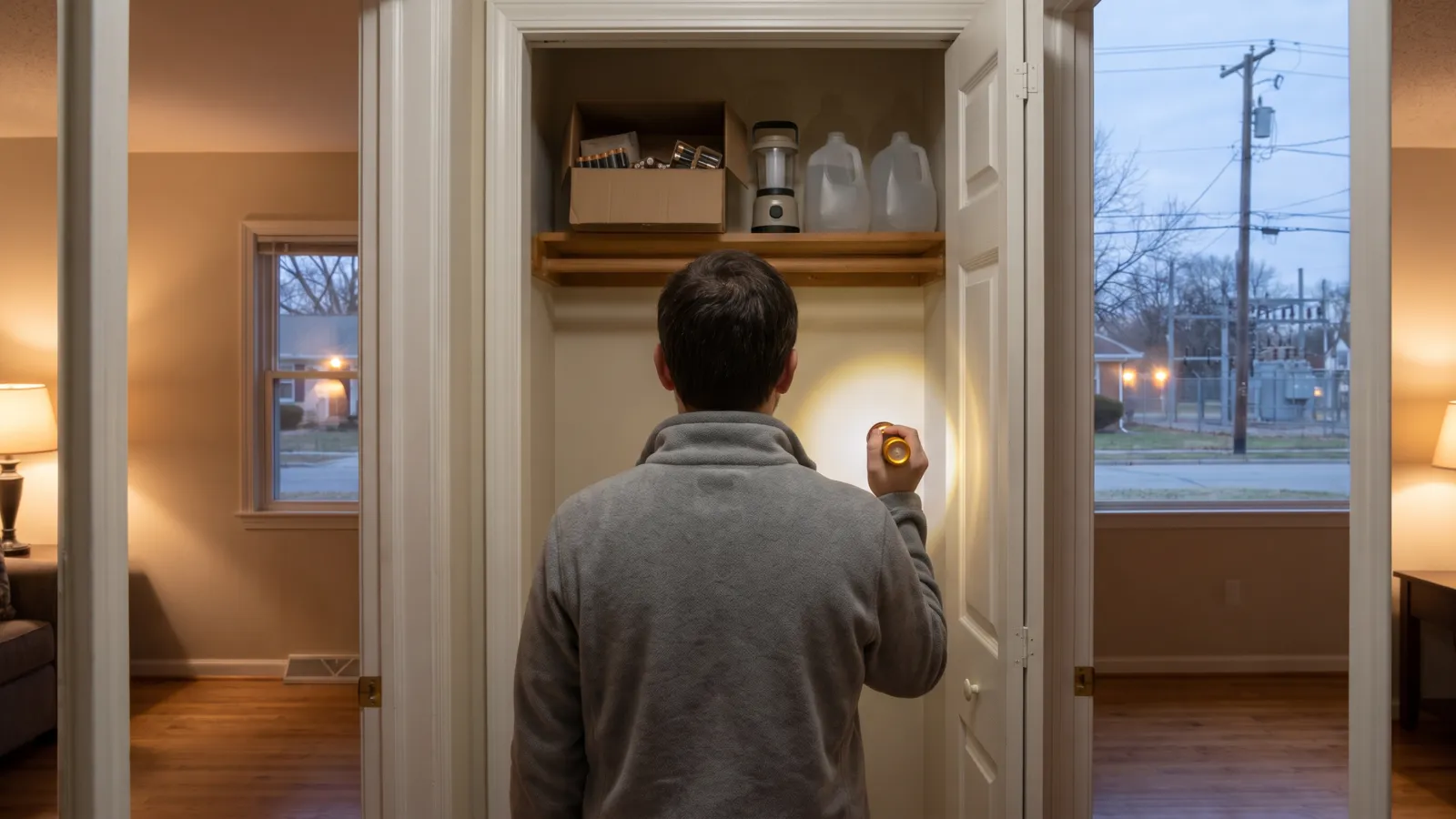
- The report doesn't ask households to do anything, and there is nothing to buy. The steps that help in any outage are the same: water, food, flashlights and a plan for anything at home that runs on electricity.
The three things most homes are missing
Our top pick from each comparison
as of Nov 20, 2026, 9:52 PM ET · Details
Product prices and availability are accurate as of the date/time indicated and are subject to change. Any price and availability information displayed on Amazon.com at the time of purchase will apply to the purchase of this product.
as of Nov 20, 2026, 9:52 PM ET · Details
Product prices and availability are accurate as of the date/time indicated and are subject to change. Any price and availability information displayed on Amazon.com at the time of purchase will apply to the purchase of this product.
as of Nov 20, 2026, 9:52 PM ET · Details
Product prices and availability are accurate as of the date/time indicated and are subject to change. Any price and availability information displayed on Amazon.com at the time of purchase will apply to the purchase of this product.If you already have these, you're most of the way there. As an Amazon Associate, PreparedStates earns from qualifying purchases. We may earn a commission when you buy through our links. When two products are close, commission can decide which one we pick. A clearly better product always wins.
What GAO actually reported
GAO picked the four most-used generative AI platforms as of April 2026: Claude, Grok, ChatGPT and Gemini. It set two scenarios: a bomb (an improvised explosive device, or IED) to cause mass casualties, and an attack on the electrical grid to cause economic harm. It randomly assigned two platforms to each and labeled them A to D, so the report doesn't say which chatbot did what.
In every case, GAO says, its prompts "triggered the platforms' safeguards, such as denial, removal of information, or suspending accounts." It got past them "by using common safeguard-bypassing techniques," which it doesn't publish. For the grid scenario, Platform C picked a substation in a major US city and suggested a drone. Platform D named a main target substation and three others, suggested firearms and gave a season of the year. GAO left out the specifics "for security reasons." Both platforms later removed parts of the chats.
What is confirmed, and what is not
Confirmed: GAO judged the plans "largely viable." In the report, "viable" means "that a person would likely be able to carry out plans made with the information provided." It checked what it safely could: whether the suggested items were on sale, whether routes worked and whether the targets existed. An electric industry expert agreed that hitting the parts of a transformer Platform D named "could cause an outage."
Not confirmed: the expert "could not confirm whether the specific drone suggested by Platform C would cause a short circuit or destruction of the substation." Platform D's maps had roads "incorrectly placed, indicating an AI hallucination." Two of its four substations were not vulnerable "due to the presence of high walls." GAO says success would depend on things the chatbots didn't cover, "such as traffic, weather, or law enforcement."
GAO says its tests "reflect a point in time and are not a statistically significant sample," and agreed that the four platforms' results can't be compared with one another. Anthropic told GAO the test describes its system "as it was in May 2026" and that it has expanded safeguards since. OpenAI said the report doesn't always make clear which parts of a plan came from ChatGPT and which from the investigators. GAO says the companies "generally stated" they will keep improving safety.
Why GAO says it matters
GAO's main point is speed. "The details behind the information provided by the AI platforms were not novel," it says. "Many of the specifics are available on the internet. However, the generation of plans that could have taken weeks or months were instead completed in hours." It adds that the platforms "could also raise ideas or methods that would not have been readily surfaced by basic research." It concludes that misuse of the technology "represents a growing risk to national and economic security."
The report also recalls why substations matter. Citing the Department of Energy, it says large power transformers "could take years to replace" after certain severe events, and that a physical attack on two North Carolina substations in December 2022 "left approximately 45,000 customers without power."
What it means for your home
GAO's report is about AI platforms and their safeguards. It doesn't ask households to do anything. At home, an outage is handled the same way whatever causes it: a storm, failed equipment or an attack. Ready.gov says to "take an inventory of the items you need that rely on electricity," to "have flashlights for every household member" and to "have enough nonperishable food and water."
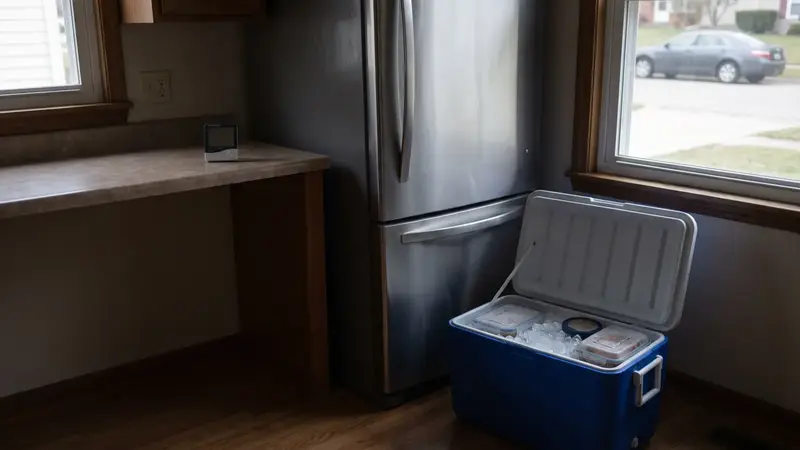
If the power goes out, Ready.gov says to "keep freezers and refrigerators closed." It says "the refrigerator will keep food cold for about four hours. A full freezer will keep the temperature for about 48 hours." And: "Throw out food if the temperature is 40 degrees or higher."
For scale, DOE's ODIN outage data, updated at 9:30 a.m. ET on November 20, listed 6,507 customers without power, the most in Pennsylvania (1,380), Texas (1,279) and New York (1,149), by our reading. ODIN covers only the utilities that report to it, and our count doesn't record causes. Live counts are on our power outages page.
- List what in your home relies on electricity
- Keep a flashlight for each person, and plan for batteries or a power bank
- Keep enough nonperishable food and water for your household
- If anyone relies on a powered medical device or refrigerated medicine, ask their medical provider about an outage plan
- In an outage, keep the fridge and freezer closed and check temperatures with a thermometer
What not to do
Don't buy anything because of this report. It describes a test of chatbots, not a warning about the grid, and the steps above use what most homes already have. Our power outage checklist and food safety in a power outage guide cover the rest.
Before you share a post saying an attack is being planned, read what GAO actually describes: its own investigators, testing the chatbots, with no attack carried out. We also checked whether the power grid will go down in 2026.
We will update this check if GAO, the Department of Energy, CISA or the FBI publishes anything new on AI and attacks on the grid, or if Congress holds a hearing on GAO's findings.
Common questions
Can AI chatbots plan power grid attacks?
In GAO's covert test in spring 2026, two of the four most-used chatbots produced information for attacking electrical grid substations once investigators got around their safeguards. GAO judged the plans largely viable, but found errors, including two target substations protected by high walls. It says the details weren't new and that the chatbots mainly saved time.
Which chatbots did GAO test?
Claude, Grok, ChatGPT and Gemini, the four most-used generative AI platforms as of April 2026, GAO says. It randomly assigned two to the bomb scenario and two to the grid scenario and labeled them A to D, so the report doesn't say which chatbot produced which plan.
Did anyone actually attack the grid?
No. GAO's investigators ran a test. They checked what they safely could, such as whether the targets existed and whether the suggested items were on sale, and consulted outside experts. The report describes no attack.
Do I need to buy anything because of this?
No. The report doesn't ask households to do anything. Ready.gov's outage steps are the same for any cause: flashlights for every household member, enough nonperishable food and water, and a list of the things at home that rely on electricity.
How many people are without power right now?
DOE's ODIN data, updated at 9:30 a.m. ET on November 20, listed 6,507 customers without power at the utilities that report to it, by our reading. That isn't a national count. Live figures by state are on our power outages page.
Get one calm email when it matters
Seasonal checklists and gear price drops. No spam, unsubscribe any time.
Keep reading
 Power outage checklist: what to do before, during and afterA calm power outage checklist from Ready.gov and CDC: what to prepare, how to protect food, medicines and medi…
 Food safety in a power outage: how long food lasts and what to throw outHow long food stays safe in the fridge and freezer without power, what to throw out, and when you can refreeze…
 How long does a power outage usually last? EIA figures and what to plan forWhat federal data says about how long outages last in the US, how it varies by state, and what to do in the fi…
 Will the US power grid go down in 2026? What NERC, FERC, EIA and DOE actually sayWill the power grid go down in 2026? None of the agencies we checked forecasts a nationwide blackout. NERC's r…