Is there going to be a blackout in Michigan? What the grid record and winter assessment say
Is there going to be a blackout in Michigan? NERC finds enough winter supply for MISO in normal conditions. What EIA's outage record and MPSC credits mean.
By Tom Calder · Updated November 21, 2026 · Sourced to NERC, EIA, the Michigan Public Service Commission, the National Weather Service, the Energy Department's ODIN outage data, Ready.gov and CDC
“Is there going to be a blackout in Michigan?”
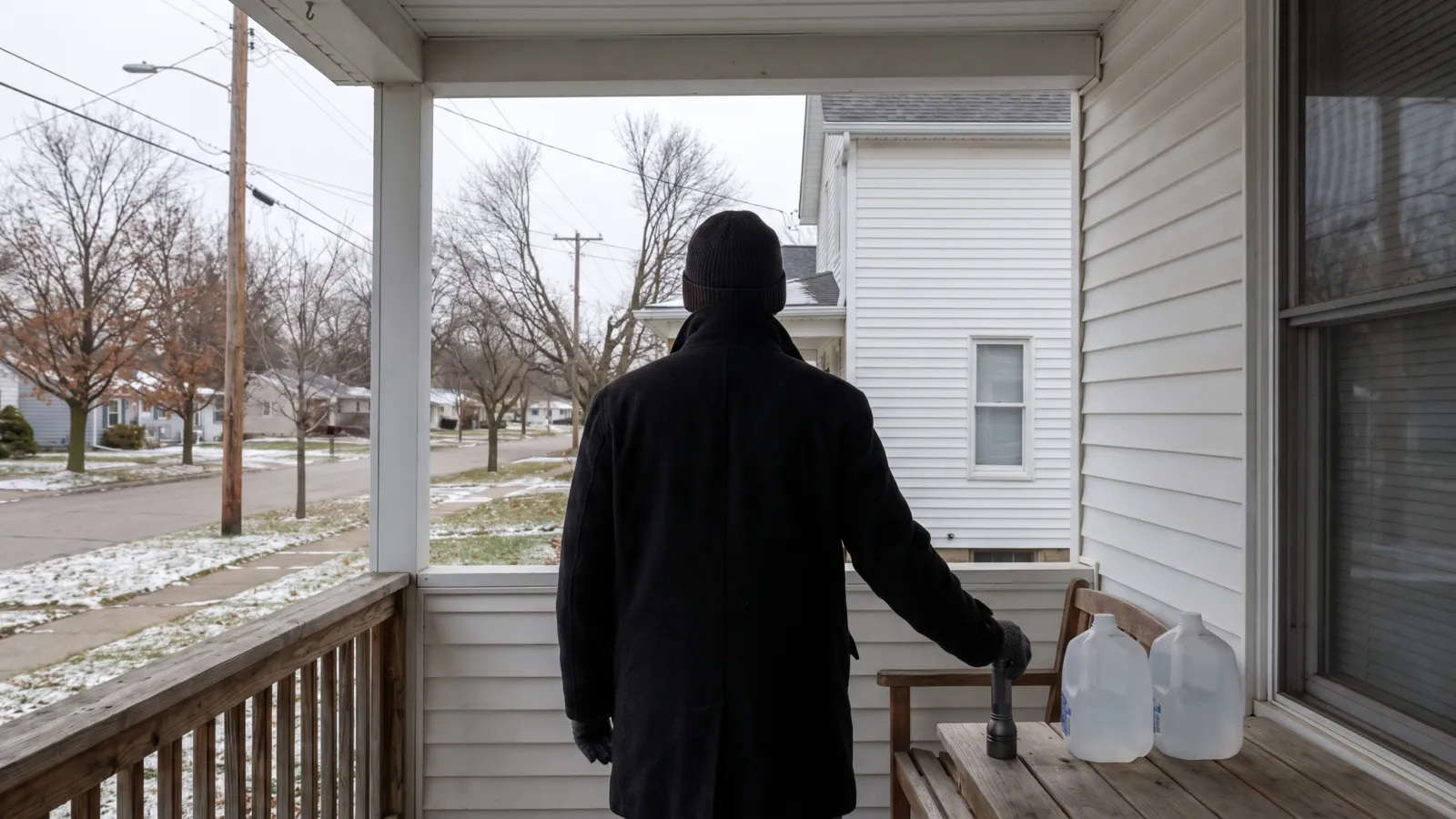
We found no official warning of a statewide blackout. NERC finds enough winter supply for normal conditions; Michigan's local outages run long.
- Is there going to be a blackout in Michigan? We found no official warning of one. NERC's winter assessment, published November 18, finds enough supply for normal winter peaks in MISO, one of Michigan's two grid operators; it flags other risks for import pockets in MISO's south, and its map shades Michigan normal risk (our reading). NERC adds that extreme conditions with high demand, weather and fuel outages and weak demand response "can result in an energy emergency."
- That assessment is about the supply of power, not the line on your street. EIA's figures show the average Michigan customer had 671.5 minutes of interruptions in 2025, about 11.2 hours, second only to West Virginia and about two and a half times the US average.
- At 9:42 a.m. ET on November 21, the weather service had no alerts in effect for Michigan.
- You don't need to buy anything. A few days of water and food, flashlights, warm layers and a plan for medicines cover the outages that do happen.
The three things most homes are missing
Our top pick from each comparison
as of Nov 21, 2026, 9:52 AM ET · Details
Product prices and availability are accurate as of the date/time indicated and are subject to change. Any price and availability information displayed on Amazon.com at the time of purchase will apply to the purchase of this product.
as of Nov 21, 2026, 9:52 AM ET · Details
Product prices and availability are accurate as of the date/time indicated and are subject to change. Any price and availability information displayed on Amazon.com at the time of purchase will apply to the purchase of this product.
as of Nov 21, 2026, 9:52 AM ET · Details
Product prices and availability are accurate as of the date/time indicated and are subject to change. Any price and availability information displayed on Amazon.com at the time of purchase will apply to the purchase of this product.If you already have these, you're most of the way there. As an Amazon Associate, PreparedStates earns from qualifying purchases. We may earn a commission when you buy through our links. When two products are close, commission can decide which one we pick. A clearly better product always wins.
What people are asking
"Is there going to be a blackout in Michigan" is a question people type, not a headline from one outlet. We answered the same question for California this morning in Is there going to be a blackout in California?, and our national answer is in Is there going to be a blackout this week?
For Michigan, we checked five official sources: the winter grid assessment from NERC, the North American Electric Reliability Corporation; the Energy Information Administration's outage record; the Michigan Public Service Commission's outage credit rules; the National Weather Service's alerts for the state; and the Energy Department's outage data.
What NERC's winter assessment says for Michigan
NERC published its 2026-2027 Winter Reliability Assessment on November 18. It covers "the upcoming three-month (December–February) winter period." Its first finding is that adequate resources for a normal winter peak "are available across the BPS," the bulk power system, but that "more extreme winter conditions extending over a wide area could result in supply shortfalls in some assessment areas."
NERC lists Michigan among the "states in MISO," its MRO-MISO area run by the Midcontinent Independent System Operator, and among the states in PJM's area. NERC's risk table gives MISO an "Other Reliability Risks" label this winter, which it defines as "identified transmission constraints, fuel supply scenarios, or operating challenges that fall outside the risk criteria." It places those at "import-dependent load pockets in the south part of MISO," and its map hatches only MISO's southern end, around the lower Mississippi.
On that map, Michigan is shaded normal risk, which NERC defines as "Sufficient operating reserves expected" (our reading of the map). NERC adds that "even in normal risk assessment areas, extreme demand and extreme outage scenarios that are not closely linked may indicate risk of operating reserve shortfall." PJM is rated normal overall, though NERC's probability table says a 2024 study found PJM's winter "at risk of unserved energy." The areas rated elevated are SERC-East (North and South Carolina) and two Canadian areas, the Maritimes and Québec; none is rated high.
For MISO, NERC reports an anticipated reserve margin of 52.2%, against a reference level of 42.2%, up from 49.4% last winter. Its extreme scenario for MISO, a peak of 104.0 GW "similar to January 2025 winter storm" with 14.5 GW of generators out or derated, found MISO "expected to have sufficient resources to meet operating reserve requirements" across a range of scenarios, "including extreme conditions that cause generator outages due to fuel issues." MISO's own probability study found the winter's load-loss risk below its 1-day-in-10-years target.
NERC adds a caveat. Its summary for MISO says: "Extreme conditions that cause above-normal peak demand, generator outages from weather and fuel issues, and low performance from LMRs (DR) can result in an energy emergency due to insufficient operating reserves." In that case, it says, operators would rely on measures such as demand response and "non-firm energy transfers into the system."
Is there going to be a blackout in Michigan? What is confirmed, and what is not
Confirmed: NERC's November 18 assessment finds enough supply for MISO in normal winter conditions, shades Michigan normal risk, and found enough supply in the extreme scenario it tested. It is a planning assessment of supply and demand, not a forecast that the lights will or won't stay on in any town.
Not confirmed: any warning, plan or forecast of a statewide Michigan blackout. We found none in NERC's report, in the MPSC's November news releases we could find, or in the weather service's alerts. At 9:42 a.m. ET on November 21, NWS listed no alerts in effect for Michigan.
Local outages are another matter. The Energy Department's ODIN data, last updated at 2:15 p.m. ET on November 20, listed 422 meters affected in Michigan, all on Great Lakes Energy, a co-op, and 387 of them in Emmet County. Nationwide, our power outage tracker counted 13,873 customers out in that day's snapshot. ODIN covers only utilities that report to it, and it had no Michigan rows from DTE Energy or Consumers Energy, so this is a partial count (our reading). Your utility's outage map is the live answer for your home; our state pages carry live NWS alerts for Michigan and every other state.
Michigan's outage record
EIA's Electric Power Annual, released October 21, 2026, gives each state's reliability figures. In 2025, the average Michigan customer had 1.424 interruptions and 671.5 minutes without power, counting major events such as big storms; that is about 11.2 hours (our arithmetic). Only West Virginia, at 1,013.2 minutes, was higher among the 50 states and DC (our count from EIA's table). The US average was 262.6 minutes.
Most of Michigan's 2025 figure came from major events. Leaving them out, the average Michigan customer had 160.3 minutes without power, against a US average of 120.8; so major events accounted for about 511 of the 671.5 minutes (our arithmetic). In 2024, Michigan's figure with major events was 470.4 minutes. The MPSC says: "Tree contact with electric lines remains one of the top causes of power outages in Michigan."
Bill credits for long outages in Michigan
Michigan pays customers for long outages through their bills. In its September 11, 2025 release, the MPSC said it "raised the bill credit to $42 per day for customers who endure prolonged or frequent power outages," effective October 1, 2025. The credit is indexed to inflation, so check the MPSC or your utility for the current amount.
The MPSC says the credit "kicks in after" 16 hours during normal conditions, 48 hours during "gray sky conditions affecting between 1% and 10% of a utility's customers," and 96 hours during catastrophic conditions, when 10% or more of a utility's customers are out. Customers who have more than 6 sustained interruptions in a year are eligible too. Since 2023, the MPSC says, the credits "automatically show up on eligible customers' bills," so you don't have to apply.
What it means for your home
Plan for the outages that happen: winter storms, falling limbs and local equipment faults. Ready.gov says: "After an emergency, you may need to survive on your own for several days," and, for winter weather, "Gather supplies in case you need to stay home for several days without power." CDC says to store at least 1 gallon of water per person, per day for 3 days, and to "try to store a 2-week supply if possible." Ready.gov also says: "Keep freezers and refrigerators closed" and "Have flashlights for every household member."
If someone at home relies on power for medicine or a medical device, Ready.gov says to "Have alternate plans for refrigerating medicines or using power-dependent medical devices." The power outage checklist covers before, during and after, and our power outage kit builder sizes Ready.gov's list to your household.
- Water: 1 gallon per person, per day, for at least 3 days; 2 weeks if you can
- Food your household already eats, for several days, that needs no fridge
- A flashlight for every person, plus spare batteries
- Warm layers and blankets in case the heat goes off
- A battery-powered or hand-crank radio, and a charged phone
- A plan for medicines that need cold and for powered medical devices
What not to do
Don't buy a generator or a power station because of a blackout question. NERC finds enough supply for Michigan's grid area in normal winter conditions, and none of the sources we checked asks households to prepare for a statewide outage.
Heat your home safely when the power is out. Ready.gov says: "Do not use a gas stove or oven to heat your home. It increases your risk of carbon monoxide poisoning," and "Generators and fuel should always be used outdoors and at least 20 feet away from windows, doors and attached garages." It also says to "Install working carbon monoxide detectors on every level of your home." Our generator safety guide goes through it step by step.
We will update this check if NERC, MISO, PJM or the MPSC warns of supply shortfalls or rotating outages in Michigan this winter, if the MPSC's winter energy appraisal says something new about supply, or if Ready.gov changes its advice. Live alerts are on our Michigan and power outages pages.
Common questions
Is there going to be a blackout in Michigan?
We found no official warning of a statewide blackout. NERC's winter assessment, published November 18, 2026, finds enough supply for MISO, one of Michigan's two grid operators, in normal winter conditions, and its map shades Michigan normal risk (our reading). NERC says extreme conditions with high demand, weather and fuel outages and weak demand response could still cause an energy emergency. Local outages from storms and falling limbs happen every year.
How often does the power go out in Michigan?
EIA's figures for 2025 show the average Michigan customer had 1.424 interruptions and 671.5 minutes without power, about 11.2 hours, counting major events. That was the second-highest of the 50 states and DC, after West Virginia. The US average was 262.6 minutes. Without major events, Michigan's figure was 160.3 minutes.
Does Michigan's grid have enough power this winter?
NERC says MISO has enough for normal winter peaks. It reports an anticipated reserve margin of 52.2% against a 42.2% reference level, and its extreme scenario, a 104.0 GW peak similar to the January 2025 winter storm, still found enough resources. NERC adds that above-normal demand, weather and fuel outages and weak demand response together can cause an energy emergency.
Do Michigan utilities pay you for a long outage?
Yes, under MPSC rules. The credit starts after 16 hours in normal conditions, 48 hours in gray sky conditions and 96 hours in catastrophic conditions, or after more than 6 sustained interruptions in a year. From October 1, 2025, the MPSC set it at $42 plus $42 for each extra day; its page lists a separate $40 credit for repeat outages. Amounts are indexed to inflation and appear on your bill automatically.
What should I have at home for a winter outage in Michigan?
Ready.gov says to be ready to stay home for several days without power. CDC says to store at least 1 gallon of water per person per day for 3 days, and 2 weeks if possible. Keep flashlights for everyone, warm layers, a radio, a charged phone and a plan for medicines. Never heat your home with a gas stove or oven.
Sources (11)
- NERC: 2026-2027 Winter Reliability Assessment (PDF, November 2026)
- NERC: Increasing demand and El Niño challenge winter grid reliability (Nov 18, 2026)
- EIA: Electric Power Annual, Table 11.3 reliability metrics by state (2025 and 2024)
- Michigan Public Service Commission: MPSC raises bill credit to $42 for customers experiencing long or repeat outages (Sep 11, 2025)
- Michigan Public Service Commission: MPSC focus on reliability and resilience
- Michigan Public Service Commission: Customer outage history and credits
- National Weather Service: active alerts for Michigan
- Ready.gov: Power Outages
- Ready.gov: Winter Weather
- Ready.gov: Build a Kit
- CDC: Creating and storing an emergency water supply
Get one calm email when it matters
Seasonal checklists and gear price drops. No spam, unsubscribe any time.
Keep reading
 Is there going to be a blackout in California? What the grid record and winter assessment sayIs there going to be a blackout in California? NERC rates the state's grid normal risk this winter. What EIA's…
 Is there going to be a blackout this week? What the grid and outage data show nowIs there going to be a blackout tonight or this week? We found no planned or nationwide blackout notice. ODIN …
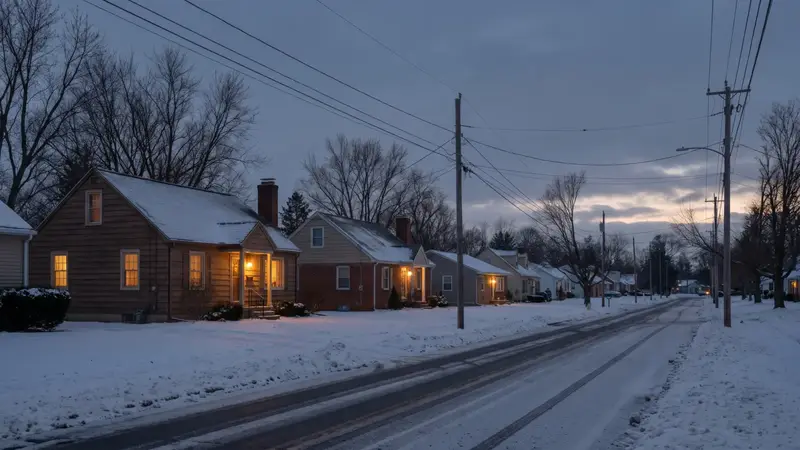 Will the US power grid fail this winter? What NERC's winter assessment says, by regionWill the US power grid fail this winter? What NERC's latest winter assessment says for ERCOT, PJM, California …
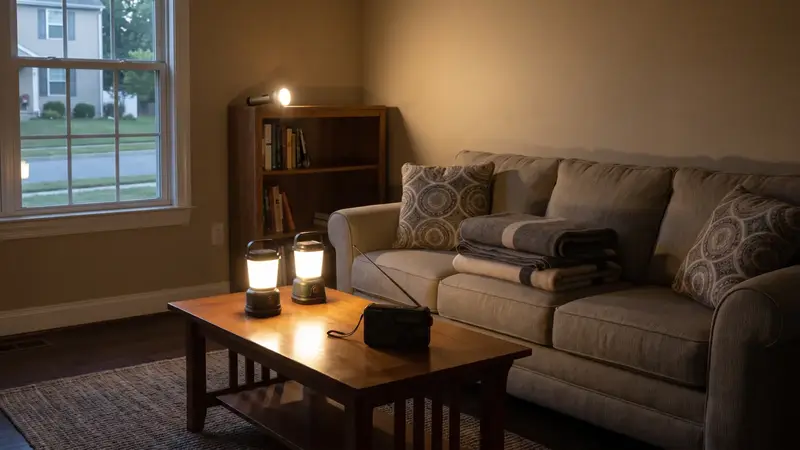 Power outage checklist: what to do before, during and afterA calm power outage checklist from Ready.gov and CDC: what to prepare, how to protect food, medicines and medi…