Is there going to be a blackout this year? What the grid record and storm outages show
Is there going to be a blackout this year? No official source forecasts one. What the grid record says, and what the Thanksgiving storm's outages show about real ones.
By Tom Calder · Updated November 27, 2026 · Sourced to the National Weather Service, NERC, the Department of Energy, EIA, the Energy Department's ODIN outage data, New York State, Ready.gov, FoodSafety.gov and CDC
“Is there going to be a blackout this year?”
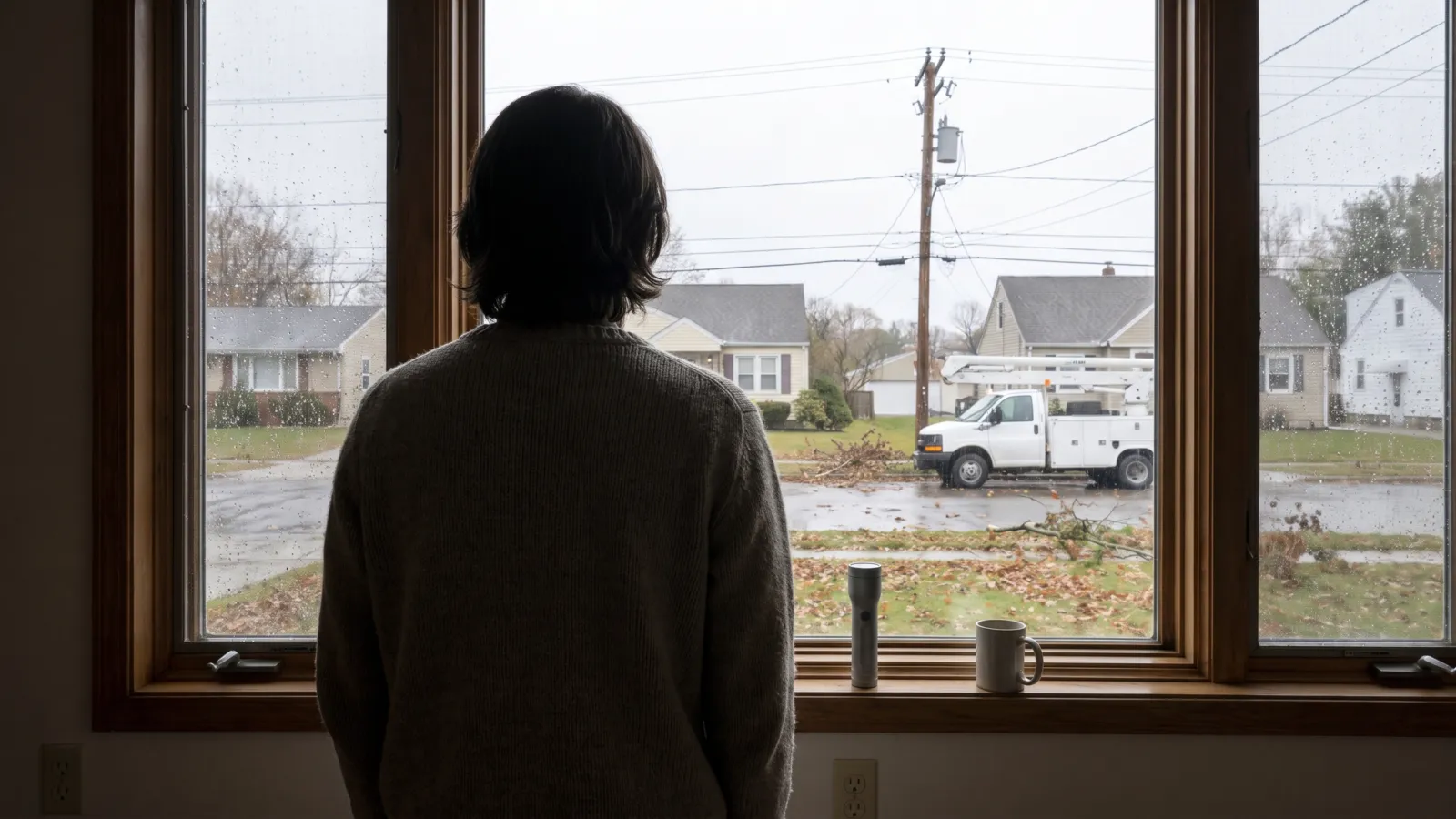
We found no official source that forecasts a US blackout this year. Outages that happen are local, like Thanksgiving's storm.
- Is there going to be a blackout this year? We found no official forecast, notice or warning of a nationwide, planned or rolling blackout for the rest of 2026. NERC's winter assessment finds enough power supply for a normal winter peak everywhere, with shortfalls possible in extreme, wide-area cold.
- What does happen is local, storm-driven outages, not a grid-wide failure. Figures in the news such as 450,000 are not official: by 9:55 a.m. ET on November 27, no state or the Energy Department had posted a count. The Energy Department's ODIN data showed 58,174 customers out at 5:15 a.m. ET, 42,482 in New York (our reading), but only 261 in Pennsylvania and 105 in New Jersey, so it is far from a full count there.
- EIA says the average US outage in 2025 lasted 196.3 minutes, about 3.3 hours, counting big storms. Averages can hide much longer waits after big storms, and Ready.gov's advice is sized for several days. You don't need to buy anything new.
The three things most homes are missing
Our top pick from each comparison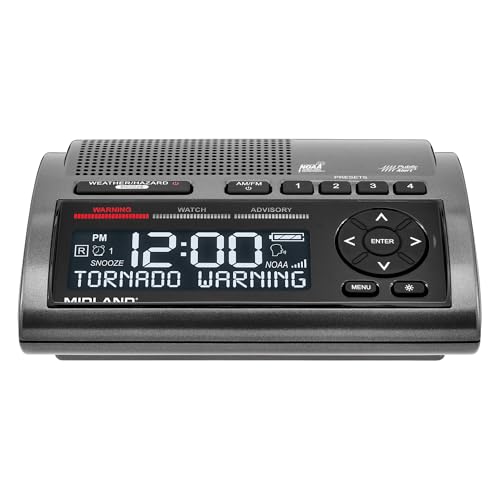
as of Nov 28, 2026, 7:52 PM ET · Details
Product prices and availability are accurate as of the date/time indicated and are subject to change. Any price and availability information displayed on Amazon.com at the time of purchase will apply to the purchase of this product.
as of Nov 28, 2026, 7:52 PM ET · Details
Product prices and availability are accurate as of the date/time indicated and are subject to change. Any price and availability information displayed on Amazon.com at the time of purchase will apply to the purchase of this product.
as of Nov 28, 2026, 7:52 PM ET · Details
Product prices and availability are accurate as of the date/time indicated and are subject to change. Any price and availability information displayed on Amazon.com at the time of purchase will apply to the purchase of this product.If you already have these, you're most of the way there. As an Amazon Associate, PreparedStates earns from qualifying purchases. We may earn a commission when you buy through our links. When two products are close, commission can decide which one we pick. A clearly better product always wins.
What people are asking
"Is there going to be a blackout this year" is a question people type, not a claim from one outlet. It comes as a coastal storm brought high winds, flooding and power outages to the Northeast on Thanksgiving Day. We have checked the nearby versions already: Will the US power grid go down in 2026?, Is there going to be a blackout this week? and Is there going to be a blackout in 2027?.
For the rest of this year, we checked what NERC, the grid's reliability watchdog, and the Department of Energy have published, what the National Weather Service said about the storm, and what the Energy Department's outage data showed overnight.
What the grid record says for the rest of 2026
NERC's 2026-2027 Winter Reliability Assessment, released November 18, covers December through February. Its first finding: "Adequate resources for normal winter peak-load conditions (i.e., 50-50 peak demand forecast) are available across the BPS," the bulk power system. The caveat: "more extreme winter conditions extending over a wide area could result in supply shortfalls in some assessment areas." The one US area it names at risk in more extreme conditions is SERC-East, North and South Carolina.
That is a planning assessment, not a forecast. NERC's release says resource additions, delayed retirements and better cold-weather performance "have improved the overall reliability outlook for the upcoming winter," while this year's El Niño "may also cause disruption." NERC's newsroom posted nothing about blackouts or rolling outages after that release, up to early November 27; its one later item, on November 24, is about its standards process.
The Energy Department's newest grid action is an emergency order of November 20 keeping two units at the Eddystone station in Pennsylvania available "through February 18, 2027." Energy Secretary Chris Wright says the order is about "reducing the risk of blackouts"; it does not announce or forecast any outage. We found no blackout notice from DOE between November 21 and early November 27.
What the Thanksgiving storm did
The Weather Prediction Center said on Thursday afternoon that the storm "impacting the central Mississippi Valley and the East Coast will continue to move northwards through this evening across the Mid-Atlantic and head towards New England by Friday." NWS New York's highest wind reports on Thursday were 66 mph at LaGuardia, 60 mph at JFK and 54 mph in Central Park.
Early Friday, NWS Albany had a High Wind Warning for northern Berkshire County in Massachusetts, eastern Rensselaer County in New York and Bennington County in Vermont until 7 a.m., with gusts up to 60 mph, saying "Widespread power outages are expected." Coastal Flood Warnings were in force on parts of the coasts of New York, New Jersey and Delaware, and along the Delaware River in Pennsylvania. New York Governor Kathy Hochul declared a state of emergency on November 25 for New York City, Long Island, Westchester and contiguous counties.
The Weather Prediction Center expects conditions to "begin to improve across the East on Friday as the storm system begins to slowly exit the region," with gusts of 25 to 35 mph still possible. It says interior New England may see "a glaze up to two tenths of an inch of ice" through Friday morning. Our Thanksgiving storm check has the run-up. By about 9:50 a.m. ET on Friday, no High Wind Warning or Wind Advisory was in force in New York, Pennsylvania, New Jersey, Connecticut, Massachusetts, Vermont, New Hampshire or Maine; Coastal Flood Warnings were still up in parts of New Jersey and Pennsylvania.
Is the grid going down? What the outage data shows
Our reading of the Energy Department's ODIN data, which counts outages reported by the utilities that take part, found 70,168 customers without power at 1 a.m. ET on November 27, across 32 states. New York had 48,263, most of them in the Hudson Valley and western counties: Sullivan County had 9,165, Columbia 6,099 and Dutchess 4,891. Massachusetts had 6,285 and Delaware 3,042. Oregon had 5,926; ODIN does not give causes, and the Weather Prediction Center described a separate storm system in the Northwest. By ODIN's 5:15 a.m. ET update the total was 58,174, with 42,482 in New York.
That count is partial. At 5:15 a.m. ODIN showed 261 customers out in Pennsylvania, 105 in New Jersey and 3 in Maryland, so it is not a full count for those states. The 450,000 and higher figures being shared are not from a state or federal count: by 9:55 a.m. ET on November 27 we found no outage count from the New York, Pennsylvania, New Jersey, Maryland, Virginia, Massachusetts or Connecticut governors, or from the Energy Department. None of the sources we checked describes a failure of the grid as a whole.
That is about five times the 13,873 at 2:15 p.m. ET on November 20, and more than twice the highest daily reading in our tracker since October 27, 32,479 on November 8 (our arithmetic; our tracker has no readings for November 21 to 26). These are partial counts, since not every utility reports to ODIN. ODIN does not record causes. NWS Albany warned that "Damaging winds will blow down trees and power lines," and none of the sources we checked describes a shortage of power supply.
How long outages last
EIA, the government's energy statistics agency, says the average US customer went 262.6 minutes without power in 2025, about 4.4 hours, counting major events such as big storms, or 120.8 minutes without them (our arithmetic for the hours). A single interruption lasted 196.3 minutes on average counting major events, about 3.3 hours.
Storm years run longer. EIA says that in 2024, "Major events such as Hurricanes Beryl, Helene, and Milton accounted for 80% of the hours without electricity," and that interruptions not caused by major events "routinely average about two hours per year." Averages can hide much longer waits after big storms, and the official advice is sized for several days, not hours. Before the storm, the governor's office said New York's regulated utilities had about 5,780 workers available for damage assessment, repair and restoration.
Is there going to be a blackout this year? What it means for your home
Ready.gov says: "After an emergency, you may need to survive on your own for several days." CDC says to store at least 1 gallon of water per person, per day for 3 days, and to "try to store a 2-week supply if possible." For a household of four, three days is 12 gallons (our arithmetic).
FoodSafety.gov says "your refrigerator will keep food safe for up to 4 hours during a power outage," and "A full freezer will hold a safe temperature for approximately 48 hours," or about 24 hours if it is half full and the door stays closed. Ready.gov says: "Keep freezers and refrigerators closed," and "Throw out food if the temperature is 40 degrees or higher." It also says to "Have alternate plans for refrigerating medicines or using power-dependent medical devices." Our power outage kit builder sizes Ready.gov's list to your household, and the power outage checklist covers before, during and after.
- Water: at least 1 gallon per person, per day, for 3 days
- Food your household already eats that needs no fridge
- A flashlight for every person, plus spare batteries
- Charged phones and a charged power bank
- A plan for refrigerated medicines and powered medical devices
What not to do
Don't buy a generator or months of supplies because of a blackout-this-year question. None of the sources we checked forecasts a blackout or asks households to prepare beyond Ready.gov's several days and CDC's two-week water supply "if possible."
After a storm, New York State's advice is: "Never touch or go near downed utility lines, as they may still be live and highly dangerous. Report downed lines immediately to your local utility provider or 911." The National Weather Service says: "Do NOT drive into flooded roadways or around a barricade; Turn Around, Don't Drown!"
If you use a generator, Ready.gov says: "Generators and fuel should always be used outdoors and at least 20 feet away from windows, doors and attached garages." It also says: "Do not use a gas stove or oven to heat your home. It increases your risk of carbon monoxide poisoning." Our generator safety guide goes through it step by step.
We will update this check if a grid operator, NERC or the Energy Department warns of rotating or planned outages before the end of the year, or if Ready.gov changes its advice. Live outage counts are on our power outages page, and weather alerts on our alerts page.
Common questions
Is there going to be a blackout this year?
We found no official source that forecasts a nationwide, planned or rolling blackout for the rest of 2026. NERC's winter assessment, released November 18, finds adequate supply for a normal winter peak across the bulk power system, with shortfalls possible in more extreme, wide-area cold. Outages that do happen are local, like those from the Thanksgiving Day storm.
How many people lost power in the Thanksgiving storm?
No state or the Energy Department had posted a count by 9:55 a.m. ET on November 27, and figures such as 450,000 in the news are not official counts. The Energy Department's ODIN data showed 58,174 customers out at 5:15 a.m. ET, down from 70,168 at 1 a.m. (our reading), but it includes few utilities in Pennsylvania, New Jersey and Maryland. Your utility's outage map has the latest for your street.
How long does a power outage usually last?
EIA says the average US interruption in 2025 lasted 196.3 minutes, about 3.3 hours, counting major events such as storms, and the average customer went 262.6 minutes without power over the whole year. Averages can hide much longer waits after big storms, and Ready.gov's advice is sized for several days.
Is the grid running out of power this winter?
Not under normal conditions, says NERC: adequate resources for a normal winter peak are available. It warns that more extreme winter conditions over a wide area could cause supply shortfalls in some areas, and names SERC-East, North and South Carolina, as the US area at risk in extreme cold. That is a planning assessment, not a forecast.
What should I do if a power line is down after the storm?
New York State says never to touch or go near downed utility lines, as they may still be live, and to report them to your local utility or 911. Don't drive through flooded roads or around barricades; the National Weather Service says water may be deeper than it appears.
Sources (14)
- NERC: 2026-2027 Winter Reliability Assessment (PDF, November 2026)
- NERC: Increasing demand and El Niño challenge winter grid reliability (Nov 18, 2026)
- Department of Energy: Energy Secretary keeps critical generation available in the Mid-Atlantic (Nov 20, 2026)
- NWS Weather Prediction Center: Short Range Forecast Discussion (Nov 26, 2026, 3:22 PM EST)
- NWS New York: Public Information Statement, highest wind reports (Nov 26, 2026)
- NWS Albany: High Wind Warning (Nov 27, 2026, 1:19 AM EST)
- New York State: Governor Hochul declares State of Emergency ahead of Thanksgiving coastal storm (Nov 25, 2026)
- EIA: Electric Power Annual, Table 11.3 reliability metrics (2025 and 2024)
- EIA: Hurricanes in 2024 led to the most hours without power in 10 years (Dec 1, 2025)
- National Weather Service: Flood safety, during a flood
- FoodSafety.gov: Food safety during a power outage
- Ready.gov: Power Outages
- Ready.gov: Build a Kit
- CDC: Creating and storing an emergency water supply
Get one calm email when it matters
Seasonal checklists and gear price drops. No spam, unsubscribe any time.
Keep reading
 Will the US power grid go down in 2026? What NERC, FERC, EIA and DOE actually sayWill the power grid go down in 2026? None of the agencies we checked forecasts a nationwide blackout. NERC's r…
 Is there going to be a blackout in 2027? What NERC, DOE and the grid record sayIs there going to be a blackout in 2027? No official source forecasts one. What NERC rates for 2027, what DOE …
 Is there going to be a blackout this week? What the grid and outage data show nowIs there going to be a blackout tonight or this week? We found no planned or nationwide blackout notice. ODIN …
 Is a winter storm going to hit Thanksgiving travel? What NWS shows now for your routeUpdated Nov 28: on Saturday morning NWS had Winter Storm Warnings in the Colorado, Wyoming and Montana mountai…