Magnitude 5.0 earthquake hits Los Angeles area: what to check at home, and the aftershock odds
USGS says a magnitude 5.0 earthquake struck near Manhattan Beach on November 28, with a low likelihood of damage. The aftershock odds, and a calm home check.
By Tom Calder · Updated November 28, 2026 · Sourced to the US Geological Survey's event page, aftershock forecast and ShakeAlert report, NOAA's National Tsunami Warning Center, Ready.gov and CDC
- A magnitude 5.0 earthquake struck the Los Angeles area at 9:30 AM Pacific time on Saturday, November 28, about 5 kilometers (3 miles) southwest of Manhattan Beach, the US Geological Survey says. USGS assesses "a low likelihood that the earthquake caused damage." The largest aftershock so far, at 11:41 AM, was magnitude 4.5.
- USGS's aftershock forecast gives a 4% chance of one or more aftershocks larger than magnitude 5 in the next week, and a 78% chance of magnitude 3 or higher, which can be felt nearby. NOAA's tsunami center said of the 11:41 AM aftershock: "There is NO tsunami danger from this earthquake."
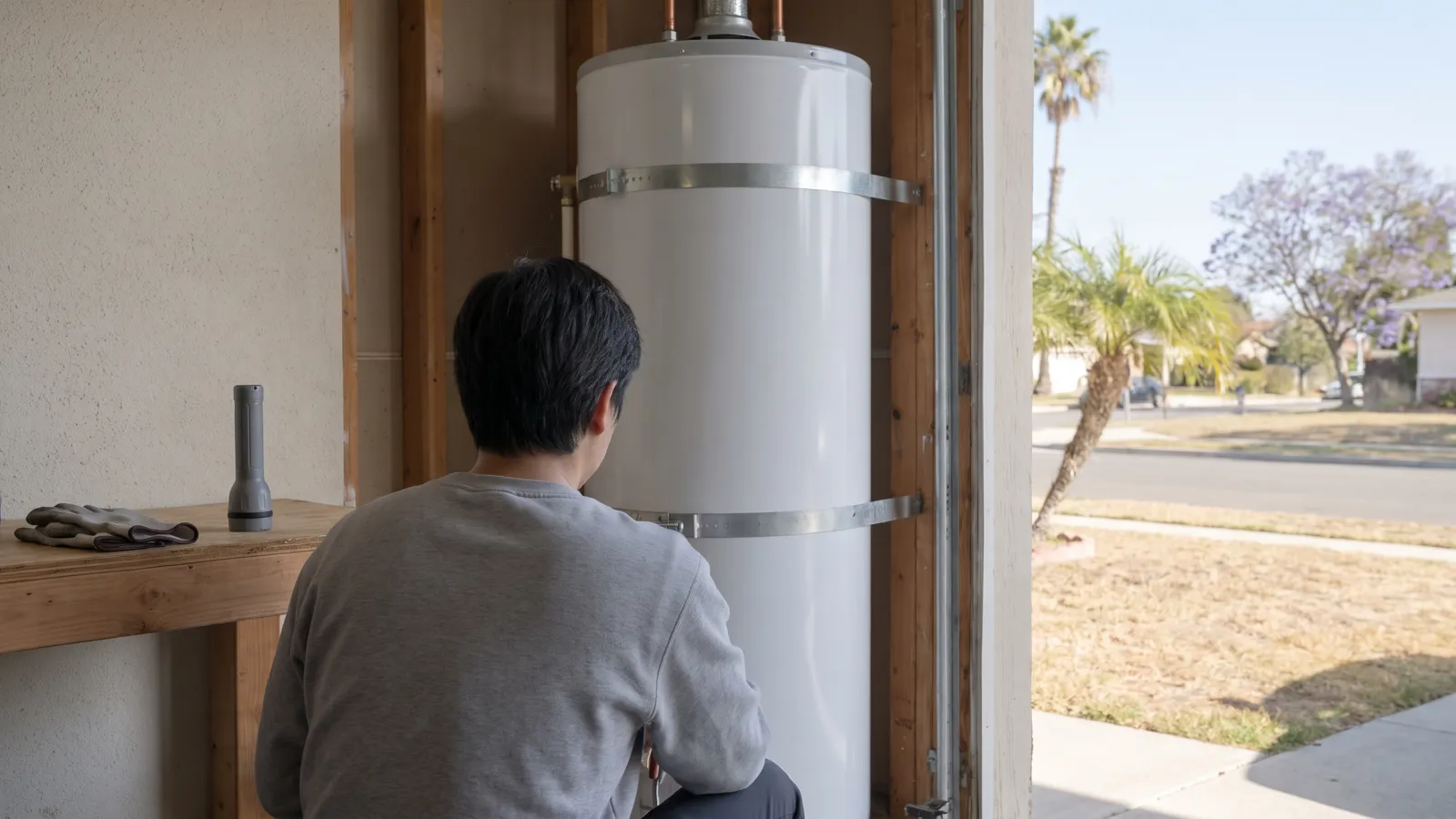
- Once the shaking stops, Ready.gov and CDC point to a short home check: gas, water and power lines, walls and foundations, and a water heater that should be strapped to the wall. If you feel an aftershock, drop, cover and hold on again. You don't need to buy anything today.
What happened on Saturday morning
The US Geological Survey says a magnitude 5.0 earthquake occurred near Manhattan Beach at 9:30 AM local time on November 28. Its event page puts it 5 kilometers southwest of Manhattan Beach, at a depth of about 12.8 kilometers (8 miles). By mid-afternoon Eastern time, more than 19,000 people had filled in USGS's "Did You Feel It?" survey for this earthquake.
USGS's early warning system, ShakeAlert, was activated, and USGS says "people may have received alerts." Its report on the alert says it "was distributed over the WEA system," the Wireless Emergency Alerts that reach phones. The alert went out about five seconds after the earthquake began, at an initial ShakeAlert estimate of magnitude 5.1. If you were very close to the epicenter, the shaking may have reached you first: USGS's report lists essentially no warning time for Manhattan Beach.
On damage, USGS assesses that there is "a low likelihood that the earthquake caused damage." Its PAGER estimate gives a green alert, the lowest level, for shaking-related deaths and economic losses. That is a model estimate for the region, not an inspection of any building, so it doesn't mean your home is fine. As of 3:40 PM Eastern time, we found no damage or injury report from the Los Angeles Fire Department, Los Angeles County's emergency site or Cal OES; that doesn't mean nothing was damaged.
Aftershocks: what USGS's forecast says
Aftershocks have followed. As of 3:40 PM Eastern time, USGS listed 11 quakes of magnitude 2.5 or higher within 30 kilometers of the epicenter since the main shock. The largest, magnitude 4.5, came at 11:41 AM Pacific time, about 6 kilometers west-southwest of Manhattan Beach.
USGS's aftershock forecast, issued at 12:20 PM Pacific time, gives these odds for the week to December 5: a 78% chance of magnitude 3 or higher aftershocks, with "most likely" 0 to 21 of them; a 26% chance of magnitude 4 or higher; and a 4% chance of one or more aftershocks larger than magnitude 5, "which can be damaging." USGS puts the chance of magnitude 6 or higher at 1 in 300.
USGS also says there is a 4% chance that this earthquake becomes a foreshock to a larger one in the next week, which it calls "possible but with a low probability." USGS's own words on this: "No one can predict the exact time or place of any earthquake, including aftershocks." The forecast is updated as time passes, particularly in the first 72 hours, and "the number of aftershocks will decrease over time, but a large aftershock can temporarily increase the number of aftershocks."
The home check after the shaking
CDC's advice for after an earthquake starts with a walk round: "Carefully check your home's walls, floors, doors, windows, and staircases for damage." If you see structural damage, "like cracks in the foundation or missing support beams, you may need to relocate to a shelter or another safe location." Ready.gov is plain about damaged buildings: "If you are in a damaged building, go outside and quickly move away from the building. Do not enter damaged buildings." CDC adds: leave your home or building "if you hear shifting or unusual noises."
CDC also says to check gas, electrical and water lines for damage. If the power is out, use flashlights instead of candles. Ready.gov says cracked lines may pollute the water supply to your house, and that it's a good idea to shut off your water until authorities say it is safe to drink. CDC's earthquake preparedness advice also names loose chimney or roof tiles and bricks as things that can fall in an earthquake.
- Walls, floors, doors, windows and stairs: look for new cracks or gaps
- Foundation and support beams: cracks or missing supports mean you may need to relocate, CDC says
- Gas: a smell, or a blowing or hissing noise
- Water lines and the water heater: leaks, and whether it's strapped
- Power: downed lines outside, flashlights instead of candles inside
- Chimney and roof: loose bricks or tiles
If you smell gas
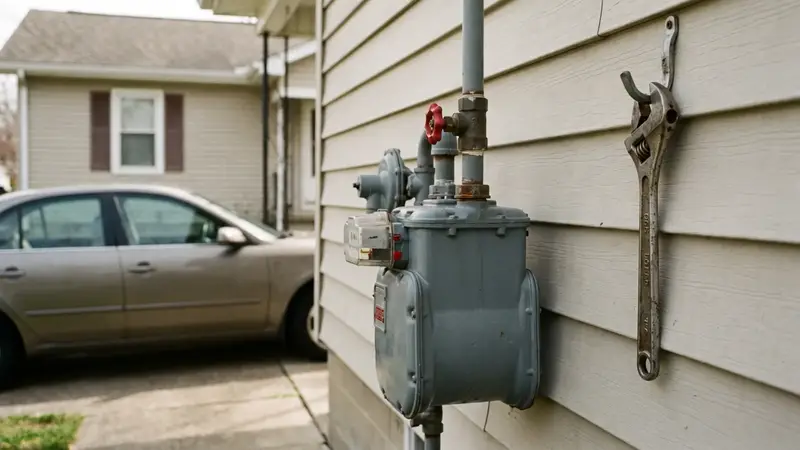
Ready.gov: "If you smell gas or hear a blowing or hissing noise, open a window and get everyone out quickly." Turn off the gas using the outside main valve if you can, and call the gas company from a neighbor's home. CDC says not to use matches, lighters, appliances or light switches until you are sure there are no gas leaks, because sparks from switches could ignite gas.
The sources give the reasons to turn it off: a gas smell or a blowing or hissing noise (Ready.gov), or a broken line (CDC). Ready.gov warns that if you turn it off for any reason, "only a qualified professional can turn it back on," and never to try it yourself. Our guide to shutting off gas, water and electricity shows where each valve usually is.
The water heater
CDC says to check gas, electrical and water lines for damage, and a water heater sits on all of them. On a gas model, the gas advice above applies. CDC's earthquake advice says to secure a water heater "with a wide metal strap around the top attached to wall studs," and Ready.gov lists water heaters among the heavy items to secure. If yours isn't strapped, that is a job for the coming days.
Ready.gov notes that the water in your water heater and toilet tanks can drain away unless you trap it by shutting off the main house valve, which it says is not the street valve at the curb. CDC says to listen to reports from local officials for advice on water precautions in your home.
Aftershocks, power lines and the coast
If you feel an aftershock, Ready.gov and CDC say the same thing: drop, cover and hold on. CDC says aftershocks "can happen minutes, days, weeks, or even months after an earthquake." Our earthquake preparedness guide explains how, and what to do indoors, outdoors or driving.
Stay clear of fallen power lines, CDC says, and call the electric company to report them. Ready.gov says text messages may be more reliable than phone calls after an earthquake, and they save battery.
On the coast, NOAA's National Tsunami Warning Center put out an information statement after the 11:41 AM aftershock saying "There is NO tsunami danger from this earthquake," and its site showed no tsunami warning, advisory or watch in effect on Saturday afternoon. The general rule from Ready.gov: "If you are in an area that may experience tsunamis, go inland or to higher ground immediately after the shaking stops."
What to keep ready, and what not to buy
Ready.gov's earthquake kit is short: enough food and water for several days, a flashlight, a fire extinguisher and a whistle. CDC says to store enough supplies to last at least 3 days. Our emergency kit checklist covers the rest, and most homes already have much of it.
You don't need to buy anything today. A flashlight you can find in the dark, shoes by the bed and knowing where your gas and water shut-offs are matter more than new gear. One thing to know for later: Ready.gov says a standard homeowner's insurance policy does not cover earthquake damage.
We will update this story if USGS changes the magnitude or its aftershock forecast moves notably, if a larger earthquake follows, if NOAA issues a tsunami alert, or if Los Angeles County, the city or Cal OES reports damage or gives households new instructions.
Common questions
How big was the Los Angeles earthquake today?
USGS says it was magnitude 5.0, at 9:30 AM Pacific time on November 28, 2026, about 5 kilometers southwest of Manhattan Beach and about 12.8 kilometers deep. ShakeAlert's first estimate was 5.1; USGS's reviewed magnitude is 5.0. The largest aftershock so far was magnitude 4.5 at 11:41 AM.
Will there be more aftershocks?
Very likely small ones. USGS's forecast, issued at 12:20 PM Pacific time, gives a 78% chance of magnitude 3 or higher aftershocks in the week to December 5, and a 26% chance of magnitude 4 or higher. If you feel one, drop, cover and hold on.
Could a bigger earthquake follow?
USGS gives a 4% chance that this earthquake becomes a foreshock to a larger one in the next week, which it calls possible but with a low probability. USGS says no one can predict the exact time or place of any earthquake, including aftershocks.
Was there a tsunami warning?
NOAA's National Tsunami Warning Center said of the 11:41 AM aftershock: "There is NO tsunami danger from this earthquake." Its site showed no tsunami warning, advisory or watch in effect on Saturday afternoon.
Should I turn off my gas after an earthquake?
If you smell gas or hear a blowing or hissing noise, Ready.gov says to open a window, get everyone out, turn off the outside main valve if you can and call the gas company from a neighbor's home. CDC says to shut off the main valve from the outside if you smell gas or see a broken line. Once it's off, Ready.gov says, only a qualified professional can turn it back on.
Sources (10)
- USGS: M 5.0 - 5 km SW of Manhattan Beach, CA (event page)
- USGS: aftershock forecast for the Manhattan Beach earthquake
- USGS: ShakeAlert report for the Manhattan Beach earthquake
- USGS: PAGER estimate for the Manhattan Beach earthquake
- USGS: Aftershock Forecast Overview
- NOAA National Tsunami Warning Center: Tsunami Information Statement Number 1 (Nov 28, 2026)
- Ready.gov: Earthquakes
- Ready.gov: Safety Skills (utility shut-offs)
- CDC: Stay Safe After an Earthquake
- CDC: Earthquake Safety
Get one calm email when it matters
Seasonal checklists and gear price drops. No spam, unsubscribe any time.
Keep reading
 Earthquake preparedness: Drop, Cover and Hold On, and what to do afterWhat to do in an earthquake: Drop, Cover and Hold On, how to secure heavy items, what to do indoors, outdoors …
 How to shut off gas, water and electricity in an emergencyWhere your gas, water and electric shutoffs are, when to use them, when not to shut off gas, and why only a pr…
 Tornado, hurricane or earthquake kit: what goes in every kit and what changes by disasterOne basic emergency kit covers most disasters. See what Ready.gov puts in every kit, and what changes for a to…
 Emergency kit checklist: what to include, how much to keep and where to store itA plain-English emergency kit checklist built on Ready.gov's basic kit and extra items, with how many days of …