
Was your SAT account hacked? What College Board says was exposed, and what to do at home
College Board says intruders reached basic account information for a subset of users and could start some password resets. What it confirmed, what it hasn't, and family steps.
By Tom Calder · Updated November 29, 2026 · Sourced to College Board's security update, the FTC, IdentityTheft.gov and CISA, with the Reuters, CBS News and Fox News reports checked
“Cyberattack on SAT administrator College Board exposed user data, organization says”
Partly confirmed: basic account details for a subset of users
- Was your SAT account hacked? College Board says intruders got "basic account information for a subset of users" and could "initiate password resets in some cases." It hasn't said how many accounts, whose, or what "basic account information" covers, and it says it has "no evidence of improper access" to its test scores and content so far.
- The break-in reached the systems used to create new College Board accounts and to submit CSS Profile financial aid applications, College Board said on November 27. New accounts can't be created for now and CSS Profile is "temporarily unavailable." Its view that "sophisticated AI tools" were used is a "preliminary assessment," not a finding.
- At home: ignore password-reset emails you didn't ask for, change a reused password, and know that a credit freeze is free. There is nothing to buy.
The three things most homes are missing
Our top pick from each comparison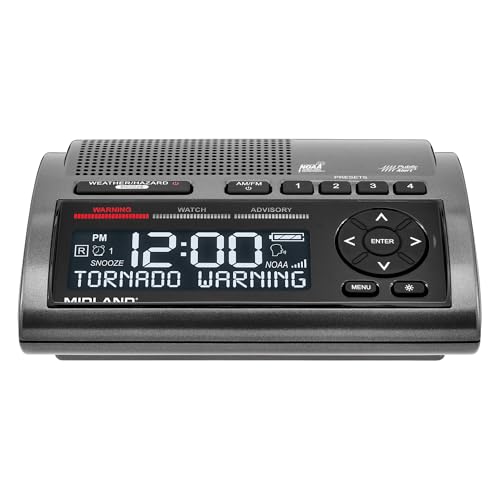
as of Nov 29, 2026, 1:52 AM ET · Details
Product prices and availability are accurate as of the date/time indicated and are subject to change. Any price and availability information displayed on Amazon.com at the time of purchase will apply to the purchase of this product.
as of Nov 29, 2026, 1:52 AM ET · Details
Product prices and availability are accurate as of the date/time indicated and are subject to change. Any price and availability information displayed on Amazon.com at the time of purchase will apply to the purchase of this product.
as of Nov 29, 2026, 1:52 AM ET · Details
Product prices and availability are accurate as of the date/time indicated and are subject to change. Any price and availability information displayed on Amazon.com at the time of purchase will apply to the purchase of this product.If you already have these, you're most of the way there. As an Amazon Associate, PreparedStates earns from qualifying purchases. We may earn a commission when you buy through our links. When two products are close, commission can decide which one we pick. A clearly better product always wins.
What College Board actually said
College Board's security update is dated November 27, 2026, and was last updated at 8:30 PM EST that day. It says College Board "has identified unauthorized activity affecting certain user accounts and College Board products" and that the activity "involved access to the systems students and professionals use to create new College Board accounts and to submit CSS Profile applications for financial aid."
It says: "This access allowed the actors to access basic account information for a subset of users and to initiate password resets in some cases." And: "To date, we have no evidence of improper access to our repository of test scores and content."
Existing account holders "can still access them securely with reduced functionality," the update says, but "new accounts cannot be created, and CSS Profile is temporarily unavailable." College Board says it will tell users when those services are restored and is "communicating with the College Board community broadly to provide any necessary steps users should take in response."
What is confirmed, and what is not
Confirmed by College Board: unauthorized access to its account-creation and CSS Profile systems, basic account information reached for a subset of users, password resets started in some cases, and new accounts and CSS Profile switched off for now.
Not said in College Board's update: how many people are affected, what "basic account information" includes, or whether Social Security numbers, payment card details, family income or tax information, or passwords themselves were exposed. It doesn't mention SAT test dates. It doesn't list any steps for users yet.
Told to reporters but not on College Board's page: a spokesperson told CBS News the company is "still in the forensic investigation stage and the subset of users impacted is small," and a spokesperson told Fox News, "We have notified the FBI and will continue to work closely with them." On November 29 California's attorney general data breach list had no College Board entry; the newest entries there were reported November 25.
The "AI tools" claim
The AI part comes from College Board itself, and it is hedged: "Our preliminary assessment is that this activity involved sophisticated AI tools that have recently been leveraged to gain access to the systems of other major institutions worldwide." It doesn't name the tools or the other institutions, and we found no FBI or CISA statement about this incident.
So "AI-powered cyberattack" is College Board's early reading, not a confirmed finding. For a family it changes little. CISA notes that phishing emails used to give themselves away with errors, but "in the era of artificial intelligence (AI) some emails will now have perfect grammar and spelling, so look out for the other signs."
What it means for your home
The most direct risk College Board describes is password resets, and the obvious follow-on is fake emails about the breach. Don't use a link in an email or text to reset a College Board password. The FTC says to contact a company "using a phone number or website you know is real," not the information in the message, and CISA says to type the address yourself. If the same password is used anywhere else, IdentityTheft.gov says, "change that, too." CISA's advice is passwords of at least 16 characters, "a different strong password for each account," a password manager, and multifactor authentication "for every account or app that offers it."
The FTC says that while a credit freeze is in place, "nobody can open a new credit account in your name." It says "there's no cost to place or lift a credit freeze," that it lasts until you lift it, and that you contact all three bureaus: Equifax, Experian and TransUnion. A student who is 18 can freeze their own credit: the FTC says anyone can, for any reason. For a child under 16, the FTC says a parent can "request a free credit freeze," though "the process for getting a freeze for a minor is different than getting one for an adult."
The FTC also says that "generally, a child under 18 won't have" a credit report, and that parents can ask the three bureaus for "a manual search for your child's Social Security number" to check. If College Board offers free credit monitoring, IdentityTheft.gov's advice is to accept it. Our cyberattack guide covers reporting fraud.
- Don't click links in password-reset or "security" emails about College Board that you didn't ask for; go to the site yourself to check
- Change the password if it is used on any other account, starting with email
- Turn on multifactor authentication where an account offers it
- Think about a free credit freeze at Equifax, Experian and TransUnion, for parents and any student 18 or over
What not to do
Don't reply to, click or call anything in a message about the breach. The FTC says scammers "say they've noticed some suspicious activity or log-in attempts" when they haven't, and that "legitimate companies won't email or text with a link to update your payment information." Forward phishing emails to reportphishing@apwg.org and texts to 7726 (SPAM), the FTC says, and report them at ReportFraud.ftc.gov.
Don't pay for identity protection because of this headline: the freeze is free, and College Board hasn't said Social Security numbers or financial details were exposed. And don't treat "AI-powered" or any user count as settled yet. For this month's run of other incidents, see our check of the CIA breach and Treasury cyberattack.
We will update this check if College Board says how many people were affected or what data was exposed, sends users specific steps, restores CSS Profile or account creation, or if the FBI, CISA or a state attorney general publishes anything about the incident.
Common questions
Was my SAT account hacked?
College Board hasn't said whose accounts were affected. It says intruders reached basic account information for a subset of users and could start password resets in some cases, and a spokesperson told CBS News the subset is small. It says it has no evidence so far that its test scores and content were accessed.
What data was exposed in the College Board cyberattack?
College Board's update says "basic account information for a subset of users" but doesn't define it. It doesn't say Social Security numbers, payment details, tax information or passwords were exposed, and it doesn't say they weren't. The systems reached were the ones used to create new accounts and to submit CSS Profile financial aid applications.
Can I still use CSS Profile or make a new College Board account?
Not for now. College Board says new accounts cannot be created and CSS Profile is temporarily unavailable. Existing accounts still work "with reduced functionality." It says it will let users know when the services can be safely restored.
Was the attack really done with AI?
That is College Board's "preliminary assessment": it says the activity involved "sophisticated AI tools" that have recently been used against other major institutions, which it doesn't name. We found no FBI or CISA statement on this incident. A College Board spokesperson told Fox News the company has notified the FBI.
Should I freeze my teenager's credit?
College Board hasn't said Social Security numbers were exposed, but a freeze is free. The FTC says a parent can request one for a child under 16, through a process that differs from an adult's, and that anyone can freeze their own credit, so a student who is 18 can do it themselves. Contact Equifax, Experian and TransUnion.
Sources (11)
- College Board: Security incident updates (Nov 27, 2026)
- Reuters: Cyberattack on SAT administrator College Board exposed user data, organization says (Nov 28, 2026), the report checked
- CBS News: College Board financial aid profiles, student registration hit by cyberattack (Nov 28, 2026)
- Fox News: College Board hacked as cyberattack exposes user data (Nov 28, 2026)
- FTC: Credit freezes and fraud alerts
- FTC: How to protect your child from identity theft
- FTC: How to recognize and avoid phishing scams
- IdentityTheft.gov: What to do if your information was part of a data breach
- CISA: Recognize and report phishing
- CISA: Use strong passwords
- CISA: Turn on MFA
Get one calm email when it matters
Seasonal checklists and gear price drops. No spam, unsubscribe any time.
Keep reading
 What to do in a cyberattack: a household guide based on CISA, FTC and FBI adviceWhat to do if you are hit by a cyberattack at home: CISA's four basic steps, what Ready.gov says to do during …
 Is the CIA breach and Treasury cyberattack a threat to your accounts? What is confirmed so farA Treasury bureau, FinCEN, confirms unauthorized access to some of its systems. The CIA breach rests on an ano…
 Will tech outages keep happening in the US? What the intelligence chief said, and what to doDNI Jay Clayton told CNN on November 22 that upgrading old systems will bring more "glitches, gaps, interrupti…
 Is there a cyberattack today? What the 178 exposed websites mean for your cards and loginsOptimizely says an attacker used a flaw in its software to add malicious code to some customer projects on Nov…