
Is it true there will be a lockdown in 2026? What officials have said, and what to keep at home
We found no federal lockdown or stay-at-home order in 2026. The CDC's Ebola order limits entry for some travelers, not life at home. What Ready.gov says to keep.
By Tom Calder · Updated November 28, 2026 · Sourced to the White House, the Federal Register, HHS, the CDC, the World Health Organization, the US Code and Ready.gov
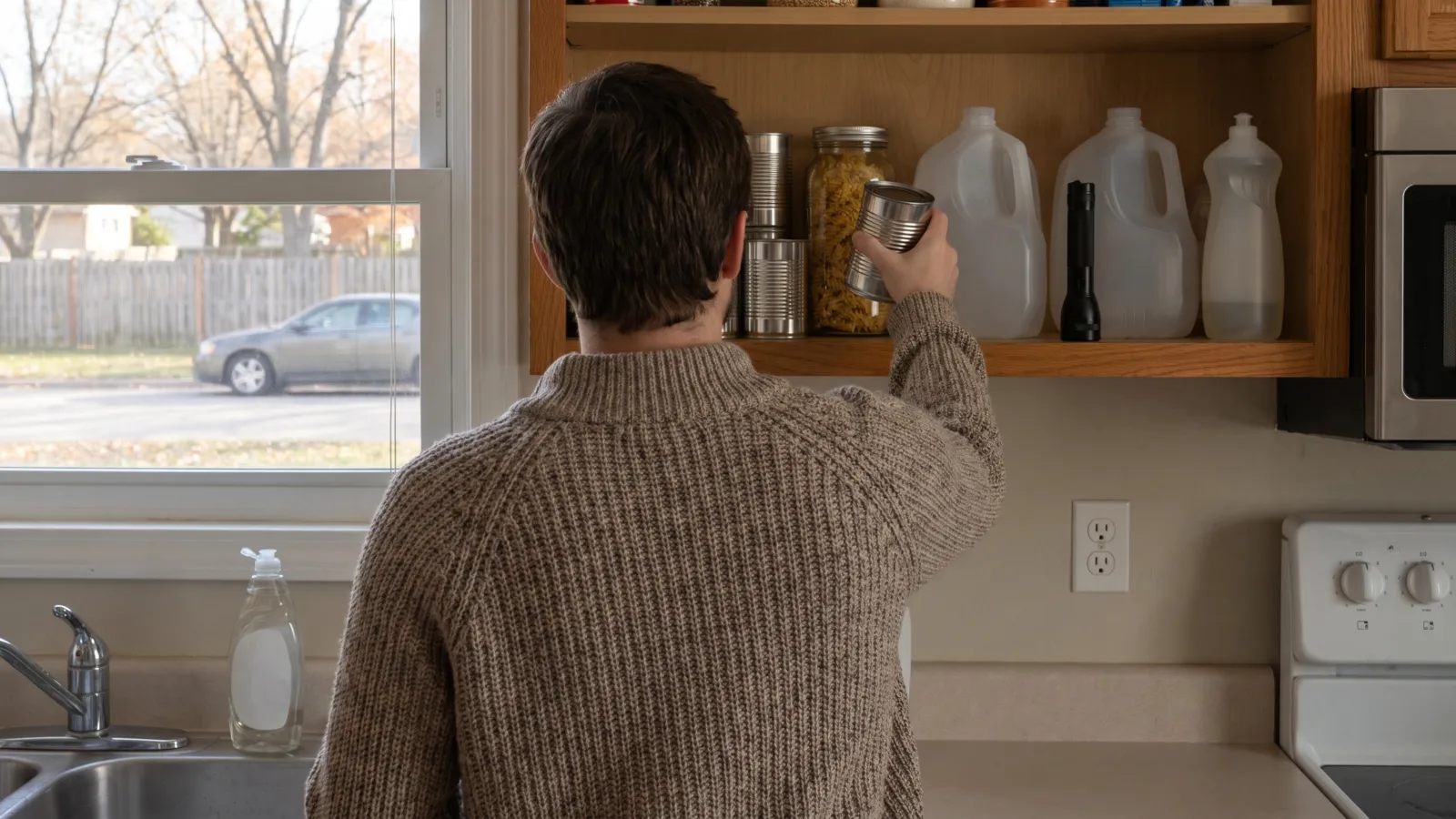
“Is it true that there will be a lockdown in 2026?”
We found no federal lockdown, stay-at-home order or nationwide quarantine. The emergency measures in use are CDC limits on entry for some travelers because of Ebola abroad.
- Is it true there will be a lockdown in 2026? We found no sign of one. None of the federal records we checked (the newest White House presidential actions, this year's Federal Register and HHS's list of public health emergencies) announces a lockdown, a stay-at-home order or a nationwide quarantine.
- The real measures are at the border, over an Ebola outbreak in Africa. A CDC order in force through December 10 suspends entry, with some exceptions, for people who aren't U.S. citizens or nationals and were in the Democratic Republic of the Congo, Uganda or South Sudan in the last 21 days. Separate rules keep anyone, Americans included, who was in the DRC then off flights to the US. The CDC says no case from it is confirmed here and the risk to the American public is low.
- Ready.gov's pandemic advice is to gather supplies in case you need to stay home for several days or weeks, and to buy them slowly. You don't need to buy anything because of this rumor.
The three things most homes are missing
Our top pick from each comparison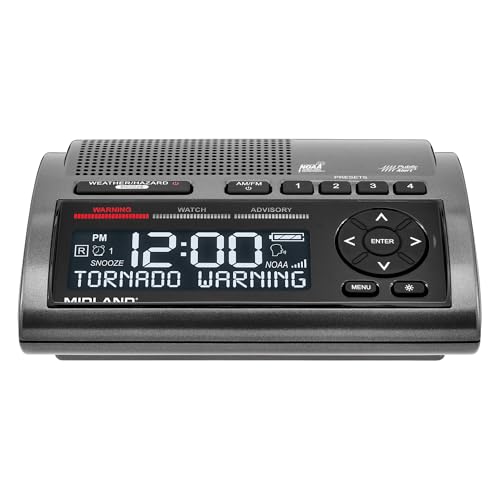
as of Nov 28, 2026, 7:52 PM ET · Details
Product prices and availability are accurate as of the date/time indicated and are subject to change. Any price and availability information displayed on Amazon.com at the time of purchase will apply to the purchase of this product.
as of Nov 28, 2026, 7:52 PM ET · Details
Product prices and availability are accurate as of the date/time indicated and are subject to change. Any price and availability information displayed on Amazon.com at the time of purchase will apply to the purchase of this product.
as of Nov 28, 2026, 7:52 PM ET · Details
Product prices and availability are accurate as of the date/time indicated and are subject to change. Any price and availability information displayed on Amazon.com at the time of purchase will apply to the purchase of this product.If you already have these, you're most of the way there. As an Amazon Associate, PreparedStates earns from qualifying purchases. We may earn a commission when you buy through our links. When two products are close, commission can decide which one we pick. A clearly better product always wins.
What is confirmed, and what is not
Confirmed: federal public health orders are in force, but at the border. On November 10 the CDC continued, for another 30 days, an order first issued in May under sections 362 and 365 of the Public Health Service Act. It applies to people who were in the Democratic Republic of the Congo, Uganda or South Sudan "during the last 21 days (regardless of their country of origin)", including lawful permanent residents, with some exceptions. It "does not apply" to U.S. citizens and U.S. nationals. It runs "through 4:59 p.m. Eastern Standard Time (EST) on Thursday, December 10, 2026" and may be amended or rescinded earlier.
The CDC's Ebola page lists more. Travelers, "including Americans", who were in the DRC within 21 days of their flight "will not be allowed to board commercial flights with U.S. destinations." U.S. citizens coming from Uganda or South Sudan must enter through designated airports for screening, and since November 3 every passenger on an international flight to the US must attest they haven't been in the DRC in the 21 days before. On November 25 the CDC extended the rule that lets entry orders cover green card holders.
The outbreak behind them is large. The CDC calls it "the second-largest Ebola outbreak on record", with 12,052 confirmed cases and 5,908 confirmed deaths as of November 24. The World Health Organization said on November 18 that it "continues to constitute a public health emergency of international concern." The WHO also "advises against any restriction of travel to, or trade with" the countries affected.
Not confirmed: any plan for a lockdown in the US. The CDC's Ebola page, updated November 27, says no cases "have been confirmed in the United States because of this outbreak", that "the overall risk to the American public and travelers remains low", and that the likelihood of Ebola spreading to the US "is considered very low."
Who can actually order a quarantine
The federal power is real but bounded. Under 42 U.S.C. 264, the government can make rules to stop communicable diseases spreading into the country "or from one State or possession into any other State or possession." Detaining people is allowed only for diseases named in a presidential executive order. The CDC lists them: cholera, diphtheria, infectious tuberculosis, plague, smallpox, yellow fever, viral hemorrhagic fevers, severe acute respiratory syndromes, "flu that can cause a pandemic", and measles.
Inside a state, the power sits mostly with the state. The CDC says states "have police power functions to protect the health, safety, and welfare of persons within their borders" and that state, local and tribal authorities "enforce isolation and quarantine within their borders." Where the two conflict, the CDC says, "federal law is supreme."
Ready.gov's stay-at-home advice: "Remain indoors as much as possible and try to only leave your home when necessary." Even then, it says, "grocery shopping, the gas station, pharmacies and going to the Post Office are still fine to do," and so are walking, jogging and exercise.
Why people are asking
There is real disease news, and none of it comes with a stay-at-home order. The CDC counts 6,039 confirmed measles cases in the US in 2026 as of November 24 (see our measles story). On H5 bird flu, the CDC says "the current public health risk is Low" and "there is no known person-to-person spread at this time" (our page on bird flu symptoms has more).
Winter illness is starting too. On November 20 the CDC said respiratory illness sending people to seek care was "low but increasing nationally", and that COVID-19 in wastewater was "moderate nationally but high to very high in some states." None of the CDC pages we read calls for a lockdown.
What it means for your home
Nothing in the federal records we checked asks the public to do anything new at home. Ready.gov's pandemic page, last updated March 5, 2026, says to "gather supplies in case you need to stay home for several days or weeks." That is the same kit that covers a storm or a long power outage, and our kit builder sizes it to your household:
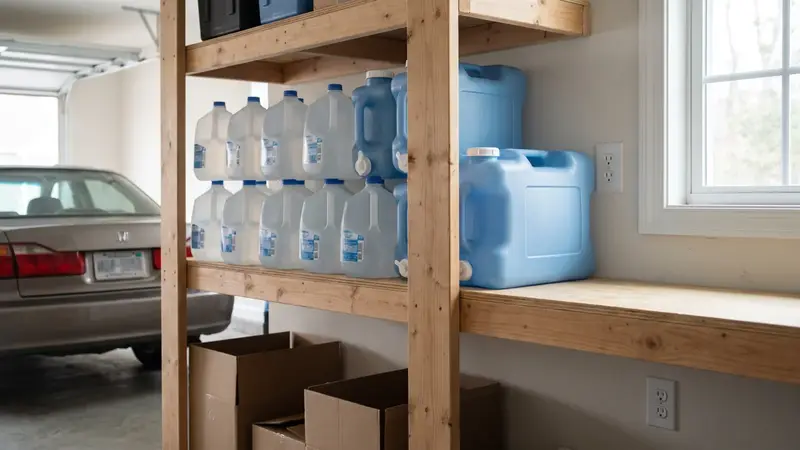
- Water: Ready.gov's kit page says "one gallon per person per day for several days, for drinking and sanitation". The CDC says to store "at least 1 gallon of water per day for each person" for 3 days and to try for 2 weeks: 12 gallons for a family of four for 3 days, 56 for 2 weeks, by our arithmetic
- Food: "at least a several-day supply of non-perishable food", with a manual can opener
- Medicines: Ready.gov's pandemic page lists prescriptions among the supplies to gather
- Cleaning supplies, which the same page lists alongside food and bottled water
- Ready.gov's kit page, last updated July 1, 2026, also lists a flashlight, a first aid kit and extra batteries
What not to do
Don't clear the shelves. Ready.gov says to "buy supplies slowly to ensure that everyone has the opportunity to buy what they need," and to build a kit over time, picking up "an extra item each time" you shop for things you use regularly. Our guide to stockpiling food and water covers how much is sensible.
Don't act on a lockdown post with no source. A real order would come from your governor, your state or local health department or a federal agency, and would be on their own sites. If one is issued, Ready.gov's advice is to stay informed and follow local instructions. You don't need to buy anything because of this rumor.
We will update this check if any federal or state authority announces a stay-at-home order or a quarantine for the public, if HHS declares a public health emergency for an infectious disease, or if the CDC confirms an Ebola case in the US or changes its December 10 entry order.
Common questions
Is it true that there will be a lockdown in 2026?
We found no sign of one. The latest White House presidential actions, this year's Federal Register and HHS's list of public health emergencies, checked on November 28, include no lockdown, stay-at-home order or nationwide quarantine. The federal public health measures in force limit travel to the US because of an Ebola outbreak in Africa, and don't restrict life inside the US.
Is there a lockdown because of Ebola?
We found none. A CDC order in force through December 10 suspends entry for people who aren't U.S. citizens or nationals and were in the Democratic Republic of the Congo, Uganda or South Sudan in the last 21 days, with some exceptions. Separate CDC rules keep travelers, Americans included, who were in the DRC in the last 21 days off commercial flights to the US. These are border measures. The CDC says no Ebola case from this outbreak has been confirmed in the US and the risk to the American public is low.
Who can order a quarantine in the US?
Both the federal government and the states, in different ways. Federal law covers diseases coming into the country or spreading between states, and detention only for diseases a presidential order lists, which the CDC names, including measles and flu that can cause a pandemic. The CDC says states hold police powers and enforce isolation and quarantine within their borders.
What would a stay-at-home order mean?
Ready.gov's advice is to "remain indoors as much as possible and try to only leave your home when necessary." It says grocery shopping, the gas station, pharmacies and the Post Office are still fine, and so are walking, jogging and exercise outdoors.
What should I keep at home just in case?
Ready.gov's pandemic page says to gather supplies in case you need to stay home for several days or weeks: non-perishable food, prescriptions, bottled water and cleaning supplies, bought slowly. The CDC says at least 1 gallon of water per person per day for 3 days, and 2 weeks if possible. Build it over time rather than all at once.
Sources (16)
- White House: Presidential Actions
- Federal Register: CDC order continuing the suspension of entry of certain persons (Ebola), Nov 13, 2026
- Federal Register: Control of Communicable Diseases; Foreign Quarantine, extension of interim final rule, Nov 25, 2026
- HHS ASPR: Public Health Emergency Declarations
- CDC: Ebola Outbreak: Current Situation
- WHO: Disease Outbreak News, Ebola disease caused by Bundibugyo virus (Nov 20, 2026)
- US Code: 42 U.S.C. 264, Regulations to control communicable diseases
- CDC: Legal Authorities for Isolation and Quarantine
- CDC: A(H5) Bird Flu: Current Situation
- CDC: Measles Cases and Outbreaks
- CDC: Respiratory illness activity levels
- Ready.gov: Pandemic
- Ready.gov: Shelter
- Ready.gov: Build a Kit
- Ready.gov: Low and No Cost Preparedness
- CDC: How to create and store an emergency water supply
Get one calm email when it matters
Seasonal checklists and gear price drops. No spam, unsubscribe any time.
Keep reading
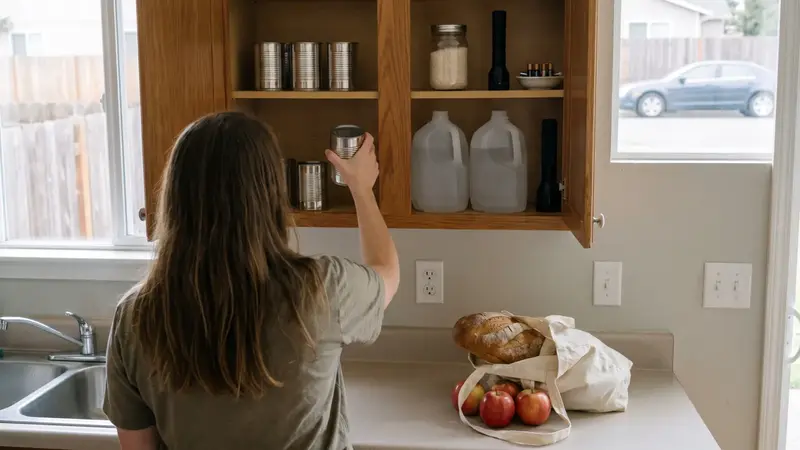 Why is everyone talking about stockpiling? Trump says 'relax': what Ready.gov says to keepA week of tech outages has people stocking up, and Walmart says it saw "a small amount" of it. Ready.gov's kit…
 How to stockpile food and water for your household: what the official lists sayHow to stockpile food and water for your household: Ready.gov says several days, the Red Cross says 2 weeks. W…
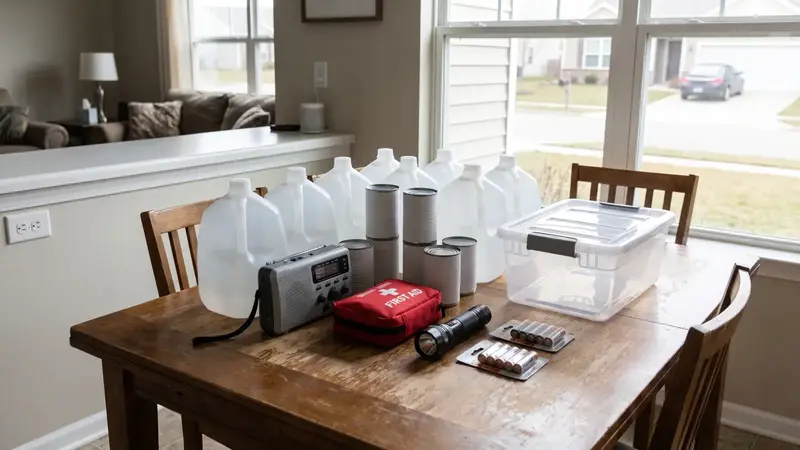 Emergency kit checklist: what to include, how much to keep and where to store itA plain-English emergency kit checklist built on Ready.gov's basic kit and extra items, with how many days of …
 How much water to store for an emergency: per person, per pet and for how longHow much water to store for an emergency: 1 gallon per person per day, pets, which containers to use, when to …