Is the US preparing for a grid collapse? What the grid record and official plans say
Is the US preparing for a grid collapse? Agencies plan and drill for grid emergencies, but none forecasts one. What NERC, DOE and the Pentagon plan, and what it means at home.
By Tom Calder · Updated November 26, 2026 · Sourced to NERC, the Department of Energy, CISA, the Department of War, EIA and Ready.gov
“Is the US preparing for a grid collapse?”
Agencies plan and drill for major grid emergencies. None we checked forecasts a collapse or asks homes to plan beyond several days.
- Is the US preparing for a grid collapse? In one sense, yes: the grid's watchdog, the Energy Department and the Pentagon all plan for severe grid emergencies, and the industry and government rehearse a grid attack every two years. But none of the official plans we checked forecasts a collapse or gives a date for one.
- NERC's winter assessment, released November 18, finds enough supply for a normal winter peak across the bulk power system, with shortfalls possible in extreme, wide-area cold. The Energy Department has used emergency orders this month to keep plants in Michigan, Pennsylvania and Maryland available. The Pentagon wants new bases able to run 30 days off the civilian grid.
- Those are plans for utilities, grid operators and military bases, not instructions to households. Ready.gov's advice is unchanged: supplies for several days. You don't need to buy anything because of them.
The three things most homes are missing
Our top pick from each comparison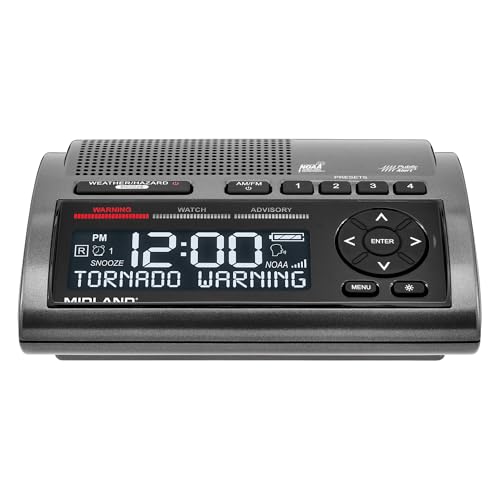
as of Nov 28, 2026, 7:52 PM ET · Details
Product prices and availability are accurate as of the date/time indicated and are subject to change. Any price and availability information displayed on Amazon.com at the time of purchase will apply to the purchase of this product.
as of Nov 28, 2026, 7:52 PM ET · Details
Product prices and availability are accurate as of the date/time indicated and are subject to change. Any price and availability information displayed on Amazon.com at the time of purchase will apply to the purchase of this product.
as of Nov 28, 2026, 7:52 PM ET · Details
Product prices and availability are accurate as of the date/time indicated and are subject to change. Any price and availability information displayed on Amazon.com at the time of purchase will apply to the purchase of this product.If you already have these, you're most of the way there. As an Amazon Associate, PreparedStates earns from qualifying purchases. We may earn a commission when you buy through our links. When two products are close, commission can decide which one we pick. A clearly better product always wins.
What people are asking
"Is the US preparing for a grid collapse?" is a question people are typing into search engines. The worry behind it is simple: if the government is getting ready for the grid to fail, should my household be too?
We answered it from the official record: what NERC, the Energy Department, CISA and the Department of War have actually published, what each plan is for, and what it does and does not mean at home. We have checked related claims before: an 18-month blackout, a blackout in 2027 and a doomsday cyberattack.
What NERC asks the grid to do this winter
NERC, the North American Electric Reliability Corporation, sets the grid's reliability standards and assesses each season. Its 2026-2027 Winter Reliability Assessment, released November 18, finds: "Adequate resources for normal winter peak-load conditions (i.e., 50-50 peak demand forecast) are available across the BPS," the bulk power system. The caveat: "more extreme winter conditions extending over a wide area could result in supply shortfalls in some assessment areas."
Its preparations are aimed at the industry. NERC says generator owners "should complete winter readiness plans and checklists prior to December," and asks operators to plan for extreme conditions that could "last for 10 days or more." It asks grid operators to run generator fuel surveys, and state regulators to help by "amplifying public appeals for electricity and natural gas conservation." NERC's chief executive, Jim Robb, said operators "will need everything in their tool kit," including requests for emergency support, "to maintain reliable operations."
There is also a standing rule. NERC's cold-weather standard, EOP-012-3, exists to ensure "each Generator Owner has developed and implemented plan(s) to mitigate the reliability impacts of extreme cold weather" on its units.
The drill: GridEx, every two years
The closest thing to the government "preparing for a grid collapse" is GridEx. NERC's security arm, the E-ISAC, says: "Every two years the E-ISAC hosts GridEx – the electricity industry's largest cyber and physical security exercise in North America." It gives industry and government "the opportunity to practice how they would respond to and recover from coordinated cyber and physical security threats to the grid."
The last one, GridEx VIII, ran on November 18 and 19, 2025, with an executive tabletop in Washington, D.C., on November 20. NERC's lessons-learned report, published in March 2026, says it "had 378 registered participating organizations, a 50% increase from GridEx VII," and its aim was to exercise the grid's resilience "in the face of a coordinated attack from a nation-state adversary." The tabletop, involving the Energy Department and the Department of War among others, was a fictional scenario "set in the summer of 2028," including drone attacks "resulting in extensive load shed." The next exercise, GridEx IX, is set for November 16-17, 2027.
A drill like this is a rehearsal of a worst case, not a warning that it is coming.
What the Energy Department is doing
The Energy Department is the federal lead for the energy sector. Its emergency office, CESER, "leads the Department of Energy's statutory role as the Sector Risk Management Agency for the energy sector," and when an energy emergency hits, it deploys staff and resources "to restore power or the flow of fuel quickly and safely." CESER is also "the lead for Emergency Support Function #12 (ESF #12) under FEMA's National Response Framework."
This year it has used emergency orders under section 202(c) of the Federal Power Act to keep power plants available. Its 2026 list runs to order number 202-26-52. The newest, on November 20, directs PJM to ensure two units of the Eddystone station in Pennsylvania "remain available to operate" through February 18, 2027. A November 13 order keeps Michigan's J.H. Campbell plant available through February 12, 2027, and a November 17 order lets PJM run Unit 4 of the Wagner station in Maryland through December 31. An October 12 order lets PJM run backup generators "as a last resort" before or during its highest grid emergency level, an Energy Emergency Alert 3.
The starkest official figure we found is in a July 7, 2025 Energy Department report. Its release says "blackouts could increase by 100 times in 2030 if the U.S. continues to shutter reliable power sources and fails to add additional firm capacity," and that its modeling shows annual outage hours "could increase from single digits today to more than 800 hours per year." That is a modeled risk under stated assumptions about plant retirements and demand growth, not a forecast of a collapse.
What CISA and the Pentagon plan for
Officials have been blunt about the cyber threat. In February 2024, CISA, the NSA and the FBI said Chinese state-sponsored hackers "are seeking to pre-position themselves on IT networks for disruptive or destructive cyberattacks against U.S. critical infrastructure in the event of a major crisis or conflict with the United States." That is an assessment of a threat. It is not a warning that an attack is planned for a given date.
The Pentagon's FORTRESS America program is for military bases. Its October 29 story says the installations "will be designed to rely on their own infrastructure for 30 days, completely detached from external utilities in case the surrounding civilian grid collapses." That is the plainest official use of "grid collapse" we found. It describes what bases are built to withstand; it says nothing about homes and gives no date.
Is the US preparing for a grid collapse? What is confirmed, and what is not
Confirmed: federal agencies and the grid industry plan for severe grid emergencies. They assess winter risk, keep plants available under emergency orders, rehearse a nation-state attack every two years, and plan for military bases to run without the civilian grid for 30 days.
Not confirmed: any official forecast, date or warning of a nationwide grid collapse. When we checked on November 26, 2026, the Energy Department's newsroom had no announcement of a long or nationwide blackout; its latest grid item was the November 20 Mid-Atlantic order. We found no agency asking households to prepare for more than several days.
Our reading: planning for a worst case is what these agencies are for. A plan is not a prediction.
What each plan means at home
None of these plans changes what a household is asked to do. The outages people actually see are short and local: EIA says the average US electricity customer went 262.6 minutes without power in all of 2025, about 4.4 hours (our arithmetic), or 120.8 minutes leaving out major events.
Ready.gov says: "After an emergency, you may need to survive on your own for several days." Its power outage page says to "Have enough nonperishable food and water," to keep freezers and refrigerators closed, and to "Have alternate plans for refrigerating medicines or using power-dependent medical devices." Our power outage kit builder sizes Ready.gov's list to your household, and the power outage checklist covers before, during and after.
- NERC's winter assessment: NERC asks state regulators to help amplify public appeals to save electricity and gas; if your utility makes one in extreme cold, that is when to cut use
- DOE's emergency orders: they keep plants running; nothing for you to do
- GridEx: a drill for utilities and agencies; nothing for you to do
- CISA's cyber warnings: aimed at operators; at home, the outage advice is the same, Ready.gov's several days of supplies
- The Pentagon's 30 days: a design goal for military bases, not a household target
What not to do
Don't buy months of supplies, or a generator, because agencies plan for worst cases. None of the official plans we checked asks households to prepare for a grid collapse, and food you never eat goes to waste.
If you already run a generator in an outage, use it safely. Ready.gov says: "Generators and fuel should always be used outdoors and at least 20 feet away from windows, doors and attached garages," and to "Install carbon monoxide detectors with battery backup in central locations on every level of your home." Our generator safety guide goes through it step by step.
We will update this check if NERC, the Energy Department, CISA or the Pentagon warns of a nationwide grid emergency, if a federal agency asks households to prepare for longer outages, or if Ready.gov changes its advice. Live outages are on our power outages page.
Common questions
Is the US preparing for a grid collapse?
Agencies plan for severe grid emergencies: NERC assesses winter risk and runs the GridEx attack exercise every two years, the Energy Department keeps plants available under emergency orders, and the Pentagon wants new bases able to run 30 days off the civilian grid. None of the plans we checked forecasts a collapse or gives a date for one.
What is GridEx?
NERC's E-ISAC calls it "the electricity industry's largest cyber and physical security exercise in North America," held every two years. GridEx VIII, in November 2025, had 378 registered organizations rehearsing a coordinated attack from a nation-state adversary. The next one, GridEx IX, is set for November 16-17, 2027.
Did the Energy Department say blackouts will increase 100 times?
Its July 7, 2025 report says blackouts "could increase by 100 times in 2030 if the U.S. continues to shutter reliable power sources and fails to add additional firm capacity." That is a modeled risk under stated assumptions about plant retirements and demand, not a forecast of a collapse.
Why does the Pentagon want bases that run 30 days without the grid?
Its FORTRESS America program says new installations "will be designed to rely on their own infrastructure for 30 days, completely detached from external utilities in case the surrounding civilian grid collapses." It is a design goal for military bases. It says nothing about homes and gives no date for an outage.
How should my household prepare for a grid failure?
Follow Ready.gov: have food, water and other supplies to manage on your own for several days, a flashlight and spare batteries, a battery-powered or hand-crank radio, a charged power bank and a plan for refrigerated medicines or powered medical devices. If you use a generator, keep it outdoors and at least 20 feet from windows, doors and attached garages.
Sources (15)
- NERC: 2026-2027 Winter Reliability Assessment (PDF, November 2026)
- NERC: Increasing demand and El Niño challenge winter grid reliability (Nov 18, 2026)
- NERC: EOP-012-3 Extreme Cold Weather Preparedness and Operations (PDF)
- NERC E-ISAC: GridEx
- NERC E-ISAC: GridEx VIII Lessons Learned Report (PDF, March 2026)
- Department of Energy: 2026 DOE 202(c) orders
- Department of Energy: Report evaluating US grid reliability and security (July 7, 2025)
- Department of Energy: Office of Cybersecurity, Energy Security, and Emergency Response (CESER)
- Department of Energy: CESER emergency response
- Department of Energy: Newsroom
- CISA: PRC State-Sponsored Actors Compromise and Maintain Persistent Access to U.S. Critical Infrastructure (AA24-038A, Feb 7, 2024)
- Department of War: Assistant Secretary says new infrastructure initiatives are a 'national calling' (Oct 29, 2026)
- EIA: Electric Power Annual, Table 11.3 reliability metrics (2025 and 2024)
- Ready.gov: Power Outages
- Ready.gov: Build a Kit
Get one calm email when it matters
Seasonal checklists and gear price drops. No spam, unsubscribe any time.
Keep reading
 Is there going to be a blackout in 2027? What NERC, DOE and the grid record sayIs there going to be a blackout in 2027? No official source forecasts one. What NERC rates for 2027, what DOE …
 Is there going to be a blackout for 18 months? What the grid record and the Pentagon plan sayIs there going to be a blackout for 18 months? No official source says so. Where the figure comes from, what N…
 Could a doomsday cyberattack black out the US? What the grid record says for your homeCould a doomsday cyberattack black out the US? Newsweek's scenario against the official record: what grid cybe…
 Will the US power grid go down in 2026? What NERC, FERC, EIA and DOE actually sayWill the power grid go down in 2026? None of the agencies we checked forecasts a nationwide blackout. NERC's r…