Is there going to be a blackout in Texas? What the grid record and winter assessment say
Is there going to be a blackout in Texas? NERC rates ERCOT normal risk this winter, down from elevated. What the 2021 storm, Saturday's wind watches and our outage count show.
By Tom Calder · Updated November 27, 2026 · Sourced to NERC, the FERC-NERC report on the February 2021 storm, EIA, the National Weather Service, the Public Utility Commission of Texas, ERCOT, the Energy Department's ODIN outage data, Ready.gov and CDC
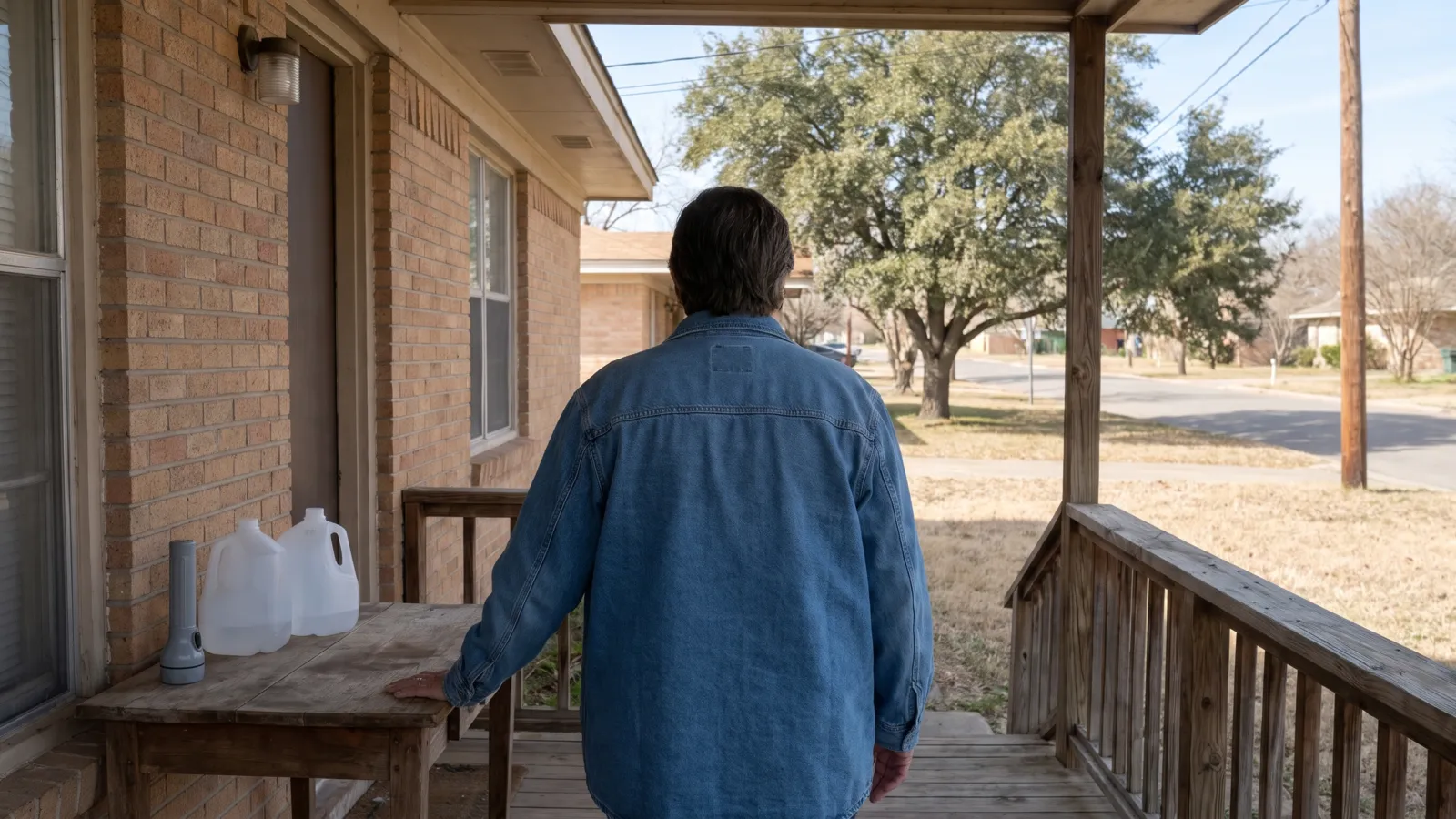
“Is there going to be a blackout in Texas?”
We found no official warning of a statewide blackout. NERC rates ERCOT normal risk this winter; the weather service says wind outages, possibly widespread, could hit the Panhandle Saturday.
- Is there going to be a blackout in Texas? We found no official warning of one. NERC's winter assessment, published November 18, rates ERCOT, the grid operator NERC says serves more than 27 million customers in Texas, normal risk for December to February, down from elevated last winter, and finds enough supply for a normal winter peak. NERC adds that extreme conditions with above-normal demand and generator outages from weather and fuel issues "can result in an energy emergency."
- That is about the supply of power, not the line on your street. On Friday afternoon the weather service had high wind watches out for Saturday in the Texas Panhandle, saying "Widespread power outages are possible." Our tracker's latest snapshot counted 390 customers out in Texas.
- You don't need to buy anything. A few days of water and food, flashlights, warm layers and a plan for medicines are what Ready.gov and CDC advise for outages.
The three things most homes are missing
Our top pick from each comparison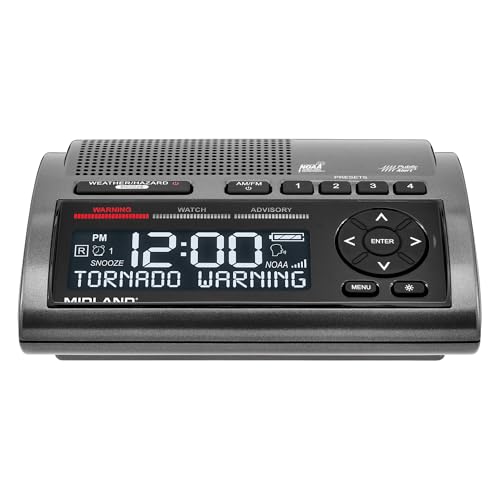
as of Nov 28, 2026, 7:52 PM ET · Details
Product prices and availability are accurate as of the date/time indicated and are subject to change. Any price and availability information displayed on Amazon.com at the time of purchase will apply to the purchase of this product.
as of Nov 28, 2026, 7:52 PM ET · Details
Product prices and availability are accurate as of the date/time indicated and are subject to change. Any price and availability information displayed on Amazon.com at the time of purchase will apply to the purchase of this product.
as of Nov 28, 2026, 7:52 PM ET · Details
Product prices and availability are accurate as of the date/time indicated and are subject to change. Any price and availability information displayed on Amazon.com at the time of purchase will apply to the purchase of this product.If you already have these, you're most of the way there. As an Amazon Associate, PreparedStates earns from qualifying purchases. We may earn a commission when you buy through our links. When two products are close, commission can decide which one we pick. A clearly better product always wins.
What people are asking
"Is there going to be a blackout in Texas" is a question people type, not a headline from one outlet. In February 2021, more than 4.5 million people in Texas lost power, some for as long as four days. We have answered the same question for California and Michigan, and for the country this week in Is there going to be a blackout this year?
For Texas, we checked the winter grid assessment from NERC, the North American Electric Reliability Corporation; the federal report on the February 2021 storm; the Energy Information Administration's outage record; the National Weather Service's alerts for the state; the Public Utility Commission of Texas and ERCOT; and the Energy Department's outage data.
What NERC's winter assessment says for Texas
NERC published its 2026-2027 Winter Reliability Assessment on November 18. It covers "the upcoming three-month (December–February) winter period" and the "generation resource and transmission system adequacy" needed to meet winter peaks. NERC says ERCOT, the Electric Reliability Council of Texas, "is located entirely in the state of Texas" and "serves more than 27 million customers."
NERC's risk table rates Texas RE-ERCOT normal risk this winter, which it defines as "Sufficient operating reserves expected." Last winter's column shows ERCOT as elevated. NERC lists Texas among areas with "a lower risk determination for this WRA compared to last winter," saying "Resource growth in terms of peak-demand capacity has largely kept pace with demand growth," with 1.7 GW of new natural-gas-fired generation and nearly 3.5 GW of new batteries, and that "Winterization standards for generators and wind turbines have improved cold-weather performance."
NERC reports an anticipated reserve margin for ERCOT of 34.8% against a reference level of 15%, down from 36.0% last winter, with a peak demand forecast of 70,139 MW after demand response. It says ERCOT "expects to have sufficient operating reserves for the winter peak load hour (hour ending 8:00 a.m.) given expected normal system conditions" and "does not expect any significant fuel supply issues for the winter."
ERCOT's own risk study, as NERC reports it, puts the chance of an Energy Emergency Alert in the riskiest hour, the 8 a.m. winter peak, at 2.7%, and of controlled load shed at 2.1%; ERCOT counts under 10% as low. NERC adds: "There is EEA risk in the early morning and evening hours due to elevated loads during these periods as well as low to no solar generation."
Is there going to be a blackout in Texas? What is confirmed, and what is not
Confirmed: NERC's November 18 assessment rates ERCOT normal risk and finds enough supply for a normal winter peak. It is a planning assessment of supply and demand, not a forecast that the lights will or won't stay on in any town. NERC's summary for ERCOT also says: "Extreme conditions that cause above-normal peak demand and generator outages from weather and fuel issues can result in an energy emergency due to insufficient operating reserves."
NERC tested one such case, which "Presumes weather conditions comparable to Winter Storm Uri." Its chart starts from 94.5 GW of resources and takes off 17.2 GW of typical outages and extreme-condition derates, leaving about 77.3 GW: below the 81 GW of extreme demand, before NERC's 1.5 GW reserve requirement is added (our arithmetic from NERC's chart). NERC still rates ERCOT normal; its rating key notes that even in normal areas, "extreme demand and extreme outage scenarios that are not closely linked may indicate risk of operating reserve shortfall."
Not confirmed: any warning, plan or forecast of a statewide Texas blackout. We found none in NERC's report or its press release, in the Public Utility Commission's 2026 news releases, or in ERCOT's news releases. On November 27 the commission's website showed that day's grid status, linked to ERCOT, as "Normal Conditions"; that is a daily status, not a winter outlook.
Local outages are another matter. At 3:39 p.m. ET on November 27, the weather service listed high wind watches for Saturday covering much of the Texas Panhandle, with gusts up to 60 mph possible. Its Amarillo office says: "Damaging winds could blow down trees and power lines. Widespread power outages are possible." Wind advisories for the South Plains say "a few power outages may result."
Texas outages in the latest snapshot
The Energy Department's ODIN data, last updated at 5:15 a.m. ET on November 27, listed 390 customers out in Texas, all on CenterPoint Energy in the Houston area, 371 of them in Harris County. Nationwide, our power outage tracker counted 58,174 in the same snapshot. ODIN covers only utilities that report to it, and it had no Texas rows from Oncor, AEP Texas or TNMP, so this is a partial count (our reading). Your utility's outage map is the live answer for your home; our state pages carry live weather service alerts for Texas and every other state.
What February 2021 showed, and what NERC says has changed
The federal report on the February 2021 storm, by FERC, NERC and regional staff, says: "More than 4.5 million people in Texas lost power during the Event, and some went without power for as long as four days." It says "ERCOT ultimately had to shed 20,000 MW of firm load at the worst point," and that operators "had only nine minutes to prevent approximately 17,000 MW of generating units from tripping."
The report names two causes, both triggered by cold: "First, generating units unprepared for cold weather failed in large numbers," and second, the natural gas fuel supply struggled to meet demand after large production declines. It also notes that customers lost service both from ordered outages and "weather-related unplanned outages (such as downed power lines)."
This year NERC credits winterization standards for better cold-weather performance, and it says generators must "submit their declarations of weather preparedness (DoWP) by December 1, 2026." It also flags a newer risk: batteries reduce emergency risk, "however, maintaining sufficient battery state of charge (SOC) is challenging for extended periods of high loads."
How ERCOT warns before controlled outages
ERCOT posts grid notices through its Texas Advisory and Notification System, TXANS, which since November 10 can send them by text message. A Weather Watch is advance notice, and ERCOT says "Grid conditions are normal during a Weather Watch." Then come conservation requests and three levels of Energy Emergency Alert. At levels 1 and 2, ERCOT says it "has not directed systemwide controlled outages"; at level 3, "Systemwide controlled outages are underway."
ERCOT's December outlook, posted October 2, puts the highest chance of an emergency alert at 8 a.m., "with a 2.95% probability that ERCOT would need to declare an EEA." With each conservation request and emergency alert, ERCOT says: "Those with critical medical needs should check with their local electric utility."
Texas's outage record
EIA's Electric Power Annual, released October 21, 2026, gives each state's reliability figures. In 2025, the average Texas customer had 1.704 interruptions and 223.5 minutes without power, counting major events such as big storms; that is about 3.7 hours (our arithmetic), below the US average of 262.6 minutes. Texas ranked 30th of the 50 states and DC, counting from the longest (our count from EIA's table).
Big storms change that from year to year. In 2024, the average Texas customer had 1,270.6 minutes without power with major events, about 21 hours, the fifth-highest among the 50 states and DC (our count). Leaving major events out, the Texas figure was 128.7 minutes in 2025 and 129.4 in 2024.
What it means for your home
Plan for the outages that happen: storms, high winds, falling limbs and local equipment faults. Ready.gov says: "After an emergency, you may need to survive on your own for several days," and, for winter weather, "Gather supplies in case you need to stay home for several days without power." CDC says to store at least 1 gallon of water per person, per day for 3 days, and to "try to store a 2-week supply if possible." Ready.gov also says: "Keep freezers and refrigerators closed" and "Have flashlights for every household member."
If someone at home relies on power for medicine or a medical device, Ready.gov says to "Have alternate plans for refrigerating medicines or using power-dependent medical devices," and ERCOT's notices tell people with critical medical needs to check with their utility. The power outage checklist covers before, during and after, and our power outage kit builder sizes Ready.gov's list to your household.
- Water: at least 1 gallon per person, per day, for 3 days; 2 weeks if you can
- Food your household already eats, for several days, that needs no fridge
- A flashlight for every person, plus spare batteries
- Warm layers and blankets in case the heat goes off
- A battery-powered or hand-crank radio, and a charged phone
- A plan for medicines that need cold and for powered medical devices
What not to do
Don't buy a generator or a power station because of a blackout question. NERC finds enough supply for ERCOT in normal winter conditions, and none of the sources we checked asks households to prepare for a statewide outage.
Heat your home safely when the power is out. Ready.gov says: "Do not use a gas stove or oven to heat your home. It increases your risk of carbon monoxide poisoning," and "Generators and fuel should always be used outdoors and at least 20 feet away from windows, doors and attached garages." It also says to "Install working carbon monoxide detectors on every level of your home." Our generator safety guide goes through it step by step.
We will update this check if NERC, ERCOT or the Public Utility Commission of Texas warns of supply shortfalls or controlled outages this winter, if ERCOT issues a conservation request or Energy Emergency Alert, or if Ready.gov changes its advice. Live alerts are on our Texas and power outages pages.
Common questions
Is there going to be a blackout in Texas?
We found no official warning of a statewide blackout. NERC's winter assessment, published November 18, 2026, rates ERCOT normal risk for December to February, down from elevated last winter, and finds enough supply for a normal winter peak. NERC says extreme conditions with above-normal demand and generator outages from weather and fuel issues could still cause an energy emergency.
Could February 2021 happen again in Texas?
NERC doesn't forecast that. It tested a scenario with weather comparable to Winter Storm Uri, and its chart for that case shows resources after outages below extreme demand (our arithmetic). It still rates ERCOT normal risk, crediting new gas and battery capacity and winterization standards, and says extreme demand plus generator outages from weather and fuel issues can result in an energy emergency. In 2021, the federal report says, more than 4.5 million people in Texas lost power.
Does the Texas grid have enough power this winter?
NERC says ERCOT has enough for a normal winter peak, with an anticipated reserve margin of 34.8% against a 15% reference level. ERCOT's own study, as NERC reports it, gives a 2.7% chance of an Energy Emergency Alert in the riskiest hour and 2.1% for controlled load shed. ERCOT counts under 10% as low risk.
How will I know if ERCOT is close to controlled outages?
ERCOT posts notices through TXANS, which you can get by email or, since November 10, by text. A Weather Watch means grid conditions are still normal. Conservation requests come next, then Energy Emergency Alert levels 1 to 3. ERCOT says systemwide controlled outages are underway only at level 3.
What should I have at home for a power outage in Texas?
Ready.gov says to be ready to stay home for several days without power. CDC says to store at least 1 gallon of water per person per day for 3 days, and 2 weeks if possible. Keep flashlights for everyone, warm layers, a radio, a charged phone and a plan for medicines. Never heat your home with a gas stove or oven.
Sources (10)
- NERC: 2026-2027 Winter Reliability Assessment (PDF, November 2026)
- NERC: Increasing demand and El Niño challenge winter grid reliability (Nov 18, 2026)
- FERC, NERC and Regional Entity staff: The February 2021 Cold Weather Outages in Texas and the South Central United States (PDF, November 2021)
- EIA: Electric Power Annual, Table 11.3 reliability metrics by state (2025 and 2024)
- National Weather Service: active alerts for Texas
- Public Utility Commission of Texas
- Ready.gov: Power Outages
- Ready.gov: Winter Weather
- Ready.gov: Build a Kit
- CDC: Creating and storing an emergency water supply
Get one calm email when it matters
Seasonal checklists and gear price drops. No spam, unsubscribe any time.
Keep reading
 Is there going to be a blackout this year? What the grid record and storm outages showIs there going to be a blackout this year? No official source forecasts one. What the grid record says, and wh…
 Is there going to be a blackout in California? What the grid record and winter assessment sayIs there going to be a blackout in California? NERC rates the state's grid normal risk this winter. What EIA's…
 Will the US power grid fail this winter? What NERC's winter assessment says, by regionWill the US power grid fail this winter? What NERC's 2026-2027 winter assessment says for Texas, PJM, the Caro…
 Power outage checklist: what to do before, during and afterA calm power outage checklist from Ready.gov and CDC: what to prepare, how to protect food, medicines and medi…